How Southeast Asian Humidity Affects Solid Wood Furniture—and How to Protect It
Singapore’s climate can change the moisture content of solid wood furniture faster than many owners expect. In HDB flats and private condos across Tampines, Bedok and Punggol, high outdoor humidity often meets air-conditioned interiors, narrow lift lobbies and compact corridors. A dining table near a balcony, a wardrobe in a corner unit or a solid wood sofa in a humid living room may therefore gain or lose moisture throughout the day.

At MIDHILL, we build and export solid wood furniture for homes in more than 15 countries. Southeast Asian conditions still require careful acclimatisation, sensible storage and regular care. This guide explains how humidity affects wood, how to prepare new pieces for Singapore interiors, and how garage storage should be arranged when furniture is used, moved or stored in the island’s hot, wet environment.
What does humidity do to solid wood furniture in Singapore?
Wood is hygroscopic: it naturally absorbs atmospheric moisture and releases it as surrounding humidity changes. Relative humidity—the amount of water vapour in the air—affects this movement. Singapore’s monthly readings commonly range around 65% to 90%, while air-conditioned rooms may fall below 60%. A solid wood dining table crossing that range can expand by roughly 1% to 3% in width, while a thinner bed frame, cabinet panel or nightstand may react more visibly.
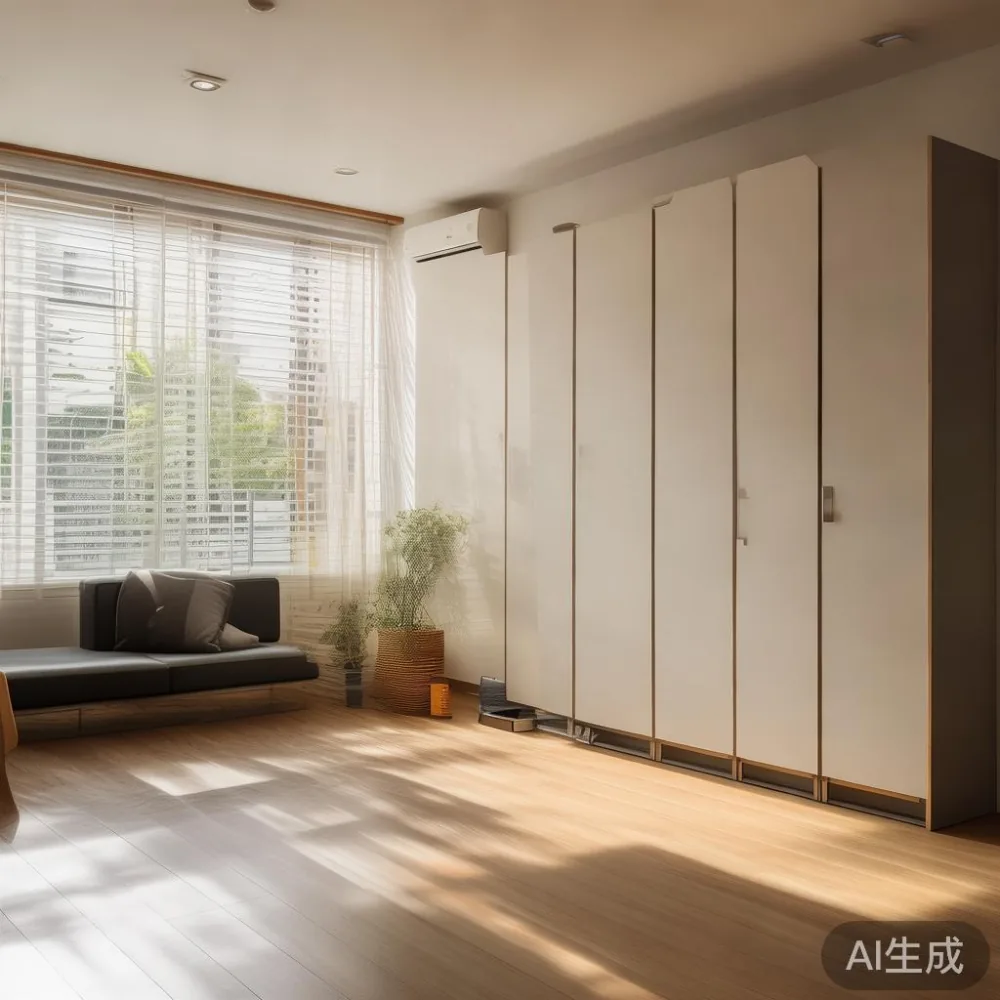
These are normal physical reactions, not automatic defects. The more important issue is repeated movement. A wardrobe beside a bathroom or balcony may swell during humid nights, then contract during dry air-conditioned afternoons. If panels are assembled under excessive tension, joints can loosen, veneer may lift and lacquer can show fine checking lines. By contrast, a piece gradually acclimatised in the room where it will be used usually reaches a stable equilibrium with less stress.
Temperature also matters. Warm air can hold more moisture than cool air, and Singapore’s garage or storeroom temperature may remain near 28°C to 32°C. The relevant factor is not simply whether it rains. It is the combination of temperature, relative humidity, airflow, direct sunlight and how quickly a piece changes from one environment to another.
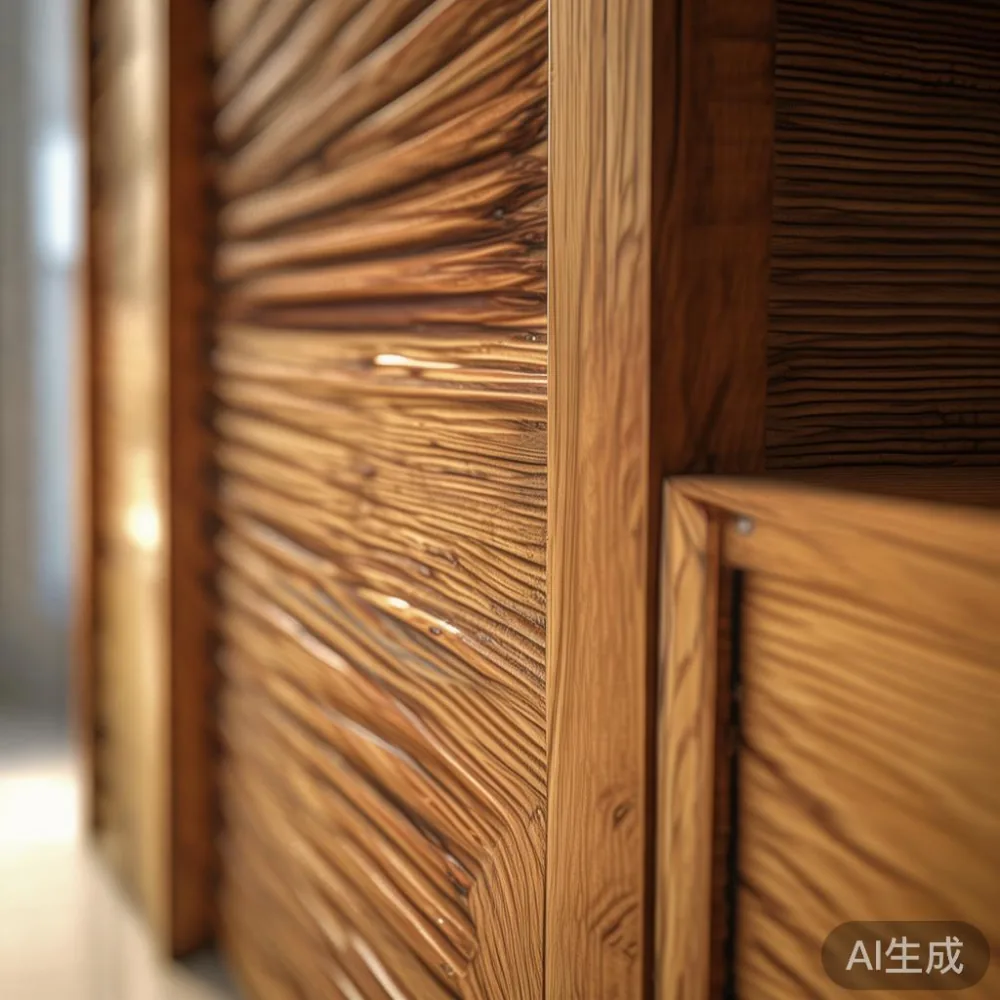
How should I acclimatise a solid wood dining table or bed frame?
Allow new furniture at least 7 to 14 days to acclimatise in its final room. Leave packaging open if space and building rules permit, or remove the outer cartons while retaining protective covers over the surfaces. Avoid standing a bed frame immediately against an exterior wall, and keep a dining table at least 30 cm away from windows with a known condensation problem.
Check the product label for its recommended operating range. A relative humidity level of about 45% to 65% is a practical target for most occupied interiors, with short outdoor excursions tolerated. Use a hygrometer costing around SGD 20 to SGD 60 rather than guessing. Place one near the wardrobe or nightstand and another near the corridor or service yard if conditions differ sharply.
Do not try to correct furniture with aggressive heating, hairdryers or excessive direct air-conditioning. Sudden drying can split a solid wood tabletop. Instead, keep the piece away from air vents, wipe spills promptly and rotate items that receive strong sunlight. If you own an adjustable solid wood sofa, move its base away from a damp wall and maintain airflow underneath.
Last month I visited a colleague’s Tampines HDB flat during a heavy afternoon shower. A solid oak dining table delivered from a showroom had been placed beside a sliding balcony door. Within about 45 minutes, the side facing the balcony became visibly cooler and damper. We moved it 60 cm inward, added a low humidity tray beneath the nearest corner and kept the sliding door closed. A hygrometer beside the table later stabilised around 68%, compared with approximately 84% beside the balcony. The small relocation prevented the daily expansion-and-contraction cycle that had begun to stress one joint.
Which furniture is most vulnerable in Bedok, Tampines and Punggol homes?
Large, flat panels usually show dimensional movement more clearly than narrow rails. A dining table may develop slight edge movement; a wardrobe may catch at its doors; a marble table needs its own attention because natural stone reacts differently from wood. Our marble table care advice includes checking silicone joints, using coasters and avoiding acidic spills, but a marble top does not remove the need to control the wooden base’s environment.
Bed frames are commonly placed against the only available bedroom wall. In a compact HDB flat, this may be an external wall shared with a corridor. Keep at least 5 cm of ventilation space behind the headboard where possible, and do not place bedding or cardboard against it. For a solid wood sofa, choose a location away from damp entryways and kitchen corners. Maintain 10 cm to 15 cm between the sofa and a wall so air can circulate.
Condo owners should also consider the difference between the living room and the lift lobby. A timber-clad corridor can remain at 78% relative humidity while the unit runs at 58%. Furniture moved from an air-conditioned flat to a humid corridor may therefore take 24 to 72 hours to settle. Carry it rather than rolling it over thresholds, protect corners with 2 mm foam and avoid leaving a wardrobe or bed frame in a corridor for more than 2 hours.
Singapore’s lift and corridor dimensions can shape delivery planning as much as humidity. Confirm the cargo dimensions before booking, note lift-door widths of approximately 80 cm to 100 cm and turning space at landings. MIDHILL can prepare delivery information in centimetres and kilograms, but the site manager’s approval remains necessary. This matters for a solid wood sofa or wardrobe whose carton may exceed the clear lift opening even after disassembly.
How can I compare French sofa vs Modern sofa finishes for a humid room?
When comparing French sofa vs Modern sofa options, finish type matters more than style alone. French light luxury pieces often use open-pore oak, walnut or ash, while modern silhouettes frequently pair solid wood with woven fabric, leather or matte lacquer. An open-pore surface will reveal small changes in texture as the wood responds to moisture; a closed-pore film is less sensitive but still needs sensible care.
For a Singapore living room, choose a finish with a stable, factory-applied coating and avoid untreated raw timber unless you intend to maintain it. Check whether the sofa’s solid wood components can be reached for cleaning. Lift removable seat cushions, vacuum gaps at 5 cm intervals and keep standing fans or air-conditioner outlets from blowing directly at the frame.
For bedroom planning, research how to style European light luxury bed in bedroom by balancing pale upholstery, restrained lines and warm timber tones. The same phrase can guide a French light luxury composition without overcrowding a 9 m² to 12 m² HDB bedroom. Leave 60 cm beside a double bed for circulation, 75 cm for a queen bed and 90 cm for a king bed where space permits.
For wider style comparisons, one design publication’s top 10 Post-modern furniture ideas can be useful, but every material should still be assessed for humidity. Searches for under 2000 Post-modern furniture should include post-code delivery, lift access, assembly and GST rather than relying on headline price alone.
Can garage storage protect furniture during Singapore’s wet seasons?
Garage storage is useful for boxes, cushions, display pieces and furniture awaiting installation, but an untreated garage is often one of the most humid spaces in an HDB or condo development. Concrete walls can transmit damp, metal roofs can create condensation, and a garage may sit at 80% to 95% relative humidity. Do not assume that a covered unit is a safe long-term environment for solid wood.
Before using garage storage, inspect for leaks, white salt deposits, peeling paint and dark moisture marks. Keep furniture at least 15 cm above the floor, 30 cm away from walls and 60 cm below any roof edge that receives rain. Use a stable, rigid rack rather than bare concrete, and leave 5 cm to 10 cm of space between packed items for airflow.
Wrapped pieces should be protected with breathable material where possible. Plastic sheeting can trap condensation if warm furniture is wrapped tightly. For short-term storage of up to 30 days, clean and dry every component before packing. Remove batteries from remote controls, detach cushions from a solid wood sofa if the design allows, and protect moving parts with acid-free tissue. Label each carton with its contents, material, date and destination room.
Raised garage storage also helps during delivery preparation. A bed frame stored flat for 2 weeks can settle differently from one stored upright. If possible, stand panels vertically with support every 40 cm to 60 cm. Keep heavy wardrobes and dining tables on the bottom rack, distribute weight below 80 kg per shelf, and check the rack’s rating before adding solid timber components.
MIDHILL’s product planning can account for Singapore projects where units need to be produced in batches and staged in a garage. Because garage storage is temporary in many homes, a planned 7-day to 14-day acclimatisation period should begin inside the final room, not in the loading area. GST and local delivery charges should also be confirmed in SGD before the order is approved.
How often should solid wood furniture be cleaned and inspected?
Inspect timber every 3 months, with closer checks during the 12-month wet period from roughly November through February. Look for sticking wardrobe doors, lifted dining table edges, loose bed-frame joints and pale salt-like deposits on garage shelves. Wipe with a soft cloth lightly dampened with water, then dry immediately. Do not use household bleach, ammonia or soaking sprays on lacquered wood.
Coaster and mat use reduces repeated wetting. Keep drinks away from a nightstand, place a 30 cm by 20 cm mat under a table lamp and check the marble table separately for water rings. A solid wood sofa should be vacuumed every 2 weeks in high-use homes and protected from damp cushions arriving straight from the laundry.
Annual maintenance can include checking hinges, tightening fixings where appropriate and renewing a compatible oil or polish only as the finish requires. Do not sand a finished surface automatically; each coating behaves differently. MIDHILL provides finish-care guidance with each order and supports lifetime refinishing, which can be particularly helpful when a Singaporean home experiences sun exposure and seasonal humidity changes.
For buyers evaluating an American light luxury bed frame, ask specifically about timber species, finish compatibility and local service. If a supplier asks whether an is American bed worth it, answer with the room conditions, expected daily maintenance and warranty terms—not simply the origin label. Confirm that replacement parts and refinishing support are accessible in Singapore.
What should I ask before ordering for a Singapore home?
Request the exact packaged dimensions in centimetres, the net weight in kilograms, the number of cartons and the delivery lead time in days. For a condo, add the lift-door width, landing turning space and parking distance to the lift. For an HDB flat, ask whether the building requires a moving booking and whether the corridor permits a two-person carry.
Also ask how the piece was stored, whether the finish is suited to 60% to 80% relative humidity, and whether replacement components are available locally. Check the order total in SGD, including GST, delivery, lift fees and assembly. A typical move-in delivery can take 20 to 45 minutes per major item, while a multi-piece wardrobe may require 2 to 4 hours.
Choose a supplier with a clear structural warranty and a repair pathway. MIDHILL was established in 2008 and offers a 10-year structural warranty, lifetime refinishing, free shipping above US$350 and a 14-day return window. Confirm the currency treatment for an SGD purchase, the return condition for indoor furniture and the collection terms before confirming.
Product documentation at api.midhill.co can help buyers structure specifications and measurements before approval. Use it to keep room dimensions, packaging details and care requirements consistent across a project. Do not rely on a generic “teak” label; ask for the species, finish and intended indoor environment.
How do I choose moisture-conscious furniture without compromising style?
Choose proportion appropriate to the room, construction designed for seasonal movement and a finish you can maintain. In a Tampines 3-room flat, a 140 cm dining table may suit the dining zone better than a 180 cm model, while a 120 cm to 150 cm bed frame can preserve circulation. In a Punggol condo with generous glazing, allow for stronger daily humidity changes and use filtered curtains that block direct sun without preventing airflow.
Style labels can help organise a purchase list. A search for best Minimalist sofa for 2026 is useful for proportions and low-profile forms, but “minimalist” does not make a frame immune to moisture. Likewise, French light luxury can work well with lighter woods and clean upholstery, provided open pores are maintained. For post-modern light luxury, combine solid timber with one controlled accent rather than allowing many finishes to collect near a damp balcony.
The most practical choice is a piece that can acclimatise, be cleaned and be serviced in its final location. Measure before ordering, protect it during garage storage, and give it 7 to 14 days to settle. Humidity will always influence solid wood furniture in Southeast Asia; thoughtful placement and steady care turn that normal movement into a manageable part of owning quality furniture.