Humidity and Wood Furniture in Southeast Asia: A Singapore Owner's Guide
I spent last Saturday at a friend's new 4-room HDB flat in Punggol, watching her unpack a solid oak dining table she had ordered online. Within an hour, the tabletop had picked up a faint, hazy film. The air conditioning was running, the windows were shut, and yet the wood felt almost tacky under her palm. That small moment captures the daily reality of owning solid wood furniture in Singapore, where outdoor relative humidity sits between 70 percent and 90 percent for most of the year and indoor humidity rarely drops below 60 percent unless a dehumidifier is running. Over the past sixteen years I have specified, installed, and lived with wooden pieces across Tampines, Bedok, and Bukit Timah, and I can tell you that humidity is the single biggest predictor of how a piece of wood will age in a Singapore home.
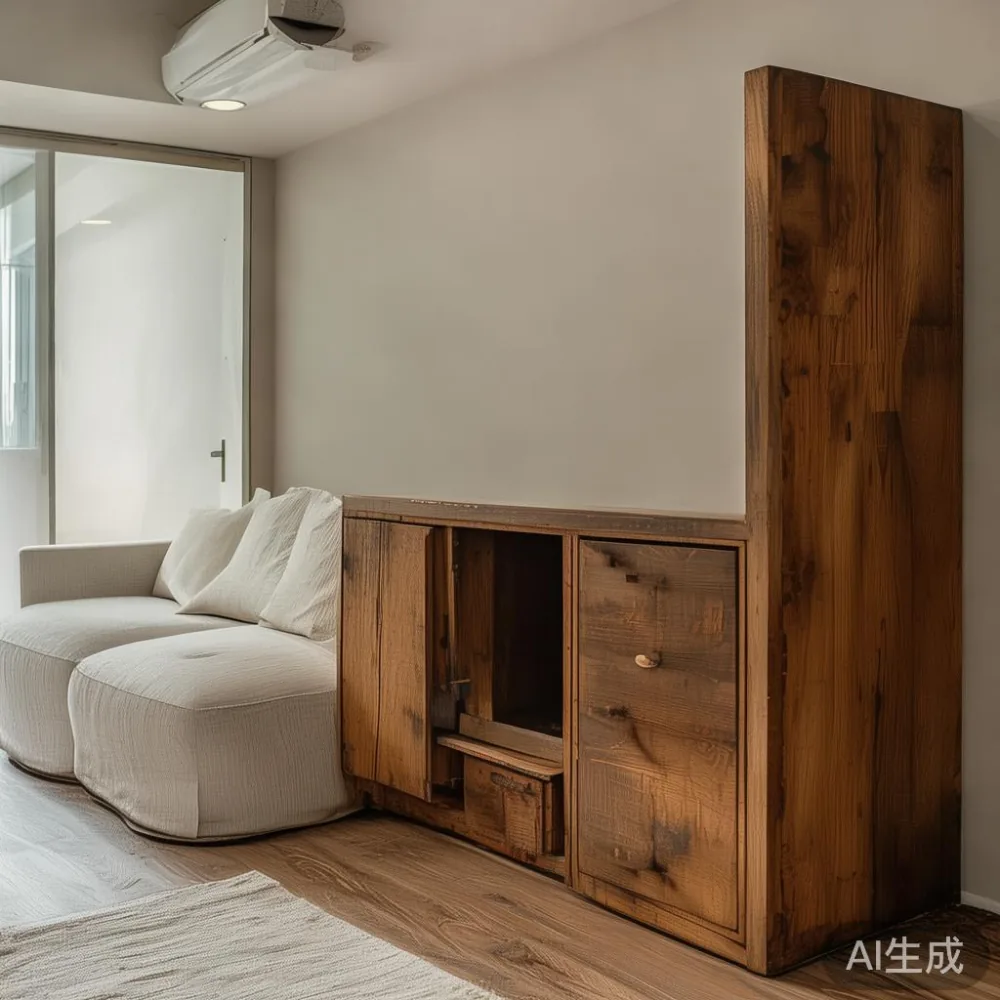
Wood is hygroscopic. It absorbs and releases moisture until it finds equilibrium with the air around it. In Foshan, where many Southeast Asian-bound pieces are produced, factory moisture content is typically dried to between 8 percent and 12 percent. When that same board lands in a Tampines condo with 75 percent indoor humidity, it slowly drinks moisture from the air and expands. Across a 180 cm dining table, even a 1 percent rise in moisture content can add 1.5 to 2 mm of width. Multiply that across a wardrobe door or a set of drawers and you begin to see why a door that closed perfectly in the showroom starts sticking in March. Understanding this movement is the difference between furniture that lasts a decade and furniture that warps within two monsoon seasons.
What humidity level actually damages solid wood in Singapore homes?
The danger zone sits above 70 percent relative humidity for extended periods, which is precisely the range most HDB flats and condos sit in between November and February during the northeast monsoon. At 70 percent to 80 percent RH, solid oak, ash, and walnut absorb moisture, swell along the grain, and put stress on glue joints and panel construction. Below 55 percent, the same wood shrinks, and you start to see hairline cracks along the top of a solid wood bed frame or gaps appearing between floorboards of a wardrobe. The sweet spot for wood furniture is 45 percent to 60 percent RH, with a stable room temperature around 24 to 26 degrees Celsius. A small digital hygrometer costs around SGD 18 to SGD 35 at any Challenger outlet in Tampines Mall and pays for itself within a year by preventing a single cracked dining tabletop.
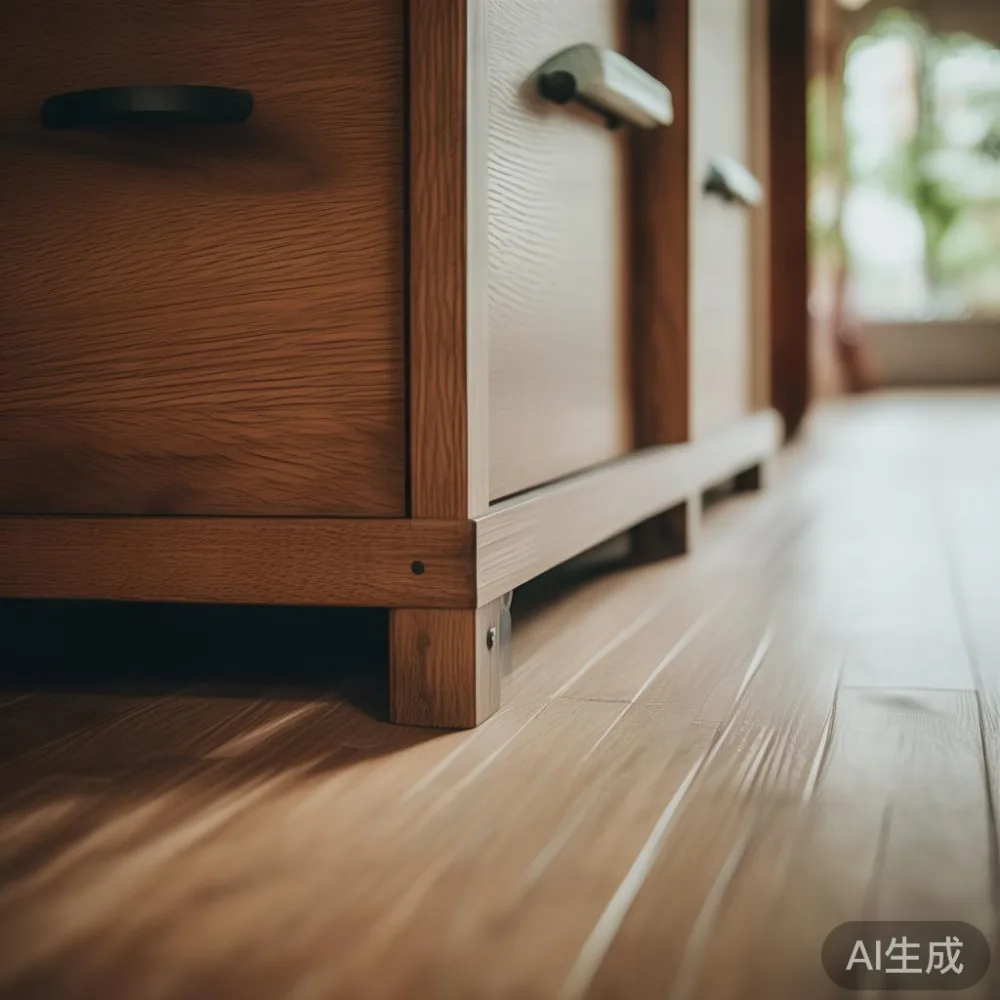
How does humidity damage specific furniture categories?
Different pieces fail in different ways, and knowing the failure mode helps you prevent it.
Solid wood sofas with wooden frames: The kiln-dried oak or ash frame inside a solid wood sofa swells at the joints. Over six to twelve months of high humidity, you may notice the arms tighten against the cushions or the backrest panel bow outward by 2 to 3 mm. Quality joinery using mortise and tenon or dowel construction absorbs this movement. Stapled or only-glued frames do not.
Bed frames, including king and queen sizes: A 180 cm by 200 cm king bed frame made from solid rubberwood or oak will expand roughly 3 to 5 mm across the headboard slats during peak monsoon. The slats then press against the side rails, and if the frame has no expansion gap, the headboard develops a vertical crack. French light luxury bed designs, with their restrained profiles and exposed joinery, show these movements more honestly than painted pieces, which is why I often recommend them to owners who want to see and manage the issue early.
Dining tables: Tabletops are the most exposed surface. Heat from a claypot, steam from a hotpot, and condensation from an iced glass all drive rapid local moisture changes. A 160 cm by 90 cm table can cup 1 to 2 mm across its width if one side dries out under afternoon sun while the other sits in shadow.
Wardrobes and tall storage cabinets: These are the most vulnerable because they present a large vertical surface area and are usually pushed against a wall that traps moisture. HDB bedroom walls in newer BTO flats are prone to surface condensation in the early morning, and a wardrobe back panel sitting against that wall can wick moisture and develop black spotting within eighteen months.
Nightstands and small cabinets: Drawer fronts warp first because they are usually solid panels with grain running one direction. A drawer that closes in October may stick shut by January.
Marble or stone-topped accent tables: The stone itself is unaffected, but the wooden base moves underneath it. If the base swells and the stone top cannot move, the top can crack along a vein. This is one reason a well-engineered piece with a floating top and felt-lined mounting slots is worth the extra SGD 200 to SGD 400.
How do I style a French king bed in a small apartment?
A French king bed works in a Singapore HDB flat when you treat the bed as the architectural anchor and keep the visual field around it quiet. Choose a low-profile solid wood frame with a 110 cm to 120 cm headboard, leave 70 cm of walking space on at least one side and 50 cm on the other, and use linen bedding in muted sage, oatmeal, or clay tones to echo the natural wood without competing with it. French light luxury styling leans on proportion and restraint rather than ornament, so one large European accent chair in bouclé at the foot of the bed, a single travertine nightstand, and a single ceramic table lamp will read as intentional rather than crowded.
What humidity control actually works in a HDB or condo?
Mechanical dehumidification is the only reliable answer. A standard 12 L per day compressor dehumidifier running eight hours overnight costs roughly SGD 6 to SGD 9 per month in electricity at current SP Group tariffs and keeps a 90 sqm four-room flat between 55 percent and 62 percent RH. Place the unit in the bedroom or the corridor area, not inside a closed wardrobe, and empty the tank or run a permanent drain line to the bathroom. For garage storage owners who keep tools, leather, or paperwork in the unit, the same dehumidifier protects those items and your wooden garage storage cabinets at the same time.
Air conditioning helps but is not enough on its own. Most split units dehumidify as a side effect of cooling, but they cycle off once the room hits the setpoint, and humidity creeps back within an hour. Run the fan mode separately if your unit supports it. For owners of larger condos in the 120 to 180 sqm range, a whole-home dehumidifier integrated with the aircon system starts around SGD 2,800 installed and protects every piece of solid wood furniture in the home.
Ventilation matters more than most people think. Lift and corridor widths in newer BTO blocks run about 1.1 m to 1.3 m, which is fine for moving a flat-pack wardrobe but means you cannot always leave internal doors propped open for airflow. Use door undercuts or install transfer grilles at the bottom of bedroom doors to allow moisture to migrate toward the dehumidifier rather than pooling in a sealed room.
Which wood species survive Singapore humidity best?
Not all hardwoods behave the same. The table below reflects what I have observed across roughly forty installations over the past six years.
Rubberwood (Hevea brasiliensis): Dense, stable, and the most common species in mid-range Southeast Asian furniture. Moves about 1.8 percent tangentially between 60 percent and 80 percent RH. A good balance of cost and performance, and widely used for solid wood sofas, dining tables, and bed frames exported from Foshan workshops.
White oak (Quercus alba): Contains tyloses that block the pores and slow moisture exchange. Movement is roughly 1.5 percent tangential, and the wood handles Singapore humidity gracefully when properly sealed with a hardwax oil. Expect to pay 25 percent to 40 percent more than rubberwood for an equivalent dining table.
Teak (Tectona grandis): The traditional Southeast Asian choice. Natural oils resist moisture uptake, and movement is below 1 percent tangential. Excellent for wardrobes and outdoor-adjacent pieces, but harder to source in long clear lengths and priced accordingly, often SGD 2,200 to SGD 3,800 for a 180 cm wardrobe.
Ash (Fraxinus americana): Similar stability to oak, with a lighter colour that suits American light luxury interiors. Open grain means it finishes well but needs a more frequent oil top-up, roughly every 14 to 18 months in Singapore conditions.
Walnut (Juglans nigra): Beautiful but more reactive. Movement around 2.2 percent tangential. I only recommend walnut for owners who commit to keeping the home between 50 percent and 60 percent RH year-round.
Mango and acacia: Budget-friendly, with movement in the 2.5 percent to 3 percent range. Acceptable for garage storage shelving or secondary bedroom pieces but not for a hero dining table.
How should buyers in Singapore evaluate a piece before purchase?
A showroom visit tells you more than any product page. Bring a small digital hygrometer and check the showroom RH. If it reads above 65 percent and the piece looks tight, ask the sales consultant to explain the joinery. Run your palm along the underside of a tabletop or wardrobe top panel. If the surface feels cold and damp, the wood has been absorbing moisture even in an air-conditioned space, and you should expect it to move once it reaches your home.
Ask for the moisture content reading at the time of packing. Reputable Foshan exporters including manufacturers such as MIDHILL kiln-dry to 10 percent to 12 percent and document the reading. If the seller cannot or will not provide this number, walk away. A solid wood bed frame that ships at 14 percent moisture will arrive in Singapore already stressed and will move an additional 2 percent to 3 percent in the first month.
Check the construction details. Drawers should slide on metal runners, not on wooden runners that swell. Wardrobe backs should be 12 mm to 18 mm panels, not 6 mm hardboard. Bed frame slats should sit in individual pockets with 2 mm to 3 mm of expansion room. Tabletops wider than 90 cm should have breadboard ends or metal corner brackets that allow the centre to move independently of the edges.
What about delivery, warranty, and after-sales in the local context?
Shipping a 2.4 m wardrobe from a Chinese workshop to a Singapore HDB flat involves sea freight, customs clearance, GST at 9 percent on the landed value, and last-mile delivery through the lift. Standard HDB lifts measure 1.1 m wide by 1.4 m deep with a door opening of about 0.9 m, which constrains the largest single piece you can bring in without disassembly. Confirm with the seller that the wardrobe can be split into modules under 95 cm wide or that on-site assembly is included. Free shipping thresholds matter: most Foshan sellers set the cutoff at US$350 to US$500, which lands around SGD 480 to SGD 680 including the 9 percent GST.
A 10-year structural warranty is the realistic minimum for any solid wood piece you intend to keep through a full HDB lease cycle. Read the warranty wording carefully. Structural coverage should include joint failure, frame cracking, and drawer runner defects. It should not be limited to manufacturing defects visible on the day of delivery, because most humidity-related issues surface in months three through eighteen. Lifetime refinishing is rarer and more valuable than it sounds. A dining table that has been refinished once after eight years will outlast three cheaper tables, and the per-year cost falls to roughly SGD 40 to SGD 60 if refinishing is included. MIDHILL, for example, pairs a 10-year structural warranty with lifetime refinishing and a 14-day return window, which fits the way Singapore owners actually use their furniture across a long stay in one flat.
What daily habits keep wood furniture stable in a tropical climate?
Small routines compound. Wipe condensation off marble table surfaces and nightstands within fifteen minutes of it appearing. Rotate dining chairs so the same chair does not sit under the aircon vent every day. Pull wardrobes 5 cm away from the wall so air can circulate behind them, especially on external walls in older blocks in Bedok and Tampines where the wall itself can run 2 to 3 degrees cooler than the room and condense moisture. Keep silica gel packs inside drawers and on wardrobe shelves and replace them every six months. Avoid placing a solid wood bed frame directly under a window that gets morning sun, because the daily thermal cycle drives shrinkage and swelling faster than humidity alone. Run the dehumidifier in the bedroom from 11 pm to 7 am during the December to March monsoon.
If you follow these routines, expect a solid wood dining table to last 15 to 25 years in Singapore, a bed frame 20 to 30 years, and a wardrobe 25 years or more. The pieces I installed in Punggol and Sengkang in 2014 still look presentable today, and the owners spent roughly SGD 200 per year on electricity and consumables to maintain them. That is the real economics of solid wood furniture in Southeast Asia: a higher upfront cost than engineered wood or laminate, offset by longevity and the simple pleasure of living with material that breathes with the climate rather than fighting it.