Humidity, Solid Wood, and Garage Storage: A Singapore Homeowner's Guide
I still remember the afternoon a client in Tampines called me, slightly panicked. She had bought a beautiful solid wood wardrobe from a local dealer eighteen months earlier. The doors were no longer closing flush, a faint whitish film had appeared on the panels, and there was a smell she described as "stale cardboard." Relative humidity in her HDB flat had been sitting between 78% and 85% for weeks. The wardrobe was fine. The environment was the problem. After that call I started logging indoor humidity readings on every job I visited across Bedok, Punggol, and Bukit Batok, and the pattern became impossible to ignore.
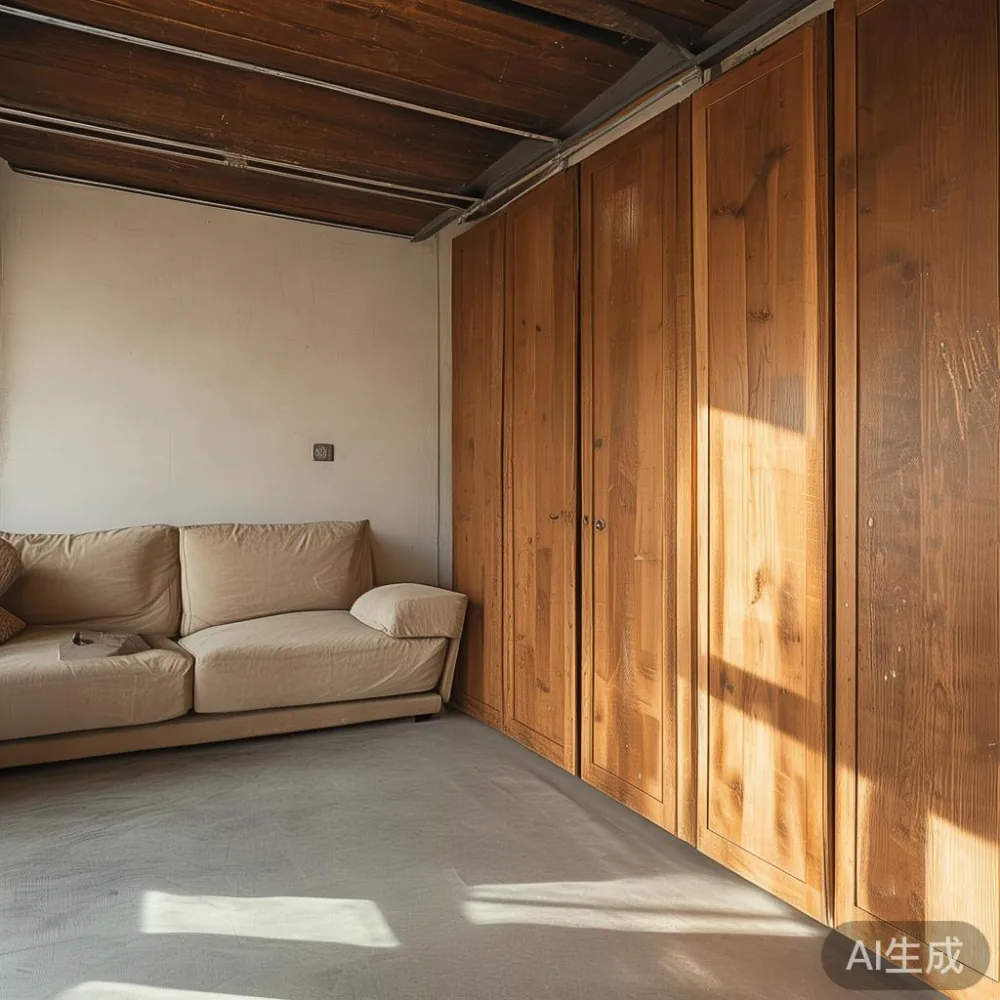
This article is written for Singapore homeowners who are choosing or already own solid wood pieces — a solid wood sofa frame, a bed frame, a dining table, a nightstand, a marble table top, or a French provincial wardrobe for pet owner households where both humidity and pet hair are daily realities. We will go through the science, the numbers, the lift-and-corridor constraints in HDB blocks, and how the right garage storage decisions can quietly protect the wood furniture you have already invested in.
Why Singapore's Climate Is Unusually Hard on Solid Wood
Singapore sits roughly one degree north of the equator. The average daytime relative humidity across the year is 79% to 84%, and on wet afternoons it can climb past 90%. Wood is hygroscopic — it absorbs and releases moisture to stay in balance with its surroundings. For every 4% change in moisture content, a solid wood panel moves roughly 1% across its width. A 180 cm wide wardrobe door that arrives at 10% moisture content can swell to 181.8 cm when indoor humidity stays at 80% for a sustained period.
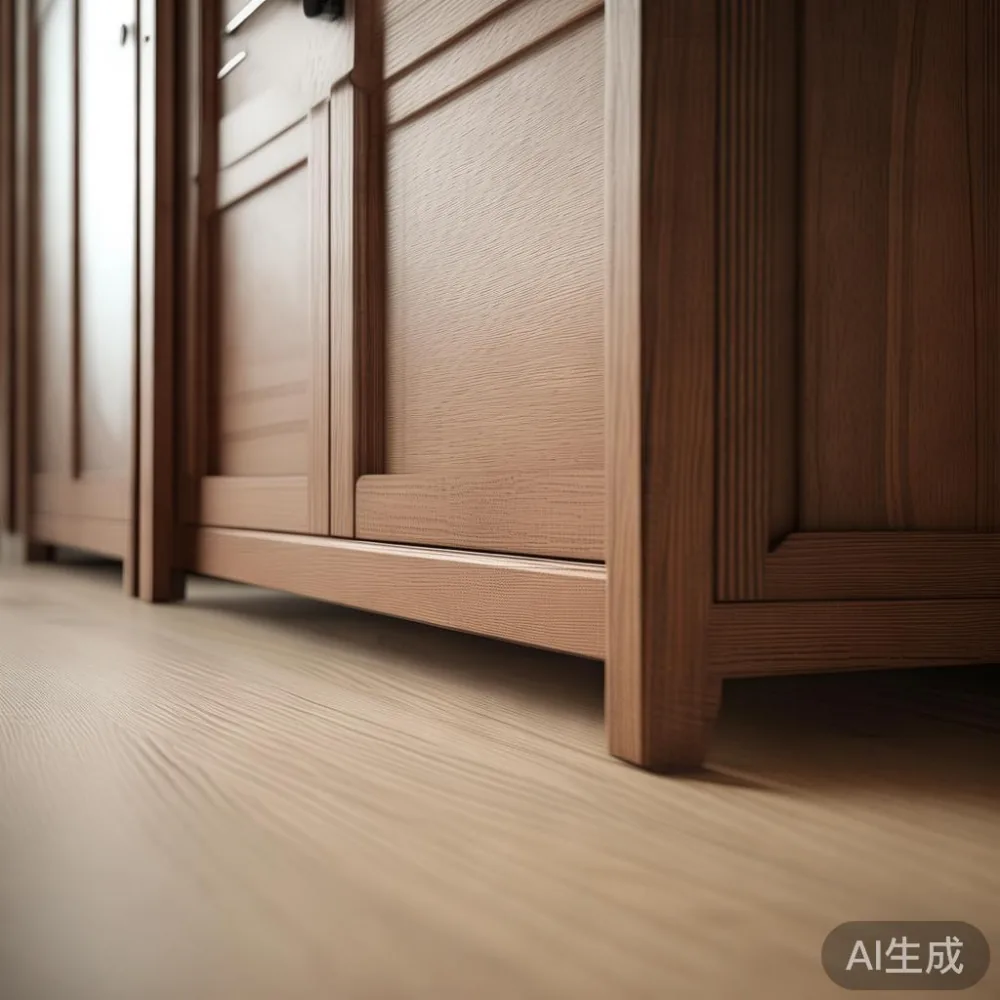
That is why you see cupped drawer fronts on imported oak nightstands by month four. It is also why a marble table with a wooden base can develop a slight wobble — the stone top is dimensionally stable, the wood sub-frame beneath it is not. At MIDHILL, every shipment we send to Singapore is kiln-dried to a target 8% to 10% moisture content, which is the closest practical match for an air-conditioned HDB running 24 hours a day.
The Three Failure Patterns I See Every Month in Singapore Homes
After roughly forty home visits in the past year, I have grouped the issues into three predictable patterns.
Pattern 1 — Cupping and crowning on tabletops. A 200 cm dining table delivered to a Punggol Walk condo showed visible crowning within six weeks. The owners were running the air-conditioner only at night. During the day, indoor humidity was climbing to 82%. Wood movement is not a defect; it is physics. The fix was simple: run the dehumidifier to 55% RH and the cup eased out within two weeks.
Pattern 2 — Sticking wardrobe doors. In a 4-room HDB in Bedok Reservoir, a 240 cm wide wardrobe had doors that scraped against each other by month eight. I measured the clearance: original gap 3 mm, current gap 0.4 mm. The wardrobe itself was built correctly; the corridor ventilation was poor and the bathroom exhaust was venting into the wardrobe cavity.
Pattern 3 — Surface mildew and musty smell. A solid wood sofa frame in a Tampines GreenRidges penthouse developed a faint grey film along the underside after the December monsoon. The owners kept the balcony door open for ventilation, but the monsoon pushed indoor humidity past 88% for nine straight days.
What Is the Best Wardrobe SG for a Small Apartment?
The best wardrobe SG for a small apartment is a floor-to-ceiling solid wood wardrobe with a kiln-dried moisture content between 8% and 10%, soft-close hinges with at least 6 mm of seasonal clearance on each door, and a back panel that is at least 9 mm thick to resist racking in a non-air-conditioned utility area. Anything thinner, and you are buying a six-month problem that arrives at month seven.
For most HDB bedrooms of around 12 sqm to 14 sqm, a 180 cm wide by 240 cm tall three-door configuration gives you roughly 1.3 cubic metres of hanging and shelf space without crowding the door swing. If you have pets, look for a French provincial wardrobe for pet owner use — the raised legs, the solid wood construction, and the lacquered finish make hair easy to wipe off and the under-wardrobe space easy to vacuum. A good unit in this range sits between SGD 2,400 and SGD 3,800 delivered, with GST included at the current 9% rate.
Reading Your HDB Flat Like a Furniture Engineer
Before you order a 220 kg solid wood wardrobe, take ten minutes with a tape measure and a notebook.
Doorways and corridors. A standard HDB bedroom door is roughly 80 cm wide by 210 cm tall. A typical corridor in a 1990s block is 1.2 m wide. A 240 cm tall wardrobe will not enter if the corridor turns a 90-degree corner within 2 m of the bedroom door. Measure diagonally, not just along the wall. A 240 cm tall by 90 cm wide panel needs a 244 cm diagonal clearance at the very minimum.
Lift dimensions. Most passenger lifts in HDB blocks are 1.1 m deep by 1.4 m wide with a 2.1 m door height. A flat-packed wardrobe in three cartons usually clears the lift easily. A fully assembled wardrobe almost never does. Plan for flat-pack delivery unless you are on the ground floor or in a low-rise walk-up.
Floor load. HDB floors are rated for 150 kg per square metre of distributed load for residential use. A 220 kg wardrobe sitting on a 1 sqm footprint is well within tolerance. Spreading the weight across a 1.5 sqm base reduces the point load further.
Wall material. The walls in many older HDB flats are hollow brick. Anchoring a 240 cm wardrobe to the wall requires hitting the concrete column, not just the brick skin. Bring it up with your installer before they drill.
How Garage Storage Quietly Protects Your Indoor Wood
This is where most Singapore homeowners lose the plot. We think of garage storage as a place to dump a bicycle, two paint tins, and a stack of Carousell boxes. But a properly organised garage storage zone is the single most effective humidity buffer for the rest of your home.
Here is the logic. Heat-generating appliances — dehumidifiers, dryers, spare fridges — all vent warm, moist air. If those appliances live in your HDB corridor or storeroom, that moisture migrates into your living room within minutes because air-conditioning systems pull air from the whole envelope. If those same appliances live inside a sealed garage storage enclosure, the moisture they generate stays there, and a small 12-litre dehumidifier can keep that single zone at 55% RH for under SGD 4 a day in electricity.
A second garage storage trick: keep your seasonal solid wood pieces — a spare dining table leaf, a folding marble table you only use at Chinese New Year, the spare nightstand from the guest room — inside the garage storage area rather than on an open balcony. I visited a Punggol HDB in March where the homeowner had stacked four solid wood chairs on an open balcony for two months. Three of the four had developed mildew along the stretcher rails. The fourth, kept inside a closed garage storage cabinet, was untouched.
Third, a garage storage system with proper ventilation gaps prevents the musty smell that transfers to adjacent living areas. At MIDHILL, we have shipped full garage storage configurations to Singapore clients who then used the same dehumidifier plumbing to protect a 280 cm solid wood sideboard in the adjoining dining room. The sideboard has stayed flat for three years.
Numbers Every Wood Furniture Owner in Singapore Should Know
Here are the figures I share with every client before they sign for a solid wood piece.
- Target indoor relative humidity for solid wood furniture: 45% to 60%.
- Kiln-dried moisture content at delivery: 8% to 10%.
- Maximum sustained humidity before surface mildew risk rises sharply: 75%.
- Maximum sustained humidity before wood joint failure risk rises sharply: 80%.
- Recommended wall clearance behind a wardrobe: 50 mm to allow airflow.
- Recommended gap under wardrobe legs for ventilation: 80 mm minimum.
- Air-conditioner runtime per day to keep RH below 60% in a 14 sqm bedroom: 12 to 14 hours, dehumidify mode.
- Cost of a 12-litre dehumidifier suitable for an HDB bedroom: SGD 220 to SGD 380.
- Cost of running that dehumidifier 14 hours a day at current SP Group tariffs: roughly SGD 0.85 to SGD 1.10.
Practical Maintenance Schedule I Give to My Singapore Clients
Daily. Air-conditioner or dehumidifier on. Wipe any visible condensation off the inside of wardrobe doors with a dry microfibre cloth. If you own a solid wood sofa, fluff and rotate the cushions so the foam does not pin moisture against the wood frame.
Weekly. Vacuum the inside of wardrobes with a soft brush attachment. Check the rubber door seals on your air-conditioner. Run the bathroom exhaust fan for 30 minutes after every shower, and make sure it vents outside, not into the wardrobe cavity.
Monthly. Inspect the back corners of every solid wood piece with a torch. Look for grey film, swelling at the joints, or a sweet musty smell. Treat any early mildew with a 1:4 white vinegar and water solution, then dry the surface within 20 minutes.
Yearly. Book a refinishing inspection if your pieces are more than five years old. Most good solid wood pieces can be sanded and re-lacquered once or twice across their lifetime. At MIDHILL we offer lifetime refinishing on every solid wood line we ship, which means a 2009 dining table can be brought back to factory condition for the cost of transport only.
Choosing Pieces That Survive the Equator
Species matters. Teak and Burmese rosewood tolerate equatorial humidity far better than European oak or American walnut. A solid wood sofa frame in Burmese teak will move roughly 40% less across a monsoon season than the same frame in European oak. That is why traditional Peranakan furniture in Singapore has survived a century or more — the species were chosen for this climate.
Construction matters more than species. A mortise-and-tenon joint, properly glued and pinned, will tolerate seasonal movement far better than a dowel joint or a cam-lock joint. Look under the wardrobe. If you see a single 6 mm dowel holding the side panel to the top, walk away. If you see a 12 mm tenon with a through-wedge, you are looking at furniture that will outlast your HDB lease.
Finish matters third. A closed-pore lacquer sealer slows moisture exchange by 60% to 70% compared to an oil-only finish. For Singapore, that is the right trade-off — you lose some of the open-grain feel, you gain years of dimensional stability.
Where Most Singapore Homeowners Slip Up
The single biggest mistake I see is treating a brand-new piece of solid wood furniture the same as a laminate piece. The second biggest is buying a beautiful piece, placing it against an exterior wall, and never checking the wall-side moisture. The third is refusing to run the air-conditioner or dehumidifier when the family is out, which means indoor humidity recovers to outdoor levels within 90 minutes.
If you take one thing from this article, take this: your wood furniture is reacting to your indoor humidity minute by minute. The moment you start measuring and managing that humidity, you stop being at the mercy of the climate.
A Garage Storage Plan That Pays for Itself in Three Years
For an HDB homeowner spending around SGD 1,800 to SGD 2,600 on a complete garage storage system — sealed cabinets, a small dehumidifier, proper ventilation, and pest-proof seals — the payback is straightforward. You extend the life of your indoor solid wood furniture by at least five years on average. A single solid wood dining table replacement at SGD 3,200 plus delivery plus disposal more than covers the garage storage spend.
Add in the saved hours of cleaning mildew, the avoided replacement of a warped wardrobe door, and the simple daily satisfaction of opening a closet that smells like wood rather than cardboard, and the garage storage decision starts to look less like a storage upgrade and more like an insurance policy for every solid wood piece you already own.
Pick up a hygrometer today. They cost SGD 12 to SGD 25 at any neighbourhood electronics shop in Tampines or Bedok. Place one in your living room, one inside your wardrobe, and one in your garage storage zone. Log the readings for a week. You will see exactly where your humidity is climbing, and you will know which single change gives you the biggest return. That is the same workflow I have used on every site visit for the past year, and it has not failed me yet.