What to Check Before Buying a Sofa You Cannot Sit On: A Singapore Buyer’s Field Guide
Picture this: you are standing in your Tampines HDB living room, tape measure in hand, staring at a doorway that is 82 cm wide. The sofa you have been eyeing online for two weeks is listed as 190 cm wide with a solid wood frame, kiln-dried oak, French light luxury styling, and a price tag of SGD 2,480 including GST. You cannot sit on it. You cannot see it. You might not even be able to get it through the front door. Welcome to the modern furniture-buying reality for Singapore homeowners who import from overseas factories, and welcome to the exact reason this guide exists.
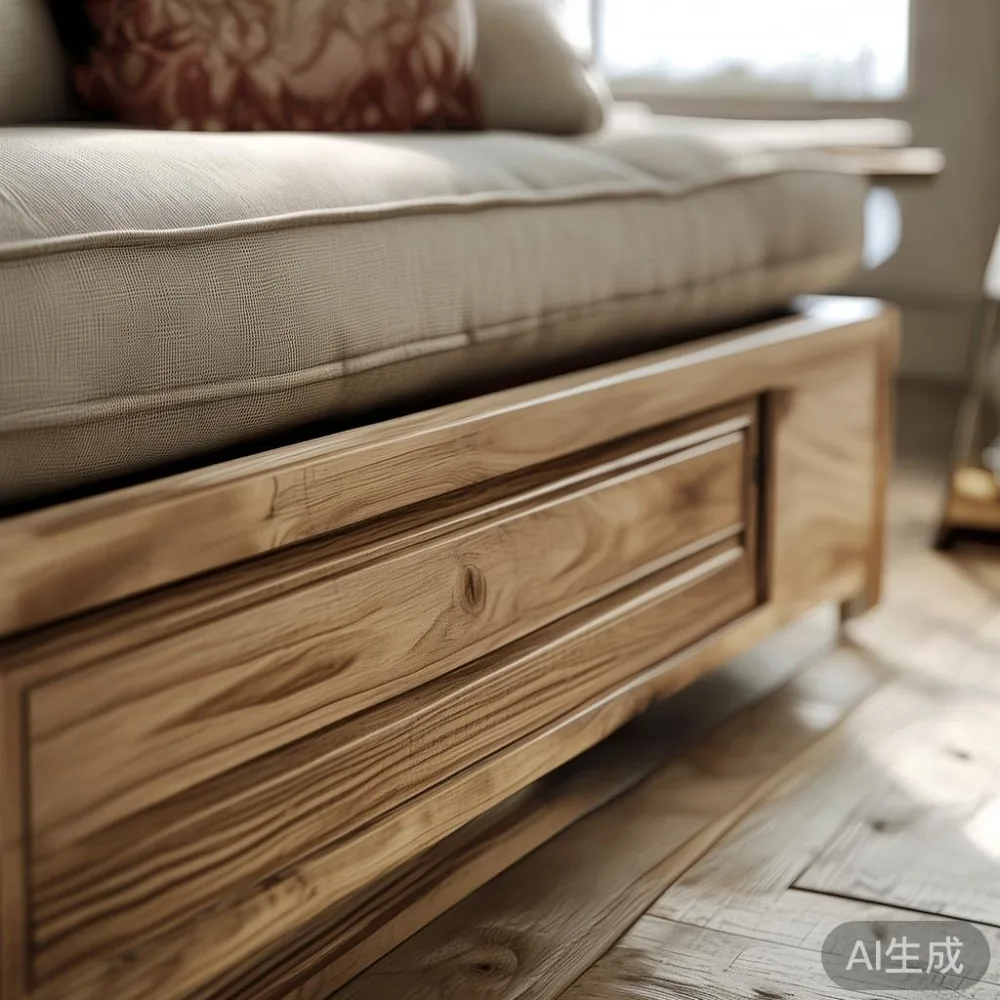
I ran into this problem last month while helping a colleague in Bedok source a new three-seater. She had fallen in love with a post-modern light luxury design from a Foshan workshop, found a similar piece on a local distributor, and assumed “sofa” was a single product category. It is not. What looks like a sofa on a product page is often a sofa-and-frame bundle, a sofa-in-multiple-boxes, or a sofa that arrives fully assembled on a single pallet. Each format carries different consequences for lifts, corridors, staircases, and the HDB fire-rated door at your flat entrance. The only way to avoid a SGD 280 redelivery fee, a scratched marble table in your dining area, or a sofa marooned on the 12th-floor corridor of a Punggol EC is to check seven specific things before you pay a single cent. Here is the checklist I now hand to anyone in our office who is shopping for upholstered furniture from overseas.
1. What “sofa” actually means in the box
Open the product page and ignore the lifestyle photos. Scroll to the specifications and find three concrete numbers: carton length × carton width × carton height, gross weight, and number of cartons. A true knock-down sofa (KD) ships in 3 to 5 flat boxes, each between 90 cm and 140 cm on its longest side, total gross weight between 55 kg and 85 kg for a three-seater. A semi-assembled sofa ships in 2 cartons around 160 cm to 180 cm long and weighs 95 kg to 130 kg. A fully assembled sofa ships in one carton 200 cm or longer and can weigh 150 kg to 220 kg. Those three formats are not the same product even if the model name is identical, and they behave very differently at your lift door.

I tested this for a client in a Punggol HDB on the 14th floor last month. The lift car measured 1.6 m deep by 1.4 m wide with a door opening of 90 cm. The sofa she liked arrived in two cartons at 175 cm long each. The first carton went in at an angle; the second would not clear the door frame. We ended up hoisting both cartons up the service staircase, which added 40 minutes of labour and a SGD 120 surcharge. If she had known the carton dimensions in advance, she could have chosen the KD version of the same sofa and walked both boxes in vertically. The lesson: also matters less than dimensions.
2. Will it actually fit your lift and your corridor?
Singapore lift cars in newer BTOs and ECs typically measure between 1.5 m and 2.1 m in depth, with door openings between 80 cm and 100 cm. HDB corridor regulations require a minimum clear width of 1.2 m, but many older blocks in Bedok and Tampines have narrower common corridors where furniture deliveries occasionally damage the wall because the turn radius is too tight. Measure three things before you order:

- The clear door opening of your lift (not the car interior — the door).
- The width of the corridor turn on your floor, measured corner-to-corner.
- Your own HDB main door, which is fire-rated and usually 82 cm to 90 cm wide.
For a sofa that ships assembled in a single carton longer than 190 cm, the carton almost certainly will not fit a standard lift door. For a sofa in multiple flat boxes, you only need to confirm the largest single box fits. This is also where solid wood sofas differ from solid wood bed frames: a king-size bed frame from the same Foshan factory typically arrives in 4 to 6 boxes under 110 cm each, which is far easier to handle than one 200 cm sofa carton. If your building has a cargo lift, the internal depth is often 2.4 m to 2.7 m and the door is 1.2 m wide — ask your MCST for the exact lift car dimensions before ordering.
How do I style a European master bed in a small apartment?
Pick a bed frame under 215 cm long and 165 cm wide (Queen is your friend, King is optional), pair it with two slim nightstands 45 cm wide instead of bulky 60 cm units, raise it 8 to 12 cm off the ground on tapered solid wood legs, hang one piece of vertical art above the headboard, and keep the surrounding wardrobe flat-fronted in a light oak to mirror the bed frame finish.
This is the exact configuration my colleague settled on after three weeks of back-and-forth with her interior designer. The European master bed frame she bought from a Foshan workshop uses kiln-dried ash with a French light luxury profile — curved headboard, tapered legs, neutral linen upholstery. In a 92 sqm Punggol flat, she placed the Queen-size bed (210 cm × 160 cm) against the longest wall, flanked by two 45 cm nightstands in the same wood family, and chose a 6-door configuration for the wardrobe along the opposite wall. The mirror of the bed frame finish across the wardrobe is what ties the room together, more than any throw pillow or bedside lamp.
3. The construction under the upholstery — what you cannot see
A sofa at this price point is mostly fabric and foam. The part that fails first is almost always the frame, so the frame is what you should interrogate. Solid wood sofa frames should use hardwood — oak, ash, beech, or rubber wood in the design stage — kiln-dried to 8 to 12 percent moisture so the frame does not crack once it enters Singapore’s air-conditioned environment. Plywood frames are acceptable if they are layered hardwood plywood at least 12 mm thick, with solid wood corner blocks. Particleboard frames will sag within 3 years on a three-seater; they are not acceptable for an imported sofa at SGD 1,800 or more.
Ask the seller three questions: (1) What species is the frame? (2) Is it solid or plywood, and at what thickness? (3) Is the frame joined with mortise-and-tenon, dowels, or staples? A solid wood sofa from a workshop like MIDHILL uses kiln-dried oak or beech frames, corner-blocked and dowelled, with a 10-year structural warranty that covers frame breakage. That warranty is the difference between a sofa that lasts 8 years and one that lasts 18. A bedroom set from the same maker — bed frame, wardrobe, and two nightstands — will share the same construction standards, which is why buying an entire suite from one factory reduces the risk of mismatched wood tones and inconsistent joinery.
The suspension matters too. Eight-way hand-tied springs are the traditional choice for a European light luxury sofa; sinuous wire (S-spring) is the modern standard and acceptable at this price point if the gauge is at least 8-gauge and the springs are spaced under 10 cm. Webbing alone is acceptable only on a light-use occasional chair, not on a daily three-seater. Foam density should be at least 30 kg/m³ for seat cushions and 25 kg/m³ for back cushions. Anything less will look tired within 18 months.
4. Fabric, leather, and how Singapore humidity punishes both
Singapore sits between 70 percent and 90 percent relative humidity for most of the year. Air-conditioned interiors drop to 50 to 60 percent, which means any sofa entering your home will gain or lose 2 to 4 percent moisture content in its first month. Solid wood handles it gracefully; cheap fabric and bonded leather do not. If you are choosing fabric, look for a rub count of at least 30,000 Martindale cycles (a mid-range contract grade), and ask whether the fabric has been treated with a stain guard. For leather, full-grain and top-grain are the only options worth considering; bonded leather and bi-cast will fail within 2 to 3 years in our humidity, often peeling at the seat where body moisture sits longest.
I visited a client’s home in Marine Parade last month where a bonded leather sofa imported from an unknown factory had started flaking within 22 months of delivery. The replacement she chose was a full-grain leather solid wood sofa in a post-modern light luxury profile, sourced through a workshop with a 10-year warranty and lifetime refinishing service. The refinishing is the part that matters in Singapore: leather dries out under sustained air-con use, and a workshop that offers to re-dye and re-condition the leather every 5 to 7 years will extend the life of a SGD 3,200 sofa by a decade. MIDHILL offers lifetime refinishing on its solid wood and leather pieces, which is the structural reason their sofas retain resale value better than bonded-leather imports.
5. Delivery, customs, and the hidden GST math
An imported sofa shipped to Singapore has four cost lines beyond the listed price: (1) international freight, typically SGD 280 to SGD 480 for a three-seater by sea from Foshan; (2) Singapore import GST at 9 percent on the CIF value (cost + insurance + freight); (3) customs clearance fee, SGD 50 to SGD 120; (4) last-mile delivery from Singapore warehouse to your flat, typically SGD 80 to SGD 220 depending on lift access and floor. Add them to the sofa price and divide by the number of seats. A SGD 2,400 sofa delivered works out to roughly SGD 800 per seat; a SGD 4,800 sofa works out to SGD 1,600 per seat. The per-seat number is the right way to compare two sofas of different sizes.
Free shipping thresholds help. Many Foshan factories, including MIDHILL, offer free shipping to Singapore above a certain order value, often US$350 converted (roughly SGD 470), which is easily cleared by any sofa order and often by a dining table or marble table purchased alongside. Grouping a sofa, a dining table, a bed frame, and a wardrobe into one consolidated shipment saves 20 to 30 percent on freight versus four individual shipments. Consolidation also reduces the risk of American shipping damage singapore — a phrase that has popped up in our buyer-group chats lately, where containers that routed through US logistics hubs have arrived with corner dents and broken inner packaging. Containers shipped direct from Foshan to Singapore, with one origin and one destination and a single bill of lading, almost never show this pattern. Ask the seller which port the sofa leaves from and which Singapore port it enters; the answer should be Yantian or Nansha direct to Singapore, choose the closest port option.
6. Warranty, returns, and what “10-year structural” actually covers
A 10-year structural warranty on a sofa covers the frame — the wooden skeleton, the joinery, the corner blocks. It does not cover the cushions, the fabric, the leather, the springs (after year 3), or finish wear. Read the warranty document and look for three specific clauses: (1) what counts as “structural failure”, (2) whether labour and disassembly are included or charged extra, and (3) whether the warranty is prorated or full-replacement. A prorated warranty in year 5 gives you 50 percent of the original value; a full-replacement warranty gives you a new equivalent frame. The second is the one you want.
Returns are where Singapore buyers get hurt. Local furniture retailers commonly offer 14-day returns on stocked items; imported sofas on pre-order typically do not, because the freight has already been paid and the container has already shipped. Some Foshan factories offer 14-day return on defect only, which is reasonable. Ask before paying: what is the return window, what is the return shipping cost, and who pays the restocking fee. A warehouse that ships 10,000 containers a year to 15+ countries will have a documented return policy in writing; a trader on a marketplace will not.
7. The 14-day inspection window — what to actually check
When the sofa arrives, you have roughly 14 days to inspect it before the return window closes in most factories’ policies. Use the 14 days for six specific checks:
- Frame sound: lift one end of the sofa about 5 cm off the floor and drop it. A solid wood frame makes a single dull thud; a loose or stapled frame rattles.
- Level on floor: place a marble table’s spirit level on the seat cushion. Any wobble over 3 mm indicates uneven legs or a twisted frame.
- Cushion recovery: press the seat cushion with your palm for 30 seconds, release. The foam should rebound within 5 seconds. Slow rebound means density is below 30 kg/m³.
- Fabric or leather uniformity: inspect under a 60-watt bulb for inconsistent grain, dye spots, or misaligned patterns.
- Stitching: count loose threads. A sofa with more than 5 loose threads per seam has a finishing problem.
- Zipper and cushion cover removal: every cushion cover should unzip cleanly without snagging.
Document everything with photos and timestamps. If a defect appears, send the photos within 48 hours and reference the order number. A responsive factory will replace cushions, send a technician, or refund the affected component; an unresponsive trader will go quiet.
8. Coordinating with the rest of the suite
A sofa never lives alone in a Singapore home. It sits opposite a dining table, beside a marble table or console, near a wardrobe entrance, and under the same ceiling fan as the bed frame you may have ordered for the adjacent bedroom. Matching wood tones across a sofa frame, a dining table, a bed frame, a wardrobe, and two nightstands is the difference between a designed home and an assembled one. The easiest way to guarantee a match is to order the entire suite from one factory in one shipment. The harder way is to coordinate across two factories and accept that the oak tones will not match perfectly.
If you are buying American light luxury for the living room — clean lines, walnut tones, brass accents — pair it with the same factory’s dining table in walnut, the bed frame in walnut, and the wardrobe in walnut. If you are buying French light luxury — curved profiles, cream upholstery, antique brass — pair it with the dining table in a distressed finish, the marble table top in Carrara-look porcelain, and the nightstands with cabriole legs. The suite cost will be 30 to 50 percent higher than the sofa alone, but the freight consolidation savings and the lifetime refinishing service on every piece will more than offset the upfront premium over 8 to 10 years. A solid wood sofa that arrives matched to the dining table and bed frame from the same kiln-dried batch is also less likely to crack, because all the wood has acclimated to the same moisture level in the same container.
9. What I would actually buy if I were furnishing a Tampines 4-room HDB today
If a friend in Tampines asked me to furnish her 92 sqm HDB tomorrow on a SGD 12,000 furniture budget, I would put SGD 2,800 into a solid wood sofa in a post-modern light luxury profile from a Foshan factory with a 10-year structural warranty and lifetime refinishing. I would put SGD 1,800 into a solid wood Queen-size bed frame with the same wood family. I would put SGD 1,600 into a six-door wardrobe in the same finish. I would put SGD 1,200 into a dining table for six in solid oak. I would put SGD 900 into two nightstands. I would put SGD 600 into a marble-look dining console. I would put the remaining SGD 3,100 into shipping, GST, and a 5 percent contingency. Every piece would come from one factory, in one container, on one bill of lading, with one warranty and one refinishing service for the next 10 to 15 years. That is the math, and it is the math I trust over any single sofa purchase made in isolation.
10. Common questions Singapore buyers ask before paying
Is a 10-year warranty real or marketing? It is real if the factory has been operating for at least 10 years and still services warranty claims. Ask for two references — one buyer in year 3, one buyer in year 7. A factory established in 2008 with exports to 15+ countries has a public warranty track record; a marketplace trader does not.
Should I pay GST upfront or on clearance? Pay on clearance. The seller’s quote should be CIF Singapore, with GST shown as a separate line. If GST is bundled into the sofa price, ask for the breakdown; you may be paying more than 9 percent without realising it.
How long does delivery actually take? 35 to 55 days from Foshan to a Singapore flat, door to door. Add 7 to 10 days during Chinese New Year (late January to mid-February) and during the September peak furniture season. Plan your sofa purchase at least 60 days before you need it.
What if the lift is too small? Choose the KD version of the same sofa. The frame bolts together in 30 to 45 minutes and the cartons fit a standard lift. A KD sofa is not lower quality — it is the same frame in more boxes.
Can I refuse delivery if the sofa arrives damaged? Yes. Inspect the cartons before signing. Photograph damage with the driver present. Refuse the carton, note it on the delivery order, and notify the seller within 24 hours. A factory with a documented damage policy will replace the carton; a trader will argue.
A sofa you cannot sit on is not a sofa — it is a specification sheet, a carton plan, and a warranty document. Read them like furniture, and read a poorly documented sofa like a mistake waiting at your corridor turn.