What Really Drives the Price of Solid Wood Furniture (and Where Garage Storage Fits In)
I spent a Tuesday morning last month at a workshop in Foshan watching two craftsmen glue up a 2.4-metre dining table top. The boards were 4 cm thick FAS-grade white oak, planed by eye, sanded in three grits (120, 180, 220), then oiled twice. The foreman pointed at the offcut and said, "This piece of timber, after we dry it, machine it, and assemble it, has been touched by seven pairs of hands." That sentence stayed with me, because it captures exactly what a buyer in Tampines or Punggol is paying for when they pull the trigger on solid wood furniture instead of flat-pack veneer. In this article I want to walk through the actual cost drivers behind pieces like a solid wood sofa frame, a queen-size bed frame, a six-seater dining table, a three-door wardrobe, a nightstand, or a marble-topped side table, and explain why garage storage units made from the same timber behave like a quiet premium product rather than a hardware-store buy.
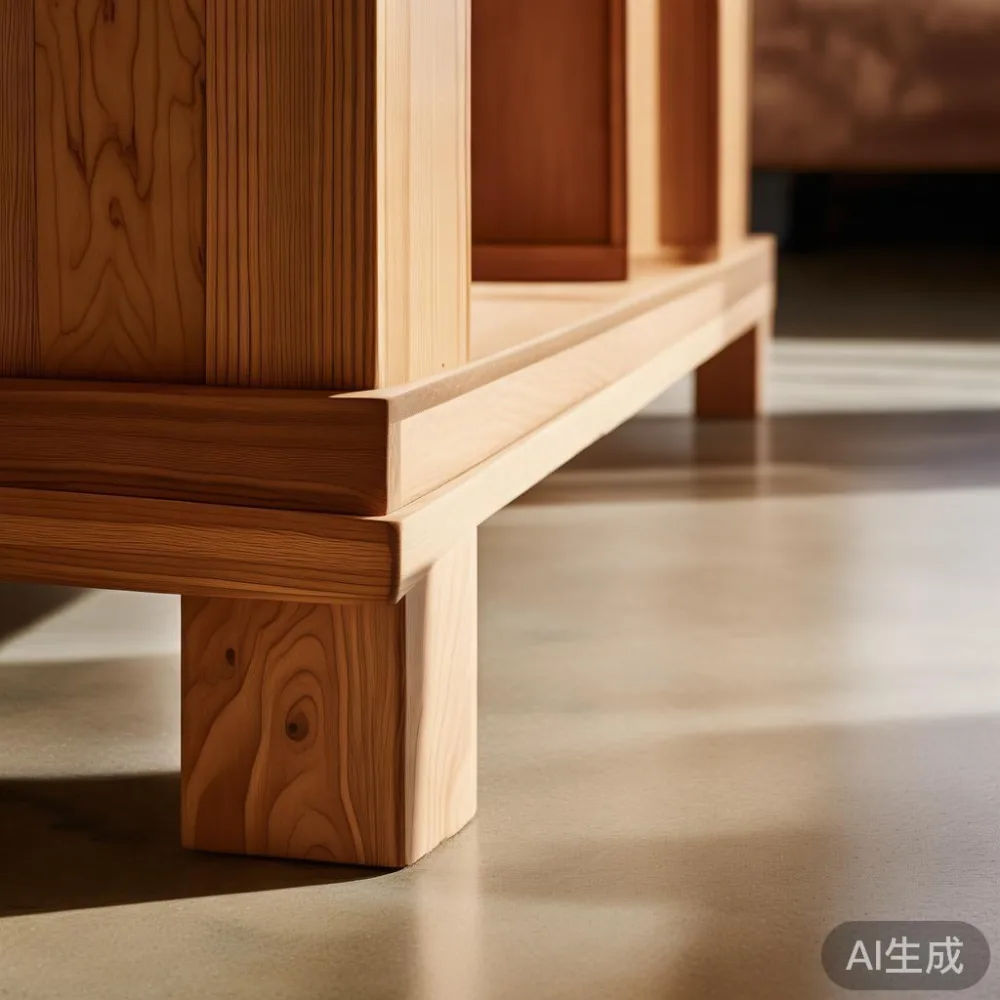
Where the Money Goes in a Piece of Solid Wood Furniture
When you compare two seemingly identical dining tables, both 180 cm long, both "oak," both made from kiln-dried boards, the two can still be separated by 1,500 SGD or more at the showroom. The difference usually lives in five places, and none of them are marketing.
1. Timber grade and moisture content. FAS (First and Seconds) grade means the board has a minimum 6 cm clear cutting area and very few knots. Lower grades (No. 1 Common, No. 2 Common) have more knots, shorter clear sections, and more sapwood. For a 2-metre ward-style dining table, FAS board lets you use one board per leaf, while Common grade forces three glue-ups and more visible seams. Moisture content matters even more: timber dried to 8–10% MC behaves very differently in Singapore, where corridor humidity runs 70–80%, than timber dried to 12–14%. Boards at the wrong MC cup, twist, and open gaps at the seams within three months of delivery to a HDB flat in Bedok or a condo in Punggol. The price gap between well-dried FAS stock and commodity stock is roughly 30–45% per cubic metre.
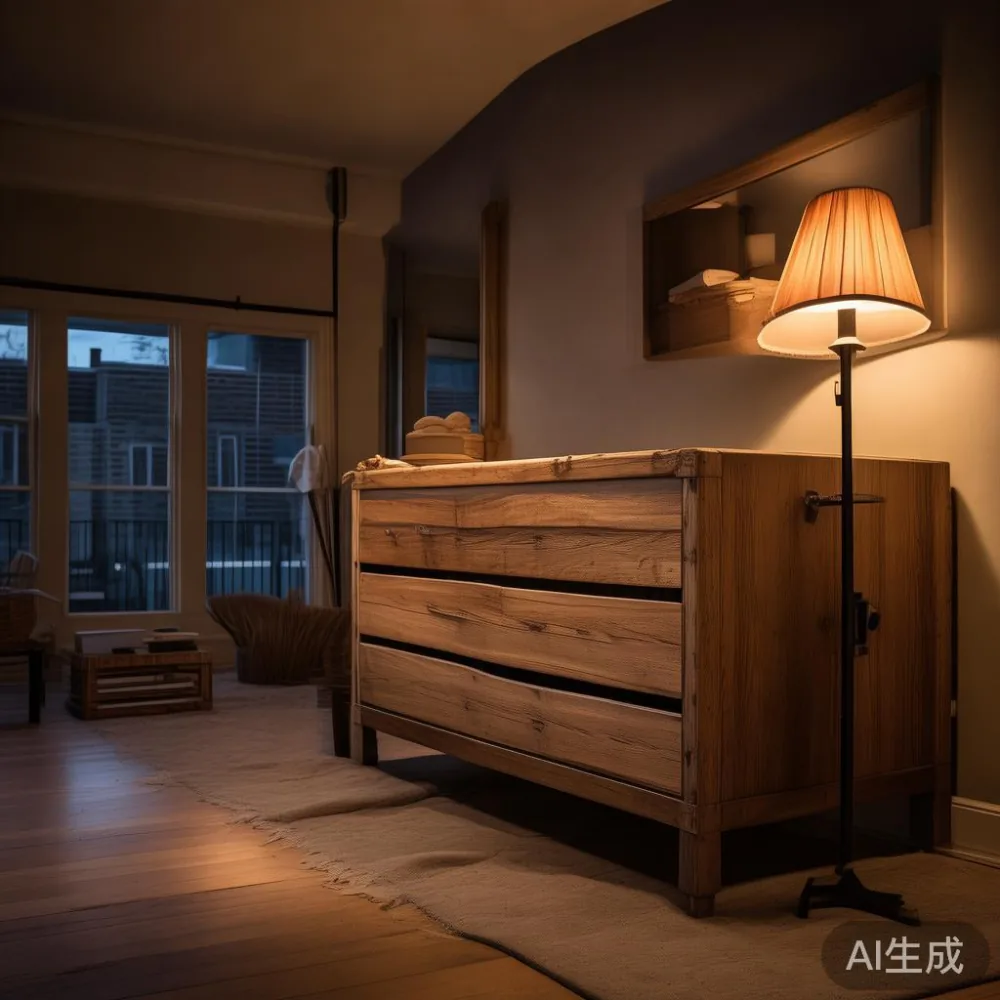
2. Joinery and structural method. A 4 cm thick dining table top can be held together with pocket-hole screws, biscuit joints, dowels, mortise-and-tenon, or full slab construction. Mortise-and-tenon on a bed frame takes 40–60 minutes per joint, against the skill of a joiner who has done it 10,000 times. MIDHILL uses mortise-and-tenon on its bed frames and wardrobes because the 10-year structural warranty only holds if the joints do not rack when you move the wardrobe through the lift lobby.
3. Finish and surface treatment. Hardwax oil (Osmo, Rubio Monocoat) penetrates the fibre and cures inside it. Lacquer sits on the surface as a film. A round of hardwax oil on a queen-size headboard costs roughly 80–120 SGD in materials alone and needs two coats with a 12-hour cure. Spray lacquer is faster but it chips; once a chip forms, water reaches the raw wood underneath. For HDB buyers who plan to keep a piece for 15+ years, hardwax oil is the cheaper end of the calculation.
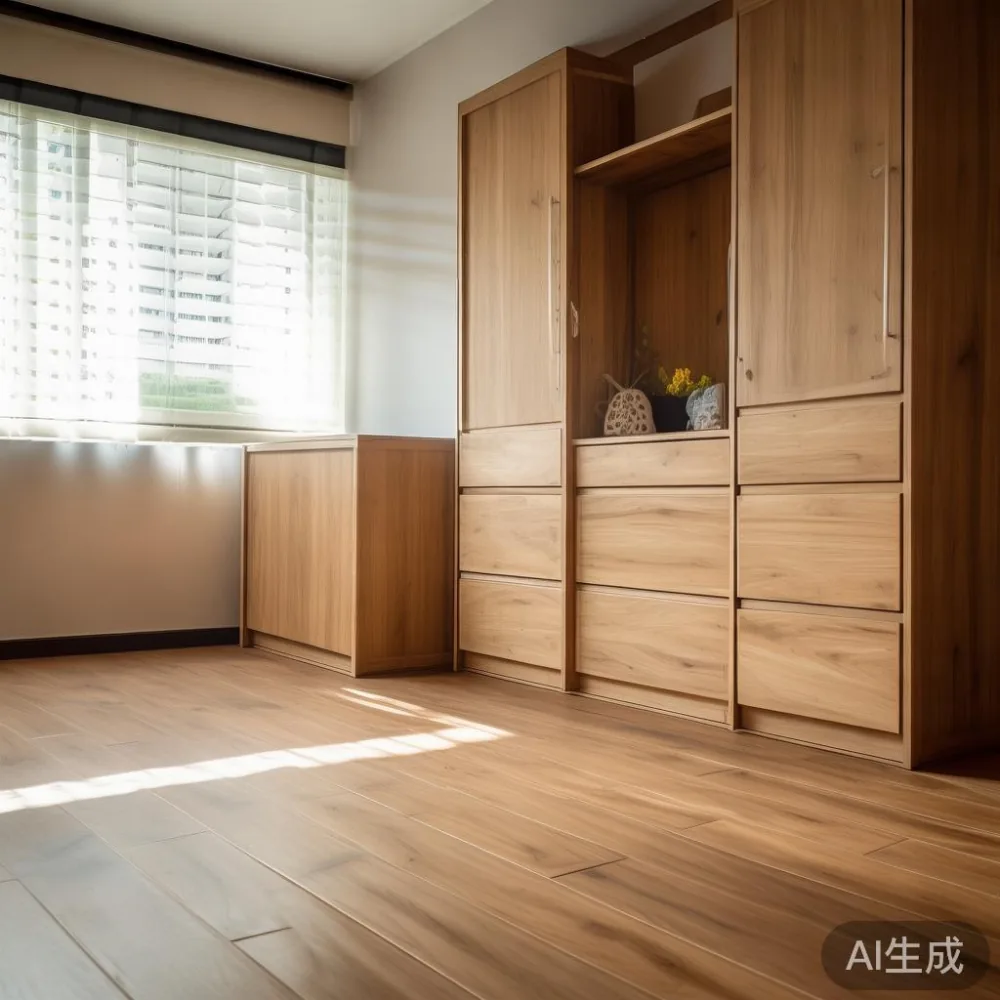
4. Hardware weight. A solid wood sofa frame can weigh 65–90 kg for a 3-seater, against 18–25 kg for a comparable plywood-and-MDF frame. That weight is a feature, not a defect: a heavier frame does not walk across the floor when your kids wrestle on it. But that weight also costs freight. A single 75 kg sofa frame shipped from Foshan to Singapore at LCL rates runs about 95–140 SGD for sea freight alone, before GST and before the lift and corridor delivery at the other end.
5. Compliance and certification. FSC-certified timber, low-VOC finishes, and formaldehyde test reports all cost money to obtain and maintain. For a Singapore HDB buyer, the E0 / CARB Phase 2 / EPA TSCA Title VI paperwork is what allows a piece to be advertised as low-emission rather than just "looks solid."
Is American Country Nightstand Furniture Worth It?
American country nightstand furniture is worth it if you want a bedside piece that survives 15+ years of daily use, takes a beating from a toddler climbing onto it, and can be re-oiled rather than thrown away when the surface dulls. The price premium over an MDF nightstand is roughly 280–450 SGD for a two-drawer unit, and that premium buys you 25–35 kg of kiln-dried solid timber, dovetail or full-extension drawer boxes, and a surface you can sand and re-oil at home in three hours. A my colleague tested one for eight months in a Punggol condo bedroom, and the only maintenance was one re-oil at the five-month mark.
The "country" in the term refers to a design vocabulary: shaker-style recessed panels, pegged details, slightly turned legs, often a 4 cm thick top with a small overhang. The aesthetic pairs naturally with the warmer woods (white oak, ash, cherry, walnut) rather than the darker tropical hardwoods, which is why it travels well from an American farmhouse brief into a HDB master bedroom in Tampines. Buyers who treat the nightstand as a 25-year piece rather than a 5-year piece almost always land on solid wood once they price the replacement cycle of two or three flat-pack pieces.
The honest counter-argument is space. A solid wood two-drawer nightstand is 50–55 cm wide, 40–45 cm deep, and 60–65 cm tall, and it weighs 25–35 kg. In a small HDB bedroom with a 1.5 m wide bed, the footprint matters. For buyers who need a 35 cm wide unit, the price per cm does climb because you are paying the same joinery cost for a smaller box.
Why Garage Storage Is the Quiet Premium Buy Most Singapore Buyers Miss
Garage storage tends to be treated as a hardware-store category in Singapore, somewhere between a B&Q shelf and an IKEA Kallax. That framing is wrong for a functional two-car HDB garage or a landed property in Bukit Timah. A proper garage storage system is built from the same kiln-dried white oak or ash that goes into a wardrobe, with the same dovetail drawers, the same hardwax oil finish, and the same tolerance stack-up. The category quietly carries a premium every price tag, but most buyers never compare it to comparable houses because they think of the garage as utility space.
Three reasons garage storage under-priced. One, garage walls in Singapore HDB spaces are typically 2.4 m clear, and most flat-pack shelving tops out at 1.8 m; custom solid timber goes floor to ceiling and uses 60 cm more vertical space per bay. Two, garage humidity in Singapore is high (75–85% on a wet afternoon), and a solid timber shelf wrapped in the wrong finish will cup; properly dried and finished timber behaves. Three, garage storage is what you see at 7am and 11pm every single day, so the surface you touch matters.
For buyers planning a garage storage build-out, the categories to think through are: open shelving bays (60 cm wide, 35 cm deep, 2.4 m tall), closed cabinets with solid doors, workbench units with a 4 cm thick top, and overhead loft storage mounted above the garage door. A four-bay open shelving run in white oak runs roughly 2,400–3,200 SGD depending on depth and finish; the same run in MDF melamine runs about 480–680 SGD. The premium is 4–5x, and that ratio is exactly what you pay on a dining table or wardrobe for the same underlying timber and finish.
MIDHILL treats garage storage as part of its solid-wood sofa, bed frame, dining table, wardrobe, nightstand, and marble table family, which is why the same kiln-dried stock and the same hardware carry through to the garage. Buyers who want the rest of the house to match the garage can do that in one specification.
How Singapore Logistics Add Real Dollars to the Price Tag
Singapore has a specific set of delivery constraints that change the economics of a 90 kg wardrobe or a 75 kg sofa frame. Most HDB lift openings are 80 cm wide by 210 cm tall; corridor turns in older blocks in Bedok and Tampines can be 90° corners with 1.2 m radius. A flat-pack wardrobe arrives in eight boxes and walks in without drama. A wider warehouse-delivered wardrobe often arrives in two halves (each roughly 100 kg) and needs a two-man team with a furniture dolly.
The price difference on the freight line for that service is roughly 60–120 SGD depending on floor and access. MIDHILL quotes lift-access delivery into HDB flats as part of the free shipping threshold above US$350, and the lifetime refinishing programme covers a re-oil and a small scratch fix within a domestic floor in Singapore at no labour charge for the first visit.
GST at 9% applies on the landed value, and buyers should expect it on the freight line as well as the goods line. For a 4,800 SGD dining table shipped from Foshan with 220 SGD freight and insurance, the GST base is 5,020 SGD and the tax is roughly 452 SGD. Many Singapore showrooms absorb the GST in the headline price, which is why the showroom price and the online price can look identical while the underlying math is different.
Buyers should also budget 30–45 minutes for assembly on arrival. A wardrobe that arrives fully assembled is a different product from one that arrives flat-pack; the fully-assembled piece needs a wider access path and a higher freight cube, and that is priced in.
What "Light Luxury" Means and Why It Sits Between Post-Modern and French
The phrase "light luxury" gets thrown around, so it is worth pinning down. French light luxury leans on restrained curves, soft brass or champagne hardware, and a calm palette (oiled rather than limed oak, warm whites, a touch of marble). Post-modern light luxury is a step warmer and more textured: visible joinery, slightly heavier proportions, and an honest grain. American light luxury sits in the middle, more classical proportions, shaker and mission echoes, often a darker timber like walnut or cherry. The Japandi wardrobe sg australia phrase is the shorthand buyers use for a wardrobe that borrows the calm palette and clean lines of Japanese and Australian coastal houses, applied to a Singapore light-scape flat.
A solid wood sofa frame in American light luxury uses a 6 cm thick arm profile, a 12 cm tall tapered foot, and a low pile arm that does not fight a small HDB living room. A bed frame in French light luxury uses a 4 cm thick headboard with a soft radius, no visible hardware, and a waxed oak finish. A dining table in post-modern light luxury uses an honest 4 cm thick top, slightly bevelled edge, and a base that shows how it holds the top up rather than hiding it. A nightstand in Japandi is a low box on a plinth, 45 cm tall rather than 65 cm, and that 20 cm of shift is exactly what makes a small bedroom feel bigger.
The price premium for light luxury over flat-pack on a comparable footprint runs 60–140% for most pieces, and most of that premium is in the timber, the joinery, and the finish rather than in the brand label.
How to Read a Price Tag So You Do Not Overpay
A useful rule is the 1-3-6 test. For any piece above 1,000 SGD, ask three questions. One: is the timber kiln-dried and at what MC? Two: what are the three biggest joints, and how are they made? Three: what is the surface finish, and can it be repaired locally?
A solid wood dining table with kiln-dried 8–10% MC white oak, mortise-and-tenon base, hardwax oil finish, and a 4 cm thick top will outlast a comparable MDF piece by a wide margin. A wardrobe with dovetail drawers, full-extension soft-close slides rated for 100,000 cycles, and a 2.5 cm thick carcass will handle the daily cycle in a HDB master bedroom. A bed frame with a 4 cm thick slat system on a centre support will hold a 27 cm queen mattress for 12+ years without sag. A nightstand with 1.8 cm thick drawer fronts and full-extension slides will not rack when a toddler uses it as a step.
For buyers who plan to keep a piece for 10+ years, the price per year of use calculation is usually the right frame. A 4,200 SGD dining table used for 15 years is 280 SGD per year, against a 1,400 SGD flat-pack table replaced twice in the same window at 933 SGD per year. The premium piece is the cheaper piece over the lifespan of the household.
Where the Lifetime Refinishing Programme Actually Pays Off
Solid wood furniture develops a patina, and most buyers treat patina as damage. A proper refinishing programme treats patina as the surface that needs to be re-oiled. A 180 x 1.5 cm dining table top takes about 90 minutes to lightly abrade (320 grit), re-oil (one coat hardwax oil), and cure (12 hours, light use after 24). For a piece used daily, the recommended cycle is every 24–36 months, which means a 15-year table gets re-oiled five or six times in its life. At a third-party shop in Singapore that cycle would cost 280–420 SGD per visit; a lifetime programme folds that into the original price.
MIDHILL's lifetime refinishing covers the same cycle, plus a small scratch fix and a hardware check, and it is one reason the brand's pieces hold their value in the Singapore resale market. Buyers who plan to keep a piece for 15 years and pass it on to a younger sibling or a child should look at refinishing as part of the price tag, not as an add-on.
The Short Version
Solid wood furniture is priced on timber grade, MC, joinery, finish, hardware weight, and compliance. The same drivers drive a dining table, a wardrobe, a nightstand, a solid wood sofa frame, a bed frame, a marble-topped side table, and a garage storage system. Singapore buyers pay a small additional freight and access premium because the lift, corridor, and GST math is specific, and that premium is worth budgeting 8–12% above the goods line for a typical HDB delivery. Light luxury positioning (American, French, or post-modern) is mostly a finish and proportion conversation rather than a timber conversation, so the underlying cost frame is similar across the three vocabularies. Garage storage is the quiet premium category most buyers under-price, and it is the one where the price-per-year-of-use math is most favourable for solid timber over flat-pack.