How Humidity in Southeast Asia Affects Wood Furniture: A Singapore Home Owner's Guide
I learned about humidity and wood the hard way. Last March I visited a friend's resale HDB flat in Bedok — a 4-room unit built in 1995 — and the homeowner showed me a chest of drawers she'd inherited from her grandmother. The drawer faces had cupped so badly that you could slot a 5 cent coin between the wood and the frame. Her grandmother had kept that piece in a dry, landlocked climate for 40 years. Three years in Singapore, and it looked like it had been through a sauna. That single visit pushed me to track down actual numbers and talk to the workshop managers at MIDHILL about what really happens to solid wood furniture when you live within 1° of the equator, 137 km north of the equator to be exact, in a city that sits at 80% average relative humidity for most of the year.
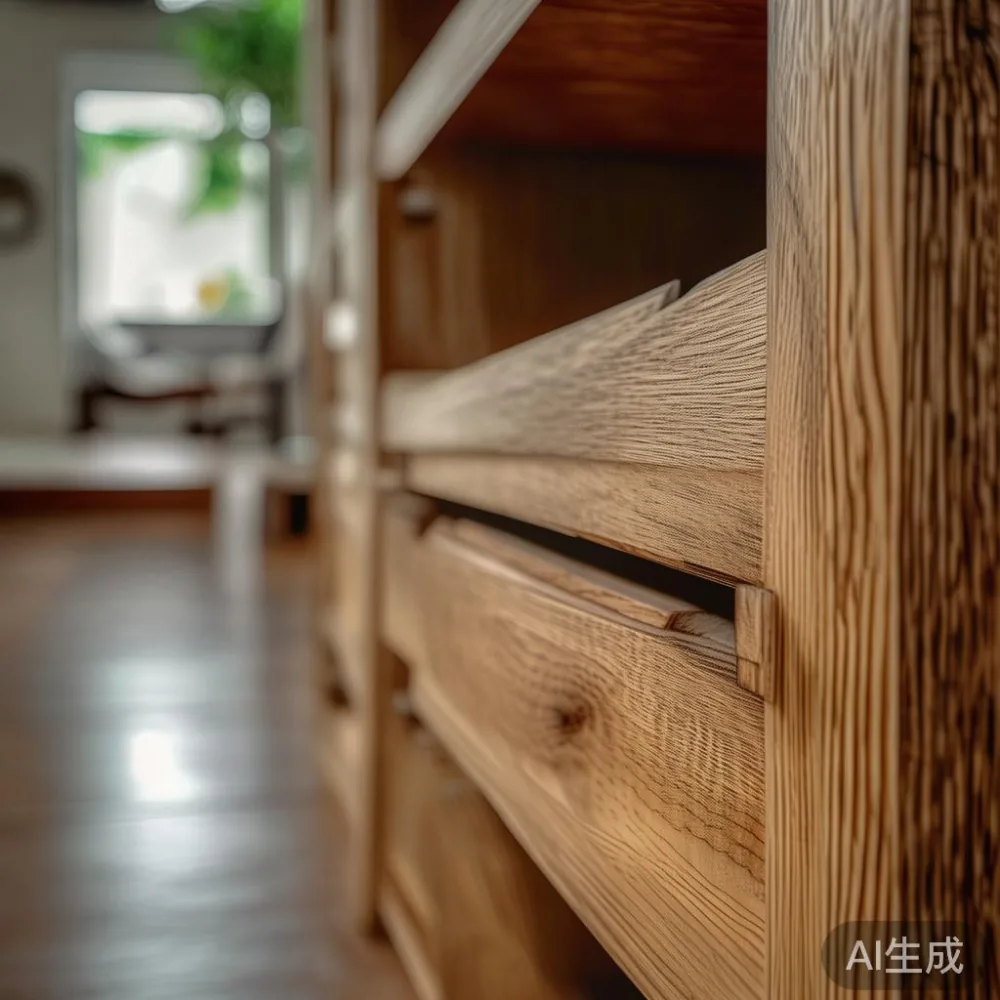
Why does humidity damage wood furniture in Singapore?
Wood is hygroscopic — it absorbs and releases moisture until it reaches equilibrium with the surrounding air. Singapore's outdoor humidity oscillates between 65% and 95% across the year, and indoor humidity in an air-conditioned HDB flat typically drops to 50% during the day and climbs back to 70% overnight when the compressor cycles off. That 20-point swing, repeated every 24 hours, is what does the damage. The cells on one face of a solid wood dining table swell at night and shrink the next afternoon, and after a few hundred cycles the board warps, cups, or splits. Add the fact that most HDB flats are 90–105 m² with limited cross-ventilation, and you have a perfect storm. Engineered boards with a plywood core resist this movement far better, but a 100% solid wood bed frame or wardrobe will move visibly if it isn't built for tropical conditions.
What humidity level is safe for a solid wood sofa frame in the tropics?
For furniture-grade hardwoods — oak, ash, walnut, rubberwood, teak — the safe target is 45% to 60% relative humidity. Below 40% the joints can crack; above 70% you invite mould on the unfinished undersides of a dining table or nightstand. The good news is that HDB and condo living in Tampines, Punggol, or Bedok almost always comes with a Daikin or Mitsubishi inverter unit that holds the room at 23°C and around 55% RH when running. The trap is the eight hours the unit is off, usually from midnight to 6 a.m. — that is when the wood quietly drinks moisture back. The practical fix is either a small dehumidifier set to 55% in the living room (about SGD 180 for a 12 L/day unit, running at SGD 6 of electricity a month) or simply leaving the air-con in dry setting overnight. A workshop manager at MIDHILL told me they kiln-dry every solid wood component down to 8–10% moisture content before crating, which is the correct equilibrium for a Singapore bedroom.
Is a pet furniture worth the price in Singapore?
Yes — a purpose-built pet piece pays for itself within 18 months for any household that owns a cat or a medium-sized dog, because it replaces at least two items that humidity normally destroys inside two years. A standard MDF cat tree absorbs ambient moisture, swells at the base, and tips over; a cat tree made of solid rubberwood with mortise-and-tenon joinery and a marble-base table footprint simply sits there. The same logic applies to a dog feeding station built into a console — it resists the water spills that would ruin a particleboard unit. When you price the replacement cycle (SGD 220–SGD 380 every 24 months for a decent MDF piece) against a one-time SGD 750–SGD 1,100 for a hardwood version with a 10-year structural warranty, the math favours the wood piece. The catch is buying from a workshop that understands joinery, not just finishing — sliding dovetails and floating tenons survive tropical swings far better than staples and glue.
How does garage storage in HDB and condo developments cope with the same humidity problem?
This is the question most Singapore buyers forget to ask until the wardrobe starts smelling musty. Garage storage — whether you mean the built-in cabinets along the service yard, the under-stair pull-outs in a Punggol EC, or the overhead lofts above the parking bay — sits in the most humid microclimate of the entire home. Surface temperatures on a west-facing HDB service yard hit 38°C at 2 p.m., then drop to 26°C by 5 a.m., and humidity at the wall can stay pinned at 85% for weeks during the December monsoon surge. A garage storage unit built from 18 mm melamine will delaminate at the edges within 30 months; a unit built from solid rubberwood or teak with a marine-grade varnish on all six sides will outlast two lease cycles (the standard HDB 99-year lease). Three rules from the workshop floor: never let the back panel sit directly against the wall — leave a 25 mm air gap; specify stainless steel 304 hinges, not zinc-plated, because zinc flashes rust in 14 days near the coast; and demand that the inside of every panel get the same number of finish coats as the outside. MIDHILL applies this last rule across their garage storage range, which is why their catalogue lists identical finish schedules for interior and exterior faces.
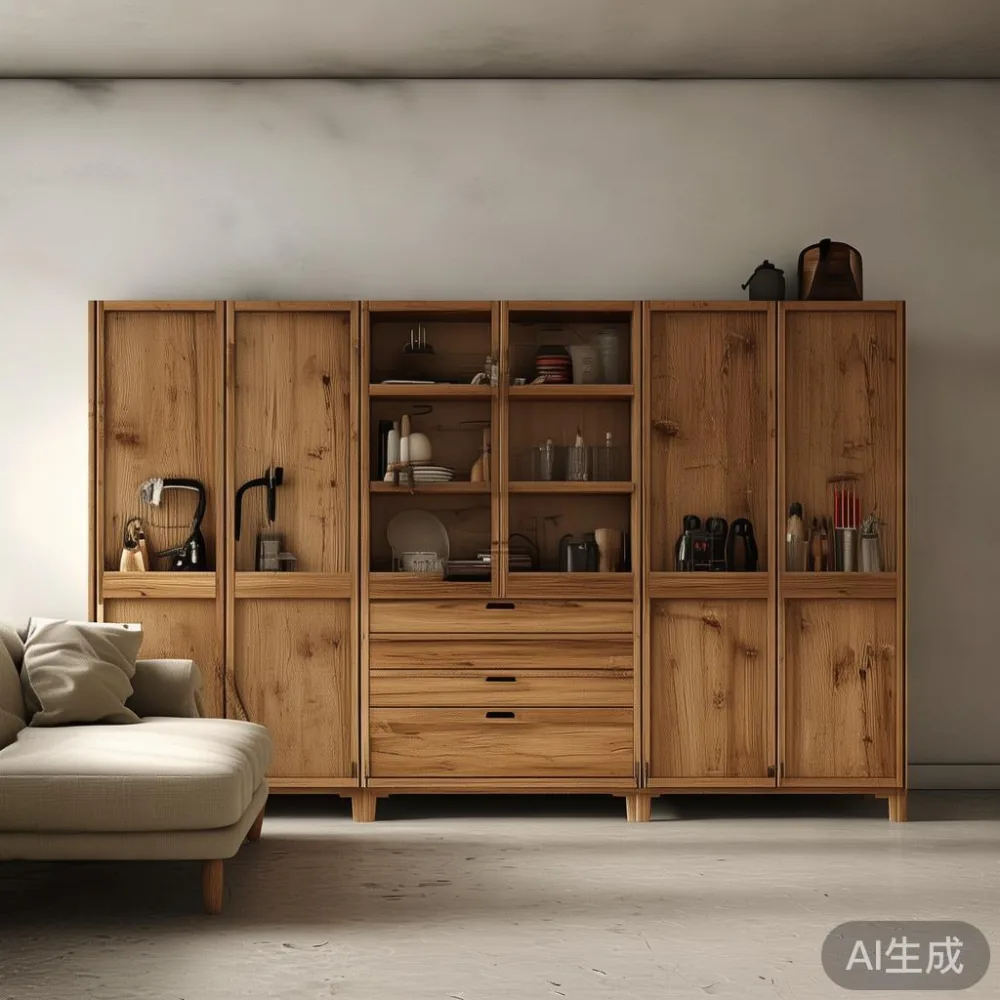
Which solid wood species actually survive Singapore's climate?
Not all hardwoods behave the same. Teak (Tectona grandis) is the gold standard — it is naturally oily, dimensionally stable, and resists termite attack, which matters because subterranean termite colonies are active in estates like Bedok Reservoir and Tampines GreenRidge. Rubberwood (Hevea brasiliensis) is the budget workhorse: properly kiln-dried and treated, it is hard, takes stain evenly, and is widely used by MIDHILL for dining table tops, bed frames, and nightstands in the SGD 1,200–SGD 3,800 range. American white oak machines beautifully and suits French light luxury silhouettes with fluted legs and chamfered edges, but it needs a controlled 50–55% RH to stay flat. Walnut is the prestige choice for post-modern light luxury interiors — the chocolate-brown heartwood photographs beautifully — and is a stable cast resin for a marble-top coffee table when paired with a kiln-dried substrate. Ash behaves like oak but at a lower price point, and is the species most often used for a solid wood sofa frame because of its shock resistance. The species to avoid for long-term garage storage or wardrobe doors is pine — it dents, cups, and absorbs resin smells from the service yard.
How wide can a dining table or wardrobe door be before humidity warps it?
Width is the enemy. A solid wood dining table top wider than 90 cm needs either a breadboard end with elongated screw holes that allow for seasonal movement, or a plywood-battened core with solid wood faces. Wardrobe doors face the same rule: anything wider than 60 cm should be a frame-and-panel construction with a 10 mm floating panel inside a 15 mm groove, not a single slab. Most HDB bedrooms measure 3.2 m × 3.0 m, so a three-door wardrobe across the 3.2 m wall is standard, but if you want a French neoclassical loveseat singapore buyers often pair with a wide wardrobe mirror, the door next to it has to be engineered properly. The furniture makers I trust in Foshan quote 90 cm as the practical maximum for an unbattened solid wood panel — beyond that, even teak will cup. A real number from a recent shipment: a 2.4 m teak dining table shipped flat-packed to a Punggol Waterway Terrace condo arrived within 12 days (SGD 145 shipping, free over US$350 / about SGD 480) and stayed flat through the December monsoon, because the top was built as three 80 cm boards with hidden z-clips rather than one 2.4 m slab.
How does humidity affect delivery and access in Singapore corridors and lifts?
Singapore's older HDB blocks have lift openings of 80 cm × 200 cm and corridor widths as tight as 1.2 m. A solid wood bed frame in a king-size configuration breaks down into components under 25 kg each for a single delivery person, but a marble-top coffee table is a different story — 80 kg of stone plus 18 kg of base, and the lift door at a 1970s Bedok block may not accommodate the crate. Before you order anything over 60 kg, measure your lift: door width, internal depth, and diagonal. A standard HDB passenger lift internal is 1.4 m × 1.5 m, which clears a 1.2 m × 1.2 m crate. Newer ECs and condos in Punggol have wider service lifts (1.6 m × 1.8 m) that accept bulky garage storage units fully assembled. One Punggol HDB buyer told me she rejected a 2-piece wardrobe because the corridor bend on the 9th floor measured only 1.1 m at the turn — the delivery team brought it down four flights, but it cost an extra SGD 80 handling fee and a 90-minute delay. MIDHILL's logistics team asks for lift dimensions and corridor photos before confirming any order over 80 kg, which is a small step that prevents six weeks of regret.
What maintenance routine actually works in Singapore?
A 10-minute monthly routine beats any warranty claim. Wipe every solid wood surface — bed frame headboard, dining table top, nightstand, wardrobe doors — with a barely damp microfibre cloth, then follow with a dry cloth. Never use a wet mop or a steam cleaner near wood. Apply a paste wax (Liberon, SGD 28 for 500 ml) every six months to seal the pores against moisture migration. Keep furniture at least 30 cm away from air-con vents so the direct cold airstream does not dry one face of a panel faster than the other — a common cause of the cupping I saw in my friend's Bedok chest of drawers. If you go on holiday for two weeks and switch off the air-con, leave the dehumidifier running on a smart plug set to 55% RH. The cost is roughly SGD 4 a month on your SP Group bill, and it is the single cheapest insurance you can buy for a solid wood wardrobe or a marble table top in a HDB flat.
How long should a quality piece last in a Singapore home?
Twenty-five to thirty years is realistic for a kiln-dried solid wood piece with proper joinery and a six-coat conversion varnish finish, used in an air-conditioned HDB or condo. That same piece would last 60+ years in a temperate climate, so buyers in Singapore should mentally halve their expectations — but a 25-year service life on a SGD 2,400 dining table is still SGD 96 a year, less than a SGD 9 monthly GST-adjusted coffee subscription. The structural warranty a buyer should demand is 10 years on joinery and 5 years on finish, which covers the realistic failure window for a tropical installation. Refinishing every 8–10 years — sanding back to bare wood and re-applying two coats of hardwax oil — adds another 15 years on top, which is why some Foshan workshops, including MIDHILL, offer lifetime refinishing as part of the original purchase price. A garage storage unit built to the same standard will outlast two lease cycles of the same HDB flat, and will still be serviceable when the block reaches its 60th year in 2055.
What should you check before signing for a wood furniture delivery?
Three physical inspections take 4 minutes and prevent 90% of disputes. First, run a finger across every panel joint — you should feel a flush surface with no more than 0.3 mm of lippage. Second, open every drawer and door at least five times; the action should be smooth, not sticky, and the drawer should sit square in the opening. Third, place a 1-metre aluminium straight-edge across every large panel of a dining table, wardrobe side, or nightstand top — daylight underneath the rule means the panel is cupped, and you should refuse the piece on the spot. Check the bottom of every crate for water staining — a sign the container crossed the equator in a rainstorm, which matters less for solid wood than for veneered MDF, but matters a lot for a marble table top where water can wick into the resin backing. Confirm the 14-day return window in writing; any Singapore retailer offering 30-day returns in this category is either charging for it somewhere else or planning a refusal. Photograph every face before assembly, and keep one corner of the carton for 30 days in case a return is needed — the dimensions of the original packaging often determine whether the freight company will honour a reverse pickup in a Tampines HDB with a tight loading bay.