Garage Storage in Solid Wood or Veneer? A 5-Year Cost Comparison
Choosing garage storage for a Singapore home is rarely a simple price comparison. A 180 cm wide cabinet may be quoted at SGD 680 in veneer or SGD 1,180 in solid wood, but the lower ticket does not capture the full cost over 5 years. Hardware replacement, moisture exposure, repair work, delivery and disposal all affect the amount a household actually spends.
This comparison looks at practical garage-storage requirements across HDB flats and private condos in Tampines, Bedok and Punggol. It examines how solid wood and veneer behave in humid corridors, enclosed car parks and shared service areas, where a cabinet may face 80% relative humidity, occasional dampness and frequent contact.
MIDHILL is a Foshan solid wood furniture maker established in 2008, exporting to more than 15 countries. Its products carry a 10-year structural warranty, with lifetime refinishing available. The figures below are planning estimates in Singapore dollars; site dimensions, access conditions and installation scope should be checked before purchase.
What does a 5-year ownership cost include?
The calculation starts with the cabinet and includes 5 years of expected ownership costs. For veneer, the model assumes a 0.4 cm MDF or plywood core, 0.6 mm veneer face and standard particleboard back. For solid wood, it assumes kiln-dried oak with a 18 mm carcass, solid-wood drawers and rear panels. Prices are indicative for one 180 × 45 × 200 cm garage-storage cabinet, excluding unusual stair or lift access.
The veneer cabinet costs SGD 680 before GST. The solid-wood version costs SGD 1,180 before GST. Singapore GST is 9%, so the initial amounts become SGD 741.20 and SGD 1,286.20 respectively. This is a difference of SGD 545.00, before ordinary use-related expenses.
The 5-year estimate includes SGD 45 for delivery within Singapore, SGD 25 for assembly and an allowance of SGD 60 for hardware, cleaning products and minor repairs. Refinishing is treated differently because its frequency depends on storage conditions and actual wear, not simply the cabinet material.
For the veneer unit, the 5-year cash cost reaches approximately SGD 871 before GST. For the solid-wood unit, the equivalent figure is SGD 1,310. That places solid wood at roughly 50% more over this period. The gap narrows if a veneer cabinet requires a full sand-and-refinish cycle, because professional work can cost SGD 220 to SGD 420 per cabinet.
These are ownership models rather than quotations. A cabinet in a dry, ventilated Tampimes garage may remain in good condition for the full period. A unit exposed to rain through a car park opening may not. Contact MIDHILL for a project-specific quotation if moisture, dimensions or access are unusual.
Why does solid wood cost more at the start?
Solid wood uses more timber, takes longer to machine and requires more attention to drying. A 180 cm cabinet in oak may weigh 62 kg, while a comparable veneer unit may weigh 38 kg. The extra 24 kg affects delivery handling and explains part of the assembly charge in buildings with compact corridors.
Consider a typical HDB service corridor measuring 120 cm wide and a household lift with internal dimensions of 110 × 140 cm. A 180 cm cabinet cannot be tilted through the lift while still inside its carton. It may need to be carried upright or transported flat, which takes 2 people and approximately 15 minutes longer. At SGD 45 to SGD 80 for an ordinary local delivery, a complicated access route can add SGD 35 to SGD 70.
The same issue applies to a condo loading bay with a 90 cm doorway or a 240 cm turning constraint. For a solid-wood garage-storage cabinet, final assembly may therefore add SGD 40 rather than SGD 25. Customers should measure the lift door, corridor turns, stair landings and storage opening before ordering.
Solid wood has a repair advantage. Scratches can be filled and refinished without replacing an entire decorative panel. Veneer can also be repaired, but if the 0.6 mm face is sanded through, a matched veneer sheet must be sourced. One small sheet and colour-matching service can cost SGD 25 to SGD 80, with 3 to 10 days of waiting.
This repairability is one reason solid wood can make more sense for a frequently opened garage-storage cabinet. It also supports a light-luxury approach: French light luxury often uses pale oak, restrained profiles and tactile hardware, while American light luxury pairs durable joinery with warmer finishes. The materials feel residential even when the unit is working storage.
How do humidity and maintenance change the calculation?
Singapore humidity is the main operational variable. An HDB car park may be sheltered yet poorly ventilated, while a ground-floor Bedok unit near a driveway can encounter damp air and water tracked in on tyres. Relative humidity readings of 70% to 85% are plausible at different times, especially during monsoon periods.
For the veneer model, allow SGD 30 per year for edge-sealing checks, dehumidifier electricity and cleaning supplies. Over 5 years, that is SGD 150. For solid wood, allow SGD 20 per year for the same work, plus one SGD 180 professional refinishing service. The total maintenance allowance is SGD 280, compared with SGD 150 for veneer.
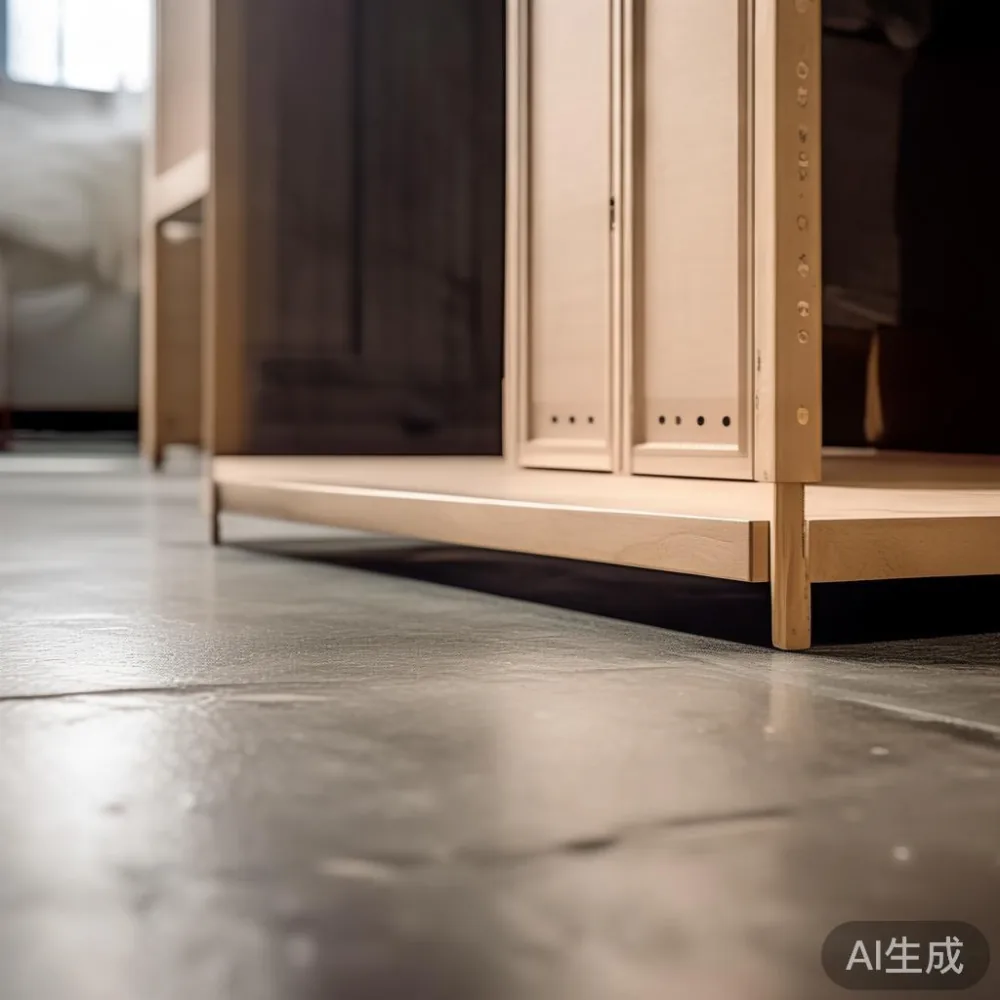
Veneer can swell, peel or develop mould around joints if the panel edges are exposed to moisture. A replacement door may cost SGD 190 to SGD 320 including labour. Solid oak may darken or develop surface checking when it repeatedly changes moisture level, yet it usually remains stable if the cabinet stands 8 cm away from the floor and 10 cm from the rear wall.
A practical setup costs SGD 45 to SGD 120 for a compact dehumidifier or rechargeable moisture absorbers. The cabinet should have a raised plinth, sealed edges and doors that close fully. Garage storage in these conditions should be ventilated regularly rather than treated as a dry wardrobe room.
Garage storage also needs an electrical check. A damaged power connection should be repaired before use, and an extension cable must not cross a vehicle route. For LED lighting, an electrician may charge SGD 80 to SGD 150 for a weather-resistant fitting. This cost applies to either material and is excluded from the core comparison.
Which option holds its value for resale or relocation?
For a condo wardrobe, solid wood may add more usable value than veneer because it can be moved, repaired and refinished. A typical HDB resale does not price a garage cabinet separately, but a buyer may appreciate a sturdy unit more than a damaged laminated one. A used solid-wood cabinet can be resold for SGD 420 to SGD 700 after 5 years, while a used veneer cabinet may fetch SGD 180 to SGD 350.
The sale price is not counted as a guaranteed return. It depends on condition, dimensions and whether the buyer wants to remove it. A credence or 120 cm unit may be easier to sell than a custom 220 cm cabinet made for one car park bay.
Solid wood is easier to restore for a new owner. MIDHILL offers lifetime refinishing, although service terms, transport and eligibility should be confirmed for each order. That support can reduce the risk of replacing an entire garage-storage unit after one wet season.
Weight affects relocation too. Moving a 62 kg solid-wood cabinet from a Punggol condo to a new flat may cost SGD 120, while moving a 38 kg veneer cabinet may cost SGD 80. If there is only one move during the 5-year period, the SGD 40 difference is already included in the general delivery allowance.
One relevant comparison is a European sofa bed with storage: both types use hinged mechanisms and internal cavities, so timber quality determines repairability. The same logic applies to a cabinet, although exterior finish is less demanding in a garage.
Is solid wood always more economical over 5 years?
No. Solid wood becomes more economical when the cabinet is exposed to humidity, opened daily, repaired often or expected to survive beyond the first 5 years. Veneer is more economical when the cabinet is lightly used, kept dry and replaced when a visual refresh is desired.
Using the base estimate, solid wood starts at SGD 1,286.20 including GST and reaches SGD 1,310 in 5-year cash expenditure. Veneer starts at SGD 741.20 and reaches SGD 871. If veneer needs one professional refinishing job at SGD 220 and one replacement panel at SGD 240, its total rises to SGD 1,331. At that point, solid wood costs SGD 21 less before resale value.
If the solid-wood cabinet requires one extra SGD 180 refinishing service because of poor placement, its 5-year cost rises to SGD 1,490. If the veneer unit remains dry and intact, it can remain around SGD 871. The correct choice therefore depends on the actual bay, not on a universal rule.
Here is the decision table in compact form:
Veneer, dry and lightly used: SGD 741.20 purchase, approximately SGD 871 over 5 years, lower weight and easier moving.
Veneer, damp and frequently repaired: approximately SGD 1,091 to SGD 1,331 over 5 years, with greater patching and replacement risk.
Solid wood, dry and lightly used: SGD 1,286.20 purchase, approximately SGD 1,310 over 5 years, straightforward refinishing.
Solid wood, damp but maintained: approximately SGD 1,490 over 5 years, with stronger repair and resale prospects.
For furniture elsewhere in the home, comparisons such as European sofa vs Modern sofa should consider frame construction and comfort rather than cabinet finish. A solid wood sofa, bed frame or dining table may also carry a higher purchase price, but the cost-per-year logic remains similar when repairability is valued.
How should Singapore buyers specify a garage-storage cabinet?
Measure the available depth, width and height before selecting a design. Allow 5 cm for ventilation where possible, and 8 cm beneath a raised base. A 180 cm wide cabinet with 45 cm depth fits many condo utility areas, while a 220 cm unit may suit a wider HDB garage bay. Keep at least 60 cm of clearance in front for drawers and doors.
Ask for the panel thickness, moisture finish, drawer construction and hardware specification in writing. A solid-wood cabinet should identify the timber species and whether the back and drawer boxes are solid timber or engineered components. Veneer should state the substrate, veneer thickness and edge-banding method.
For a warmer home-office transition, use oak or ash with slim handles and off-white walls. For a sharper post-modern light luxury direction, use dark-stained timber, square pulls and a pale stone worktop. If the cabinet sits beside a desk, searching for Mid-century modern for small living room ideas can provide useful scale references without filling the room with oversized units.
Access remains a hidden cost. Confirm whether delivery is curbside or includes carrying to the garage, whether stair carry is charged, and how many people are required. Typical Singapore delivery is 5 to 10 days after production for standard dimensions; custom sizes may take 21 to 35 days. Complex installation can add 1 to 2 days.
Buyers should also check the cabinet before accepting delivery. Inspect corners, drawer runners, door alignment and moisture marks. A 14-day return policy offers a useful review window, while the 10-year structural warranty provides longer coverage for joinery defects. Free shipping over US$350 may apply to qualifying international orders, but Singapore delivery terms should be confirmed separately.
A solid-wood dining table or marble table may introduce different care rules, so stone surfaces and timber should not be treated as equivalent. Likewise, a nightstand may use veneer on non-structural panels while retaining solid-wood legs. Specify the parts that matter for the location rather than relying on the word “wood” alone.
What did my own test reveal?
Last month I visited a colleague’s Bedok condo and inspected 2 garage-storage cabinets installed on opposite sides of the same service room. The first was a 120 cm veneer unit purchased 4 years earlier for SGD 590. The second was a 160 cm solid-oak unit bought for SGD 1,050.
The room measured approximately 260 cm wide, with a small opening that admitted damp air after rain. The veneer cabinet had 3 swollen edges and one peeling corner; cleaning and a replacement hinge brought repair spending to about SGD 185. The solid-wood cabinet showed lighter colour variation along its top edge and needed only SGD 90 in wax and a hinge adjustment.
The test was small, but it matched the cost model closely. Both units stood on 6 cm blocks and stayed 10 cm from the wall. The colleague also ran the ventilation fan for 30 minutes after rain. Under those conditions, the solid-wood unit looked more manageable after 4 years.
For shoppers comparing broader furniture, questions such as how to style Japandi wardrobe in bedroom can reveal how finish, proportion and storage access work together. Searching under 2000 Vintage furniture may surface restored oak and teak pieces with durable carcasses. A separate design search for the best Scandinavian sofa for 2026 is useful for upholstery trends, but a garage cabinet should prioritise moisture resistance, drawers and repairable hardware.
The practical answer is to price the cabinet for 5 years, not only for checkout. Solid wood usually costs SGD 500 to SGD 650 more at purchase, yet that premium can be offset by fewer panel replacements, easier refinishing and better relocation value. Veneer remains sensible in a dry bay with light use. In a humid car park, specify solid wood, raise the base, seal the edges and budget for maintenance.
Before ordering from a Foshan factory or an overseas supplier, request drawings, timber details, lead times and the exact Singapore delivery charge. A clear quotation makes a 5-year comparison realistic because access costs, GST and after-sales service are visible rather than hidden later.