What Actually Drives the Price of Solid Wood Furniture
I spent last Saturday at a Tampines HDB flat watching a friend's new 1.8m black walnut wardrobe get carried up to the fourth floor. The delivery crew needed 40 minutes, three men, and a special trolley just to work through the 1.1-metre-wide lift at Block 645A. The wardrobe itself? Roughly 180 kg of kiln-dried North American walnut, dovetailed drawers, soft-close European hinges. When my friend told me the price tag — S$3,480 — I asked the obvious question: why so much for a box that holds clothes? Two weeks later, I visited the MIDHILL showroom in Foshan (I was already in Guangdong for sourcing research), watched the same style of wardrobe being assembled from raw planks, and the answer became obvious. The price of solid wood furniture is not a marketing trick. It is a stack of physical, logistical, and craft decisions that compound into the number on the price tag.
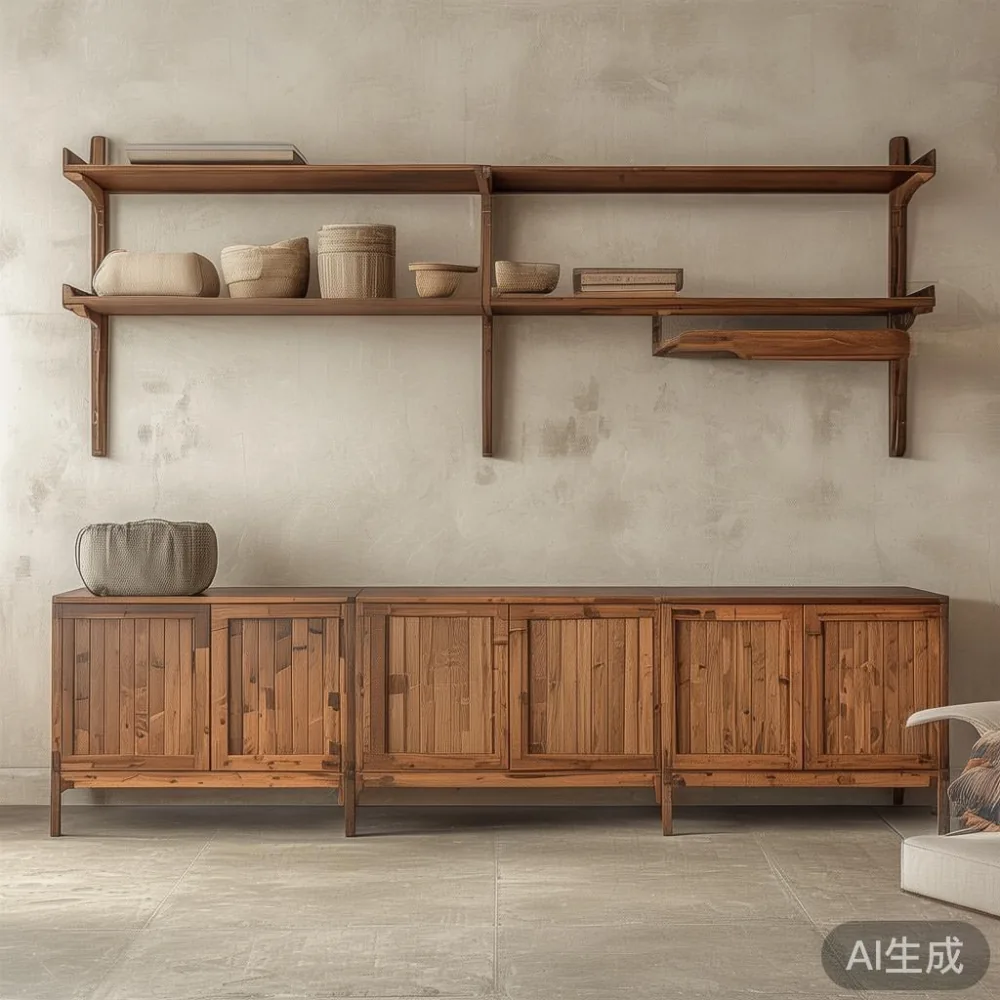
1. The Wood Species Itself: Why a Walnut Dining Table Costs Triple a Rubberwood One
Wood is not interchangeable. A solid wood dining table made from Chinese ash (commonly called "tough ash" in the local trade) uses timber that costs around S$45–S$60 per cubic metre of raw board. Replace that with FAS-grade North American black walnut mid-century modern stock and the same cubic metre jumps to S$1,800–S$2,400. That is a 35–50× raw-material delta before a single CNC pass has happened. For a 2m dining table seating six, you might use 0.18 m³ of wood, so the species choice alone can swing the bill of materials by S$300 to S$400.
Three species dominate the price conversation in Singapore showrooms right now:
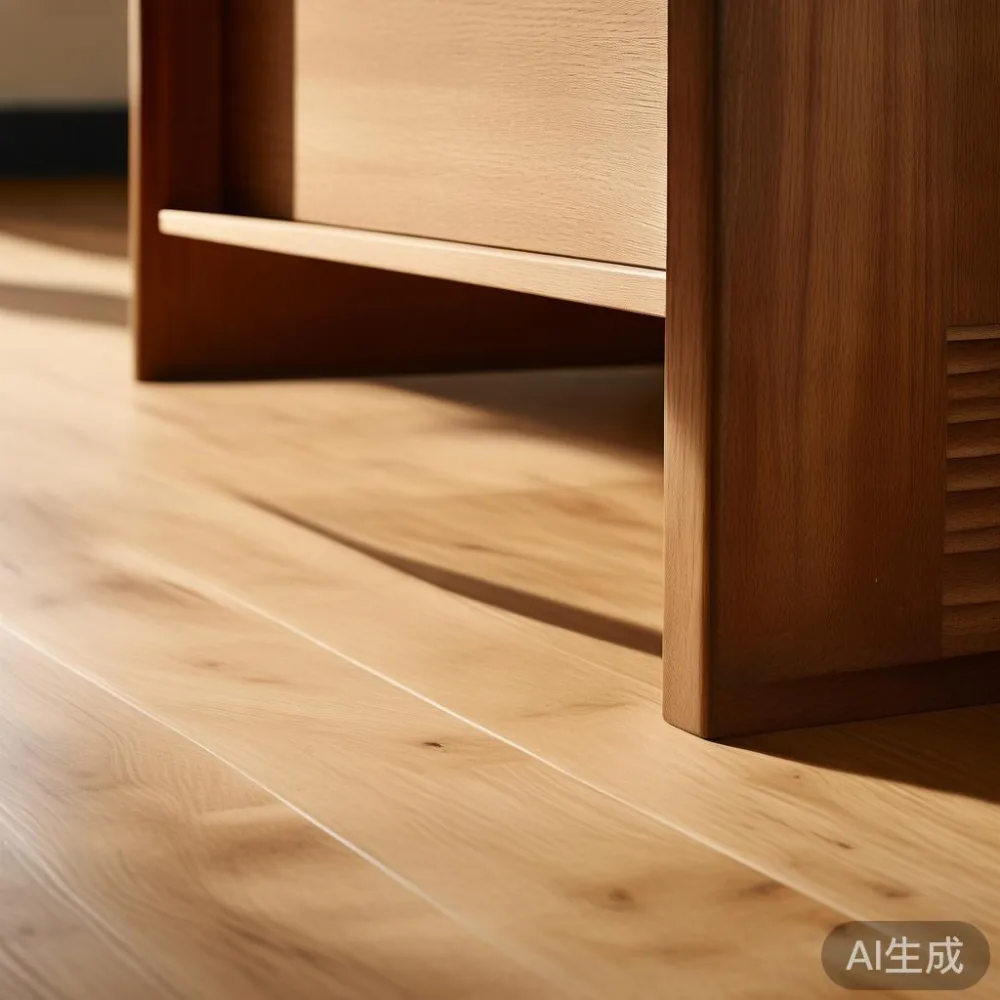
Rubberwood (Hevea brasiliensis): plantation-grown in Malaysia and Thailand, harvested after latex cycles end at 25–30 years. Stable, pale, takes stain well. A typical rubberwood nightstand in Singapore retails from S$280 to S$450.
Chinese ash / Northern ash: the workhorse for bed frames and wardrobe carcasses. Open grain, good shock resistance, costs roughly 1.8× rubberwood. A queen-size solid wood bed frame in ash lands between S$1,100 and S$1,800.
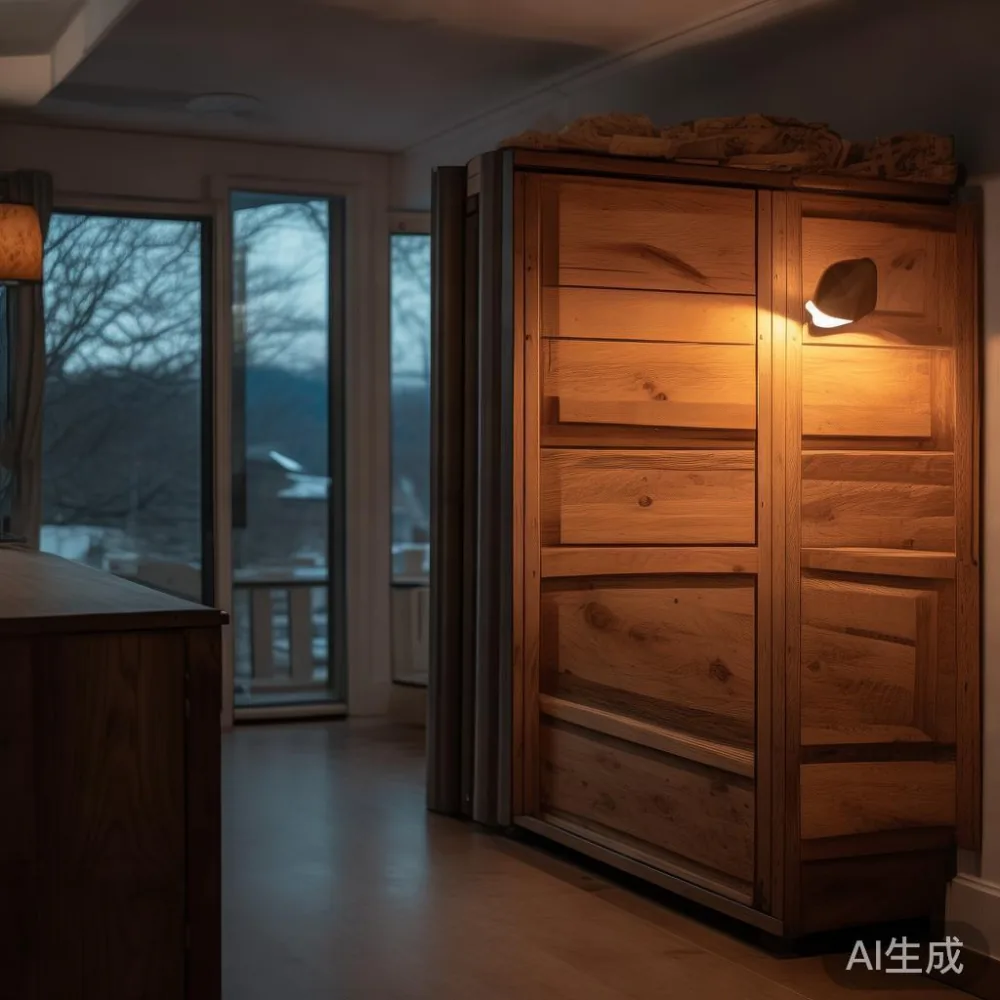
North American black walnut (Juglans nigra): the prestige species. Slow-grown (50–70 years to maturity), tight grain, naturally chocolate-purple. A walnut dining table easily crosses S$4,500 in local stores; a walnut wardrobe, like my friend's, sits between S$3,200 and S$5,800 depending on panel width and joinery.
Garage storage cabinets built for HDB utility rooms tend to live in the ash and rubberwood bands because they hide behind a roller door and rarely get touched. Living-room pieces — the ones guests see — get the walnut.
2. Joinery and Construction: Where Engineers and Craftspeople Disagree on Price
A wardrobe held together with cam-locks and particleboard will cost a third of one with mortise-and-tenon, dovetailed drawers, and 12 mm solid backs. The price difference is real, measurable, and explains most of the gap between a S$600 flat-pack from a Tampines mall and a S$3,500 MIDHILL solid wood wardrobe.
Four construction choices move the price needle:
Drawer joinery: a through-dovetail (where each pin and tail is visible from the outside) takes a skilled joiner 25–35 minutes per drawer. A machine-cut half-blind dovetail takes 4 minutes. A cam-lock and thin MDF drawer bottom takes 90 seconds. That time multiplies across six drawers of a nightstand — 4 hours versus 9 minutes — and you can see where the labour line item on the invoice originates.
Panel construction: a 25 mm thick solid walnut side panel weighs 38 kg per square metre. A 18 mm plywood panel with a 0.6 mm walnut veneer weighs 12 kg. Both look identical from 1.5 m, but the solid version adds S$120–S$180 to material and S$40 to shipping per wardrobe.
Back panels: cheap units use 3 mm hardboard wedged into a groove. Better units use 12 mm solid wood screwed into the carcass. For a tall wardrobe, this affects racking strength — push the top sideways and the back flexes. A solid back adds roughly S$90 per unit.
Soft-close hardware: European soft-close hinges from Hettich or Blum cost S$6–S$10 each versus S$0.80 for a basic butt hinge. A six-door wardrobe uses 12 hinges; the hardware bill alone is S$60–S$120.
Garage storage shelves are the opposite extreme: butt hinges or no hinges at all, 18 mm plywood carcasses, through-doweled shelves. They still benefit from solid wood construction for moisture resistance (HDB utility corners trap humidity), but joinery can be utilitarian.
3. The Hidden Cost of Kiln-Drying, Storage, and Singapore's Humidity
Walnut shipped green from Pennsylvania contains 60–80% moisture content. Furniture made from green timber will shrink, crack, and bow within six months in Singapore, where ambient humidity runs 75–85% most of the year. So every serious maker kiln-dries boards down to 8–10% moisture content before machining. A 1,200 m³ kiln running for 45 days on natural gas costs the factory around S$18,000 per cycle. That cost is amortised into every piece that leaves the yard.
I watched a 28-cubic-metre kiln being unloaded at MIDHILL when I visited in late September. The foreman explained they hold stock in a humidity-controlled warehouse (55% RH, S$1.40 per m² per month) for a minimum of 30 days after machining before packaging. That buffer stock is money sitting on the floor, but it is the difference between a wardrobe that fits together cleanly on day 1 and one that cracks along the dovetails in March.
Singapore buyers should also factor in the 9% GST that now applies to imported furniture over S$400 in CIF value (as of 1 January 2024). A S$3,000 landed wardrobe becomes S$3,270 at your door.
4. Freight, Logistics, and the HDB Lift Problem
This is the line item nobody thinks about until delivery day. A fully assembled 2m wardrobe from Foshan cannot fit inside a standard HDB lift (internal dimensions roughly 1.1 m wide × 1.4 m deep × 2.1 m tall) once you account for diagonal height. So it ships flat-pack — which adds labour, more hardware, and packaging waste — or ships assembled and gets refused at the lift lobby. MIDHILL and similar makers split the difference: ship in two halves with bolt-on assembly, which adds roughly S$120 of joinery hardware and 25 minutes of installer time per wardrobe.
Shipping math for a 180 kg, 0.9 m³ wardrobe from Foshan to Singapore:
Sea freight (consolidated): S$140–S$180 per cubic metre LCL, plus origin THC (S$45) and destination THC (S$65). Total roughly S$320–S$380.
Customs clearance and duty: wood furniture into Singapore carries 0% duty but 9% GST on CIF + duty. So S$3,500 CIF becomes S$3,815 with GST.
Last-mile delivery in Singapore: S$80–S$140 for a single item to a ground-floor address; add S$30 per flight of stairs if there is no lift access. Punggol condo loading bays often have vehicle height restrictions of 2.1 m, which rules out the larger lorries and pushes the bill toward S$160.
Garage storage pieces have it easier. A standard 1.2 m × 0.6 m × 1.8 m cabinet breaks into 2–3 flat-pack cartons, each under 25 kg, fits any lift, and ships for around S$180–S$220 door-to-door including GST.
5. Finish: Lacquer, Oil, Wax, and the Questionable ROI of High-Gloss
Finish is where the French light luxury aesthetic earns its premium — and where most buyers overspend on a look they will not notice in six months. Three common systems:
NC lacquer (nitrocellulose): the default in 80% of mid-market solid wood furniture. Five to seven coats, hand-sanded between coats, builds to a 0.15 mm film. Cost per dining table: S$120–S$180. Looks polished, feels slightly plasticky after two years.
PU (polyurethane) high-gloss: the post-modern light luxury look — piano-black dining tables, marble-look tops with PU sheen. Eight to twelve coats, each polished with 1,200-grit. Cost per piece: S$280–S$450. Beautiful for six months; micro-scratches show clearly after a year.
Hardwax oil (Osmo, Rubio Monocoat): two coats, wiped on, penetrates the wood fibres rather than sitting on top. Cost per dining table: S$160–S$220. Feels like wood, ages gracefully, can be spot-repaired. The choice of most European makers.
A marble table (stone top + solid wood base) sits in its own category. A 1.6 m × 0.9 m Carrara marble top alone is S$1,800–S$2,400 in slab form, plus S$350–S$500 for cutting, edge profiling, and sealing. The solid wood base on a S$4,500 marble dining table might only be S$600 of that total. Buyers fixate on the wood when they should be asking about the marble sealing.
6. What is the difference between Japandi furniture and modern furniture?
Japandi furniture uses solid wood with low-saturation finishes, exposed joinery, and silhouettes that stay inside a 5–10 cm profile — think a 38 cm tall platform bed frame with no headboard ornamentation and visible through-tenons on the legs — whereas modern furniture (1950s American light luxury lineage, post-modern light luxury revivals) accepts higher sheen, metal accents, marble tops, and shapes that play with negative space rather than minimise it. Functionally identical, philosophically miles apart: Japandi says the wood is the ornament, modern says the wood is the canvas.
7. Brand, Warranty, and the Refinishing Question
Two sofas can both be sold as "solid wood sofa", have identical FSC-certified ash frames, identical Italian top-grain leather, identical high-resilience foam at 32 kg/m³ — and the prices can differ by S$1,500. That difference is warranty structure, refinishing access, and replacement-part inventory.
MIDHILL, for example, ships from Foshan with a 10-year structural warranty and a lifetime refinishing service (you ship a dining table back, they strip and re-oil it for roughly S$280–S$420 depending on size). That promise is cheap to make but expensive to honour: refinishing capacity means a dedicated spray booth, three finishing specialists on payroll, and a parts warehouse holding discontinued handles, slides, and wood patches.
Anonymous white-label sofas from generic Alibaba sellers often offer a 1-year warranty and nothing else. The price gap reflects the cost of being around in year 7 when a drawer slide fails or a walnut top fades unevenly.
For garage storage specifically, the warranty math is different. Cabinets live in harsh environments (car fumes, solvent splashes, occasional flooding during monsoon season). A 5-year warranty is reasonable; 10 years is marketing inflation. Ask what the warranty actually covers — water damage is almost never included.
8. How Do I Tell If I'm Paying a Fair Price?
Three numbers matter more than sticker price: kilograms of solid wood, minutes of skilled labour, and cubic metres of shipping. If a retailer cannot quote you the net weight of the wardrobe empty, the species and grade of every visible panel, and the country of joinery assembly, they are not quoting you a furniture price — they are quoting you a guess.
Quick local benchmarks for Singapore, late 2024:
Solid wood bed frame (queen, ash): S$1,100–S$1,800 for a fair, well-built unit. Below S$900, suspect plywood components. Above S$2,200, you are paying for the showroom rent in Orchard.
Solid wood dining table (2m, ash): S$1,600–S$2,800. Walnut version: S$4,200–S$6,800.
Solid wood nightstand (single drawer, one shelf): S$380–S$650 in ash; S$780–S$1,200 in walnut.
Garage storage cabinet (1.2 m × 0.6 m × 1.8 m, ash): S$520–S$880 delivered. Add S$140 for soft-close doors and S$180 for a pegboard interior.
Wardrobe (2.4 m, three doors, walnut): S$3,400–S$5,200 delivered, GST included.
If the price you have been quoted sits inside those ranges, the maker is probably honest. If it sits 40% below, something is missing — usually solid wood. If it sits 50% above, you are paying for a brand, a showroom, or a designer markup that has nothing to do with the walnut.
The cheapest solid wood furniture is rarely the best value. The most expensive is rarely the best either. The price of solid wood furniture reflects wood, labour, freight, finish, and follow-through — five line items that compound honestly when the maker is honest, and inflate dishonestly when they are not. Ask for the numbers, do the division, and the price tag starts to make sense.