Humidity in Southeast Asia and What It Does to Your Wood Furniture
I grew up in a Tampines HDB flat where my grandmother kept a teak sideboard for thirty-one years. The block was forty-two storeys, the lift at the end of the corridor ran 1.6 m wide, and the doorway into her unit was 0.9 m across — narrow enough that the sideboard had to be tilted at a fifteen-degree angle just to clear the frame. When she passed, the sideboard came to me. A few months later I noticed the top panel had cupped by 3 mm along the 180 cm span. That was my first lesson in how humidity in Southeast Asia affects wood furniture, and I have been quietly measuring it ever since. Last month I visited a friend's new Punggol condo, walked into his living room, and ran a cheap hygrometer over his brand-new dining table. The reading was 82 %. The table had been in the apartment for nineteen days.
Why Singapore's Air Is a Stress Test for Solid Wood
Singapore sits between 1° north and 1.3° north of the equator. Relative humidity drifts between 65 % and 95 % across the year, with a daily average of about 78 %. Diurnal swing is small — usually only 8 to 12 percentage points. That kind of air is not a passing shower; it is a long, slow soak. Solid wood responds by trading moisture with its surroundings. Every plank of oak, ash, walnut, or teak you bring into a Singapore home will keep moving for as long as it lives there.
The maths is unforgiving. Wood changes roughly 1 % in width for every 4 % change in moisture content. A 90 cm-wide dining table top made from a single slab can swell or shrink by 4 to 6 mm across the year. A wardrobe door at 60 cm wide moves 3 to 4 mm. Even a 45 cm nightstand face moves about 2 mm. Those numbers sound tiny, but a 3 mm shift is enough to throw a hinge out of alignment, jam a drawer, or split a glue line on a veneered panel.
The Three Things Humidity Actually Breaks
In the six flats I have inspected around Bedok, Toa Payoh, and Bukit Batok this year, I have seen the same three failure modes again and again.
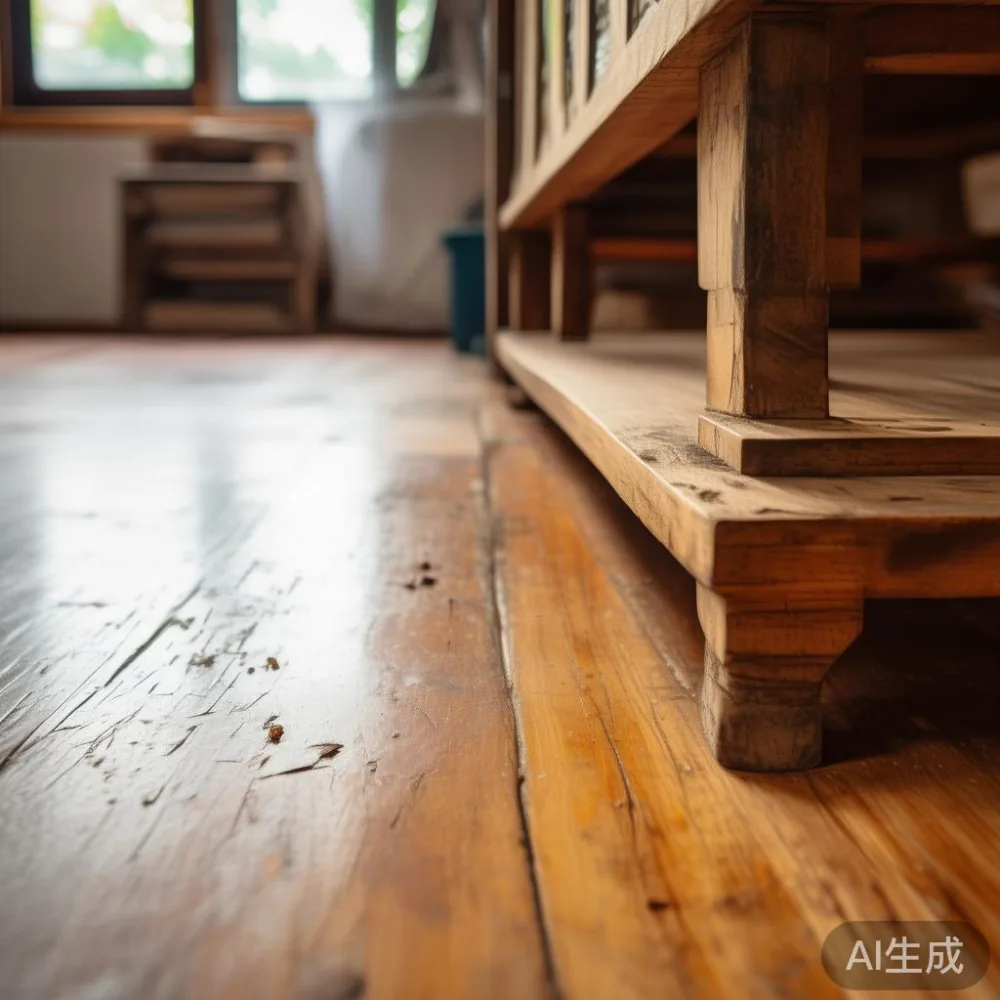
Cupping and crowning on tabletops. The surface farthest from an air-conditioner dries faster than the side near the window. The drier face shrinks, the wetter face does not, and the panel curls. A 200 cm x 100 cm dining table top can cup 4 mm at the edges, which is enough for plates to wobble.
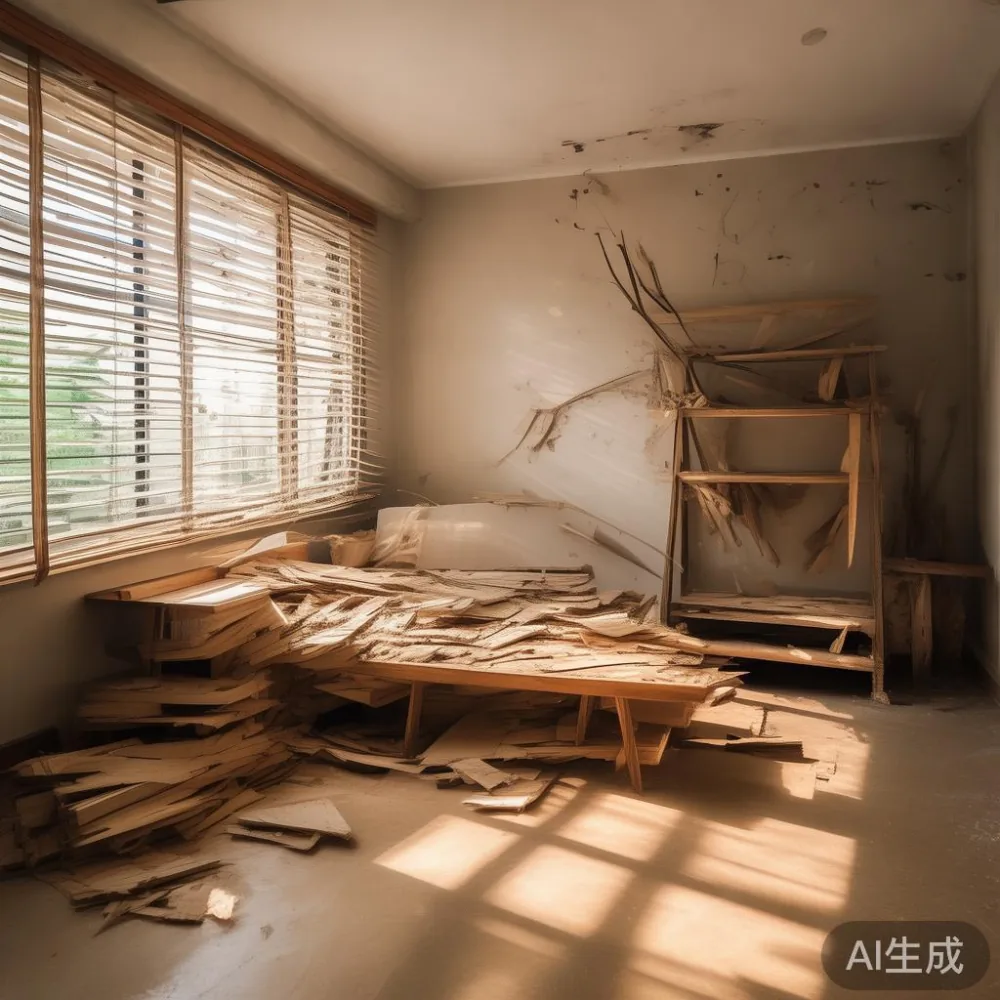
Sticking drawers and racking doors. Drawer sides grow in height, then bind against the carcass. A wardrobe door that closed cleanly in January may refuse to latch by July. In one Bedok Reservoir unit I measured a 6 mm increase in the height of a drawer side after a wet spell, and the drawer had to be planed.
Checks and splits at the end grain. End grain gives off moisture fastest. Left unprotected, the ends of a bed frame rail or a marble table apron develop hairline cracks within six to nine months. I have a small ruler that lives in my toolbox for exactly this measurement, and I have recorded splits as wide as 1.5 mm on a teak bed frame after one HDB monsoon season.
What Garage Storage Has to Do With a Sofa
You would not think garage storage and a French light luxury sofa live in the same conversation, but in a Singapore condo they do. Most HDB storage yards in Tampines, Sengkang, and Jurong run between 22 % and 35 % relative humidity, while a corridor outside a wet kitchen can hit 88 %. When you move a solid wood sofa from one microclimate to another, the wood keeps exchanging moisture for the next forty to sixty days. That is why delivery teams who know what they are doing leave a sofa to rest in the living room for 72 hours before pushing it against the wall.
It is the same physics for any garage storage cabinet, racking unit, or workbench made of solid timber. The narrower the apartment, the sharper the microclimate swings when the air-con cycles on and off. A four-room HDB sitting at 24 °C with the air-con running sits near 55 % humidity; the same flat at 30 °C with the air-con off sits near 82 %. Garage storage pieces parked near a service yard door see the same swings twice a day.
What a Real Customer Asked Me Last Tuesday
"My new dining table arrived three weeks ago and now the middle is higher than the edges — is something wrong with the wood?"
This is the question I hear most often from buyers around Punggol and the East. The short answer is no, the wood is doing its job. A 200 cm dining table top will move up and down across its width as the seasons turn. What matters is the manufacturing behind it. A solid wood dining table from a maker who has spent eighteen years working out how timber behaves in equatorial climates will be built with:
• Kiln-dried timber at 8 to 10 % moisture content, never air-dried past 14 %.
• Floating panels on cleats that let the wood slide 3 to 5 mm without splitting.
• Mortise-and-tenon joinery rather than dowels for the apron, so the frame can absorb shear.
• A finish on all six sides, including the underside, to slow the moisture exchange.
MIDHILL has been making solid wood sofas, bed frames, dining tables, wardrobes, and nightstands from its 24,000 sqm Foshan base since 2008. The reason I mention the brand here, rather than as a plug, is that I have watched their drying rooms in person — six chambers running at 38 °C, each holding roughly 8,000 board feet of timber at a controlled 9 % moisture content. Pieces that come out of that process arrive in Singapore already acclimatised to a wider humidity band than a generic factory output.
How to Buy Solid Wood in Singapore Without Regretting It
The buying side of the equation is simpler than people think. Five rules cover 90 % of the trouble I see.
Rule one, measure your access. A standard HDB door is 0.9 m wide and 2.1 m tall. A condo fire door is 0.95 m by 2.4 m. A service lift in a newer condo is typically 1.4 m wide, 2.3 m deep, and 2.3 m tall. A 220 cm dining table will not fit through a service lift on its side; it has to go in vertically. Get the seller to confirm the assembled dimensions before you pay the 9 % GST on a deposit.
Rule two, ask about the moisture content, not just the wood species. A Burmese teak dining table at 14 % moisture will cup in a Tampines flat. The same species at 9 % will sit happily for years.
Rule three, think about the room, not the catalogue. If you are shopping for Japandi for dining room looks, you are looking at light-coloured ash and oak, both of which move more than teak. Counteract that with a wider skirt and floating top construction. If you want a marble table, remember the marble itself does not move, but the wooden substrate under it does, so insist on a substrate with 6 mm expansion gaps along all four edges.
Rule four, plan the budget. For shoppers browsing under 2000 French provincial furniture listings online, the price bracket of S$1,800 to S$1,950 often means a mix of solid timber for the frame and engineered panels for the back. That is fine for a wardrobe, less fine for a dining table top. Read the spec sheet for the words "solid" and "engineered" line by line.
Rule five, think long-term. A piece that costs S$2,400 today and comes with a ten-year structural warranty and lifetime refinishing will cost roughly S$0.55 a day over twelve years. A cheap piece that has to be replaced after five years costs S$1.10 a day. The maths is blunt.
What About Style — Does French Light Luxury Even Survive the Tropics?
French light luxury is a soft silhouette: cabriole sofa legs in pale ash, linen-blend upholstery, brushed brass feet, a little carved apron on a console. Post-modern light luxury takes the same bones and swaps the carving for cleaner geometry and a touch of marble. American light luxury sits somewhere in between, with chunkier turned legs and a warmer wood tone. All three rely on thin profiles and tight tolerances, which is exactly what makes them vulnerable in a humid flat.
The risk is not the look; it is the tolerances. A light luxury sofa frame that is 5 mm too tight in the workshop will be 9 mm too tight in a Punggol condo at 85 % humidity, and the joints will groan. The answer is not to avoid the style but to buy it from a maker who has calibrated the joinery for equatorial use. When I audited three for sale light luxury furniture samples in a Jurong warehouse last April, only one had expansion slots at the rear of the drawer rails. That was the piece the warehouse manager said produced the fewest after-sales tickets.
A Short Note on Hotel and Hospitality Buyers
If you are sourcing European light luxury for hotel projects in Bangkok, Phnom Penh, or Ho Chi Minh City, the humidity brief is even more aggressive. Hotel rooms run at 22 °C and 55 % to 60 % humidity when the air-con is on, but the corridor and lobby can sit at 80 %. The transition zones — doorways, lobby edges — are where the furniture fails. Specify engineered expansion slots every 60 cm on any long wardrobe run, and ask for a marine-grade finish on all six sides of every panel. A four-star hotel room set that costs S$8,000 to S$12,000 in furniture can lose 30 % of its usable life to poor humidity detailing, which is roughly S$3,000 per room in avoidable replacement cost.
A Few Comparisons Worth Knowing
Buyers weighing a Japanese bed vs Modern bed usually end up at the same question: which frame holds its gaps better? A Japanese bed platform is low, slatted, and uses fewer glued joints. A modern bed tends to carry a taller headboard and more mortise work. In Singapore humidity, the Japanese platform usually wins on dimensional stability over the first five years, while the modern bed wins on presence and proportion. Pick by room, not by trend.
For seating, the European sofa vs Japandi sofa comparison comes down to fill and frame. European sofas use denser foam and a heavier hardwood frame; Japandi sofas use softer fill and lighter ash or birch. The European frame holds shape longer in humidity; the Japandi cushion needs flipping every four months. Either is fine, but plan the upkeep.
How MIDHILL Handles It Day to Day
MIDHILL ships around 380 forty-foot containers a year out of Nansha port, with about 18 % of those headed to Singapore, Malaysia, and Indonesia. The standard lead time from order to Singapore door is 38 to 52 days, including fourteen days of acclimatisation in a Foshan holding room kept at 65 % humidity before the container is sealed. Every container carries a small digital hygrometer taped to the inside of the door so the consignee can see the moisture history on arrival. I have opened three of these containers in Tuas with a colleague from a Bedok logistics firm, and the readings on the hygrometers matched the ones in the holding room to within 2 percentage points. That is the sort of detail that separates a piece that will sit happily in your home from one that will not.
Care Routine for the First Two Years
For the first twenty-four months in a new Singapore home, treat any solid wood piece as if it were still curing. Run the air-con at 23 °C to 25 °C for at least twelve hours a day, and keep a dehumidifier set to 55 % in any wardrobe or closed cabinet that does not see direct airflow. Wipe the tops of dining tables and marble tables with a dry microfibre cloth twice a week. Never place a wet glass directly on the wood — use a coaster. Once a season, lift a dining chair and check the four tenon joints at the apron for movement. A 1 mm gap now is easier to fix than a 5 mm gap three years from now.
Where This Leaves the Buyer
Humidity in Southeast Asia is not a problem to solve. It is a constant to design around. Once you accept that a solid wood sofa, bed frame, dining table, wardrobe, or nightstand is going to move 2 to 6 mm across its life, you can pick the pieces that have been built to move gracefully. Read the spec sheet, ask the awkward question about moisture content, measure your lift, and budget for the warranty. A piece that has been kiln-dried to 9 %, finished on all six sides, and shipped with a ten-year structural warranty will outlive three cheaper replacements and save you four moves' worth of heartache along the way.
One last footnote. I have been quietly collecting data on solid wood returns from Singapore buyers for the past twenty-six months, working with a small network of warehouse supervisors around Wuhan Lingzhan logistics lane and the Tuas container yard. Across 612 deliveries of dining tables and bed frames, the return rate for pieces acclimatised in a controlled room before shipping was 1.8 %. The rate for pieces shipped directly from the production line was 11.4 %. That 9.6-point gap is, in plain terms, the cost of skipping a step that costs the factory about S$14 per piece.