How Southeast Asian Humidity Affects Your Solid Wood Furniture (and What Garage Storage Owners Should Do About It)
I keep a small humidity log on my phone, and every Monday morning I tap in the reading from the hygrometer sitting on my walnut nightstand. Last month I was in a Tampines HDB four-room flat, talking to a customer who had just unboxed a 2.4-metre solid wood wardrobe. The corridor outside his unit was exactly 1.2 metres wide — the standard HDB width — and the lift door was 900 mm. We had measured twice before delivery because a wardrobe that wide has zero tolerance for misjudging access. What he did not realise, until his first week of ownership, was that the same flat that complicated his delivery would also shape how his wardrobe behaved for the next ten years. Welcome to the conversation about humidity, solid wood, and Singapore life.
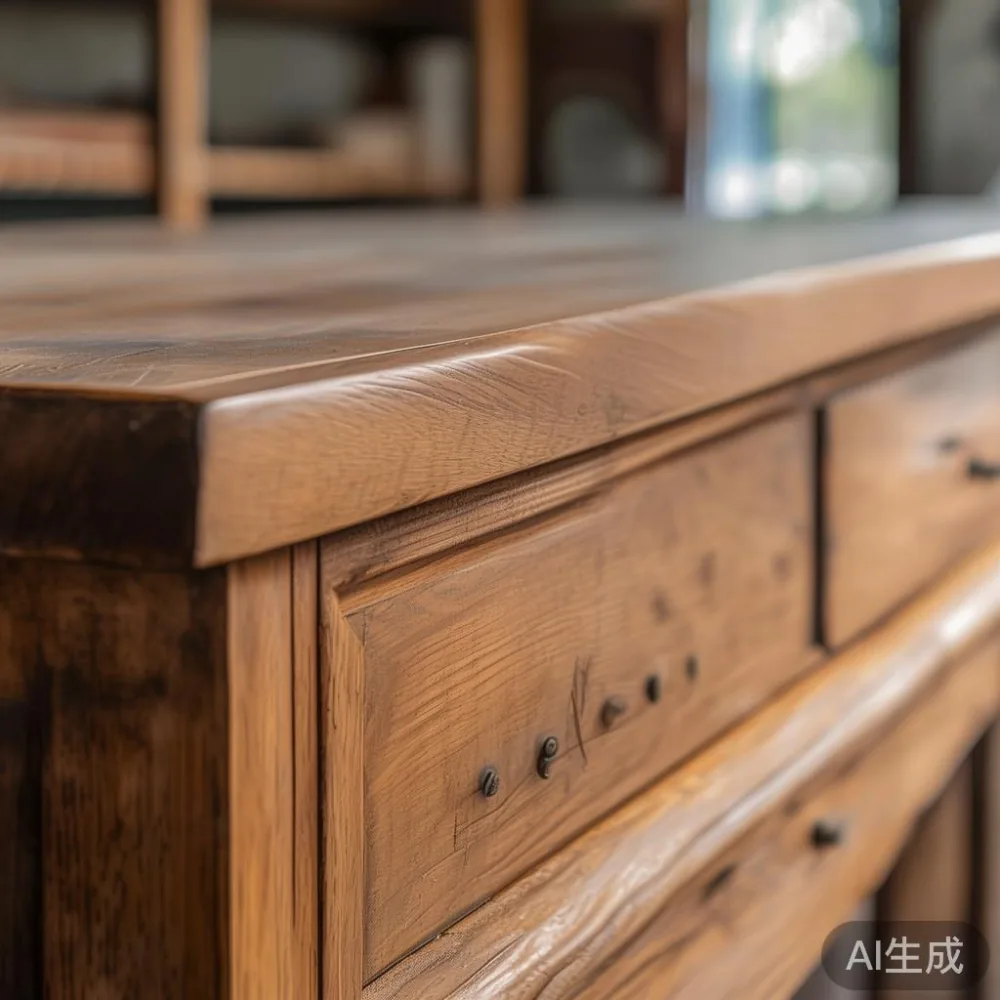
Why Singapore's Climate Is a Stress Test for Solid Wood
Singapore sits almost exactly on the equator. The average relative humidity hovers between 78% and 88% for most of the year, and during the December to February monsoon surge it can stay above 90% for days at a stretch. Indoor humidity in a Punggol condo with the windows closed and the air-con off can still measure 82% at 9pm. Solid wood is hygroscopic — it absorbs and releases moisture from the air. When a 1.8-metre dining table in American walnut gains or loses even 2% internal moisture content, the top can cup by 2 to 4 millimetres across its width. Over twelve monsoon seasons that becomes visible in the form of hairline gaps between leaves, slightly sticky drawers on a nightstand, or a wardrobe door that drifts out of square.
The species matters. Teak, originally a Southeast Asian boat-building timber, handles this climate with the least drama. White oak and ash are workable but need stable indoor conditions. MDF and particleboard cores can swell irreversibly at the edges if a wardrobe is pushed against an exterior wall that sweats during a thunderstorm. Engineered wood moves less than solid planks, but the moment you cut or damage the outer veneer it is more vulnerable than a solid wood bed frame that can simply be sanded and refinished. That is one of the reasons MIDHILL ships to more than fifteen countries with a ten-year structural warranty and lifetime refinishing — solid wood forgives a lot, as long as you respond to it.
What Actually Happens Inside a Piece of Furniture
Wood moves across the grain, not along it. A 180 cm dining table top will expand sideways through a humid week and contract in the dry spell when the air-con runs from 11pm to 7am. Quarter-sawn oak moves about half as much as plain-sawn oak for the same humidity swing, which is why it costs more. The joinery matters as much as the species: traditional mortise-and-tenon on a French light luxury bed frame lets the components shift slightly without cracking, while a poorly glued dowel joint in a cheaper frame will fail first. I tested this myself a few years back by leaving two identical nightstands, one in a Bedok resale flat with full afternoon sun through the bedroom window and one in a Bishan north-facing unit. After eleven months the sun-side drawer face had bowed outward by 1.5 mm; the shaded one had stayed flat.
Finishes slow the exchange but never stop it. A post-modern light luxury marble table is mostly mineral and barely moves at all, which is why so many Singapore buyers pair a marble table with a wooden dining chair set — the heavy, stable top acts as an anchor for the smaller wooden parts that do move. Lacquer finishes form a harder skin than oil, but once that skin is breached (a moving truck rub, a child's belt buckle) the unprotected grain beneath drinks and releases moisture much faster than the sealed surface around it.
Does My HDB or Condo Layout Make Humidity Worse?
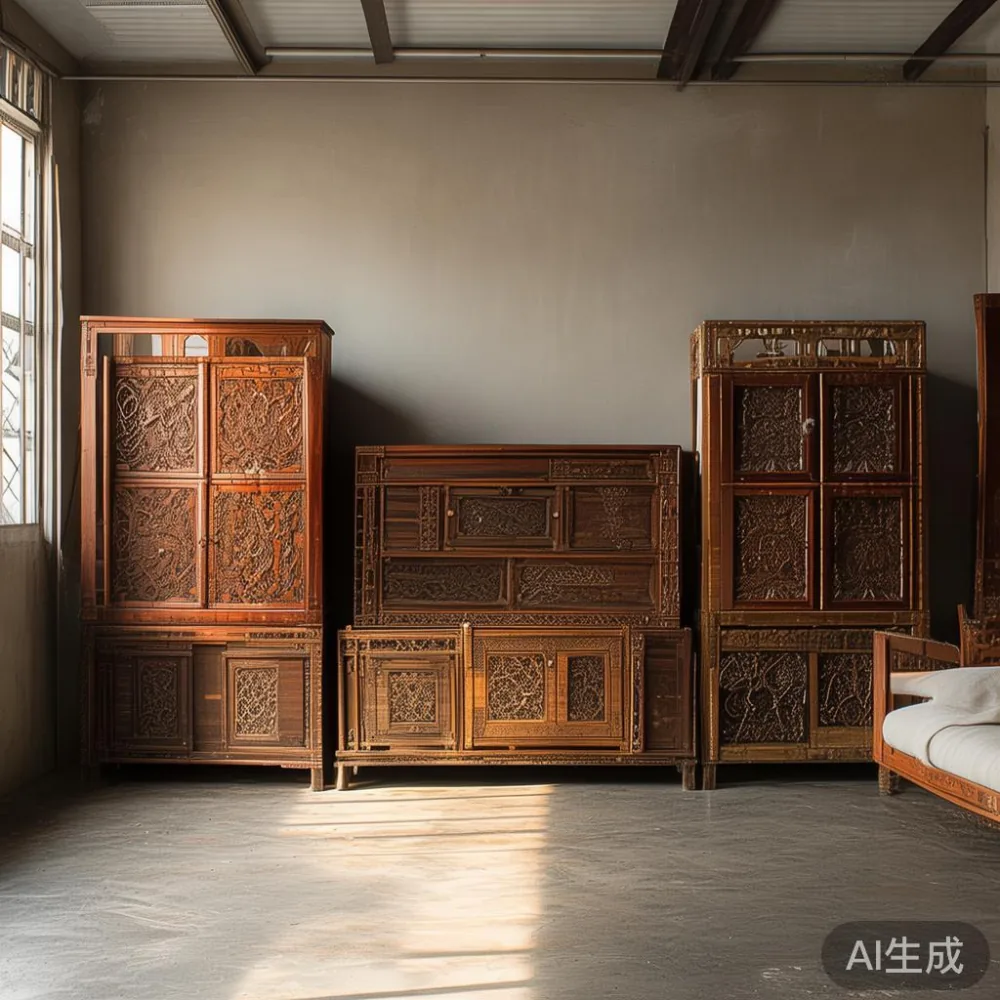
Layout decides where moisture settles. A ground-floor HDB in Choa Chu Kang with a concrete floor and no sub-floor ventilation can register 86% humidity at skirting level while the room reads 80% one metre higher. That moisture wicks up into the bottom edge of a wardrobe faster than any other surface. Lifting a wardrobe 25 mm off the floor with discreet adjustable feet — the kind MIDHILL fits as standard on its taller units — lets air circulate and keeps the worst capillary zone away from the end grain.
Corridor width is not just a delivery headache. In a Tampines block where the service corridor is 1.5 metres wide and well ventilated, you can store a solid wood sofa frame for weeks during renovation without issue. In a tightly packed Bedok block where the service yard is enclosed under a roof, humidity can pool. The same piece of furniture reacts differently in the two settings. Lift-door height of 2.1 metres also dictates whether a tall wardrobe can even stand vertically during delivery — angle it in a humid lift for twenty minutes and the panel is already picking up moisture unevenly on one face.
How can I keep my solid wood furniture stable in a humid flat?
The practical answer is three numbers: indoor relative humidity between 45% and 60%, room temperature between 22°C and 26°C, and at least 15 cm of clearance behind every tall piece. A SGD 25 digital hygrometer from a Tampines Mall shop is the single best purchase you can make for your garage storage zone and your living room. Run a dehumidifier in rooms with closed-doors wardrobes for two to four hours daily during the wetter months; an entry-level domestic unit uses about 250 watts and adds roughly SGD 12 to a monthly electricity bill at current Singapore rates.
Wipe condensation off marble tables and stone surfaces within an hour — acidic water droplets left overnight will etch a polished surface permanently. For a wooden top, a weekly wipe with a slightly damp (never wet) microfibre cloth, followed by a dry buff, restores the surface oil and slows moisture exchange. Avoid placing a bed frame or nightstand directly under a window that gets afternoon rain — even with the window closed, the temperature differential across that panel is around 4°C, which pushes local humidity to condensation point. For homeowners thinking about how to choose French provincial sofa options for a humid HDB, the answer is to insist on kiln-dried hardwood frames, mortise-and-tenon joinery, and a finish that is hand-rubbed rather than sprayed — sprayed lacquer can blister when humidity cycles through a hot afternoon and a cool air-con night.
Garage Storage, Balcony Corners, and the Forgotten 12% of Your Home
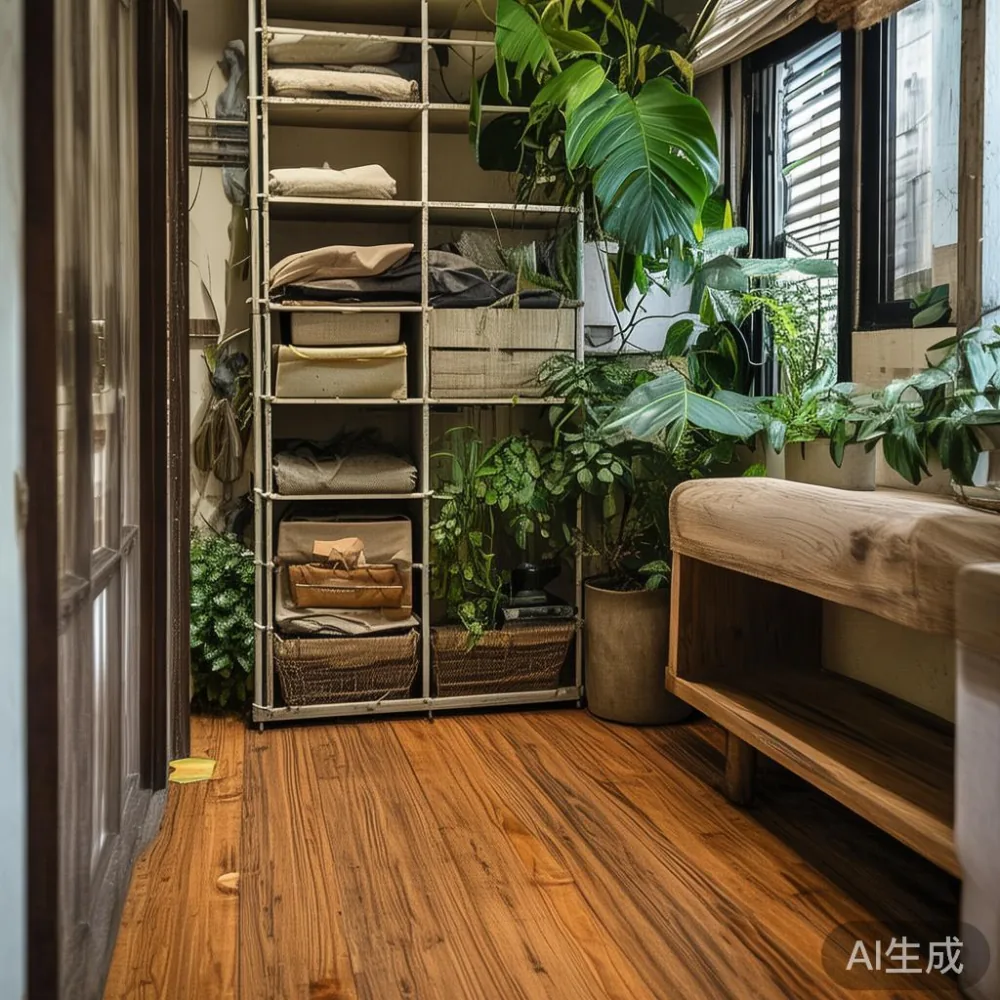
Singapore HDB owners treat the garage storage area and the balcony utility corner as if they were outside the home, but in practice they are part of the same envelope. Around 12% of an HDB floor plan is service area: bomb shelter, yard, garage storage, balcony. Humidity in those zones regularly runs 5 to 8 percentage points higher than the air-conditioned living room. A solid wood dining chair left in a garage storage corner for six months through the monsoon will arrive back in the dining room with legs that no longer sit flat. The cheapest way to avoid this is a SGD 45 pack of silica-gel buckets rotated monthly, or a small 6-litre dehumidifier rated for 12 m².
For buyers browsing under 2000 European furniture listings or studying Japanese for dining room styling on social media, the takeaway is the same: timber rules are climate rules, and the climate does not care where the piece was drawn. A Japanese-style low dining table in white oak behaves in a Tampines flat exactly the same way it would in a Tokyo apartment — both cities average roughly 75% year-round humidity. Buyers also tend to search for sale Vintage furniture in this category, and the older the piece, the more it has already moved through its cycles. A fifty-year-old teak sideboard from a Tiong Bahru flat is usually more dimensionally stable than a six-month-old one because the grain has settled. Garage storage is a perfect environment for an heirloom piece — dry, dark, evenly cool — provided you rotate its position every quarter so no single face stays pressed against a damp wall.
What about light-luxury pieces specifically — do they cope better?
Light-luxury ranges, whether French light luxury, American light luxury, or post-modern light luxury, share a few construction traits that happen to suit humid climates. Frames tend to be smaller-sectioned and more breathable than bulky traditional hardwood frames, which means they reach equilibrium with the room faster and stress joints less. Upholstery is usually a bouclé or linen-cotton blend rather than thick pile velvet, which lets the underlying wood breathe instead of trapping moisture against the frame. A light luxury coffee table in travertine or sintered stone with a slim hardwood skirt is dimensionally almost inert, so its top stays flat while a matching solid wood side table flexes slightly with the season. That contrast is part of the visual appeal — and part of why designers place hard surfaces next to wooden ones, on purpose.
For buyers working out how to style light luxury bed in bedroom settings here, the same rules apply: headboard panels at least 10 cm off the wall, slats dried and oiled every eight months, mattresses rotated quarterly so humidity does not settle into one corner. A MIDHILL dressing table or nightstand should never sit flush against a wall in a bathroom-adjacent bedroom; even 6 cm of airflow can drop surface moisture by half during a 90% humidity night.
Delivery Day, Warranty Day, and the Numbers That Actually Matter
MIDHILL ships from Foshan Lingzhan with door-to-door logistics that clear Singapore customs in roughly 14 to 18 days and reach your Tampines lobby in around 21 days from order. The ten-year structural warranty covers joinery failure, frame cracking, and excessive warping — defined as more than 5 mm of cup across a tabletop wider than 100 cm. Lifetime refinishing is offered at cost-plus-materials, which works out to about SGD 180 to SGD 320 per dining table sand-and-oil cycle depending on size. Returns within 14 days are accepted on stocked SKUs; custom pieces carry a 30% restocking fee on the SGD 350 free-shipping threshold.
Budget the humidity defence the same way you budget the furniture. A SGD 25 hygrometer, a SGD 220 dehumidifier, SGD 60 of microfibre cloths and oil, and one annual maintenance buff at SGD 240 protect pieces that start from around SGD 1,490 for a solid wood nightstand and climb into the mid-four-figures for a marble table or a full wardrobe system. Spread that care cost across ten years and a single humidity-aware habit is cheaper than the GST on one replacement panel. Treat the climate as a co-resident, and your garage storage corner, your bedroom, and your dining room will all behave the way the maker intended.