Humidity, HDB Corridors, and Solid Wood: Protecting Garage Storage in a Singapore Home
I have a confession. My first year working out of the MIDHILL showroom in Foshan, I shipped a beautiful 2.4-metre ash wardrobe to a customer in Punggol, watched it glide through her corridor, and then received a photo two months later showing a faint cup-mark along the lower panel. The culprit was not cheap glue or rushed joinery. It was the air itself. Singapore holds relative humidity at 70–85% for most of the year, and a piece of solid wood furniture sitting in an HDB corner behaves like a slow-acting sponge. That single wardrobe taught me more about reading moisture meters than any workshop manual ever did. So when friends in Tampines and Bedok ask me why their father's 1990s teak sideboard still looks perfect while a newer oak piece warps by November, I usually start with the same number: the wood's moisture content.
Why Singapore's Climate Is a Stress Test for Solid Wood
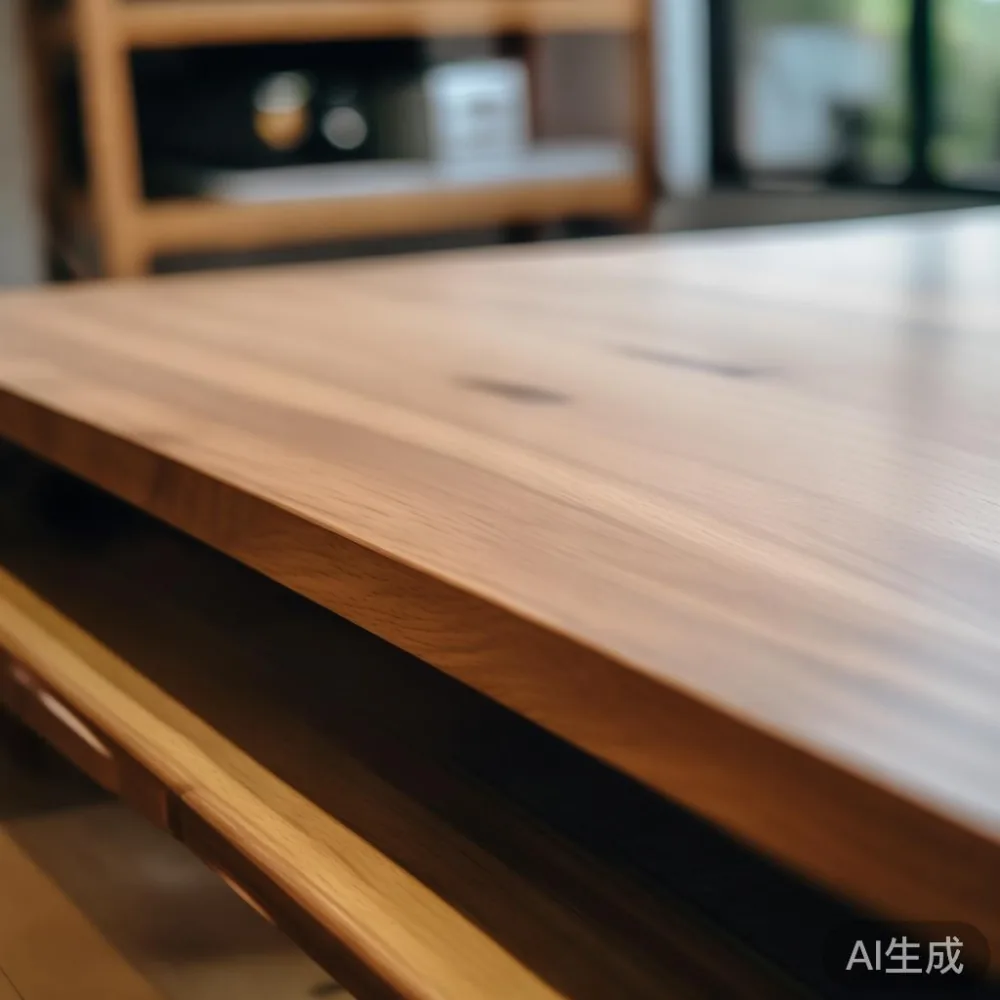
Wood is hygroscopic. It gives off moisture when the air is dry and absorbs moisture when the air is wet, and it does this through every unfinished face, end-grain, and joint. The recommended equilibrium moisture content (EMC) for indoor timber in tropical homes sits around 12–15%. Walk through a Tampines corridor in July and your digital hygrometer will probably read 82%. Most kiln-dried oak, walnut, or ash arrives from Foshan furniture factories at 8–10% EMC — already stressed by the time it leaves the loading dock in Nansha Port. In the first 30–60 days inside your flat, the wood either absorbs 2–4% extra moisture or fights a quiet battle against it. The visible result: tiny edge lift on a wardrobe door, a half-millimetre gap in a dining table top, a drawer that feels sticky in November and loose in February.
Numbers you can act on: a 1% swing in moisture content moves a 1.8-metre solid wood sofa frame by roughly 0.8 mm across its width. Multiply that by a four-panel wardrobe and you get 3 mm of seasonal movement — enough to throw factory-set hinges out of alignment. This is the everyday physics behind garage storage complaints from Punggol condo owners who store bulk items in their Punggol Digital District-adjacent units.
What the Lift Can and Cannot Do to a 2.4 m Wardrobe
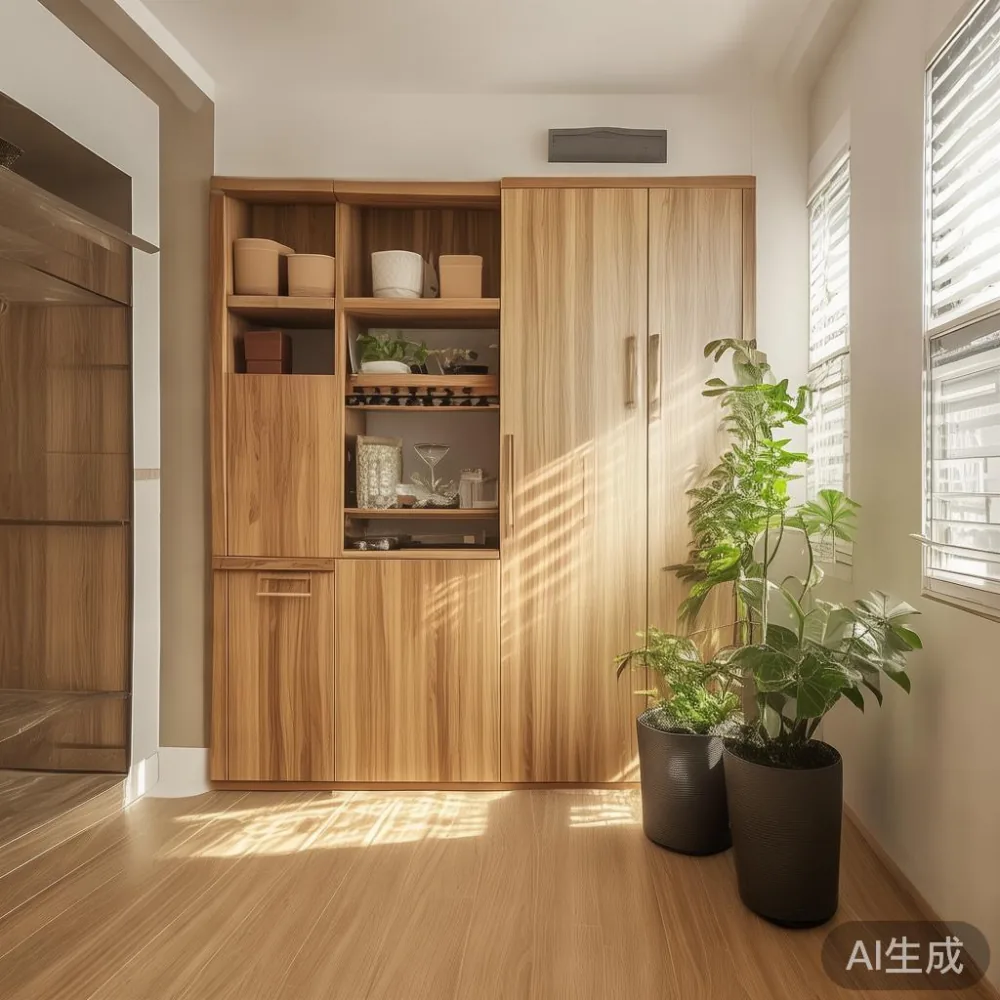
Singapore HDB lifts typically have an inner door opening of about 80 cm wide and a cab depth near 130 cm. A flat-pack wardrobe from a Swedish giant fits, but a solid wood wardrobe ordered through a Foshan direct supplier can run 60–65 cm deep with 2.4 m of vertical oak. Last month I visited a customer on the 14th floor of a Bedok North block, and her Italian light luxury wardrobe — 2.55 m tall, 90 cm deep — arrived in two halves specifically so the lift doors could close. The driver had to tilt the upper section 8° to clear the ceiling rail. That kind of triage is normal on move-in day, but it also means your wardrobe absorbs its first dose of outdoor humidity while straddling the lift threshold.
Three things to measure before delivery, especially if you are investing in larger pieces like a solid wood sofa, a bed frame, or a six-seater dining table:
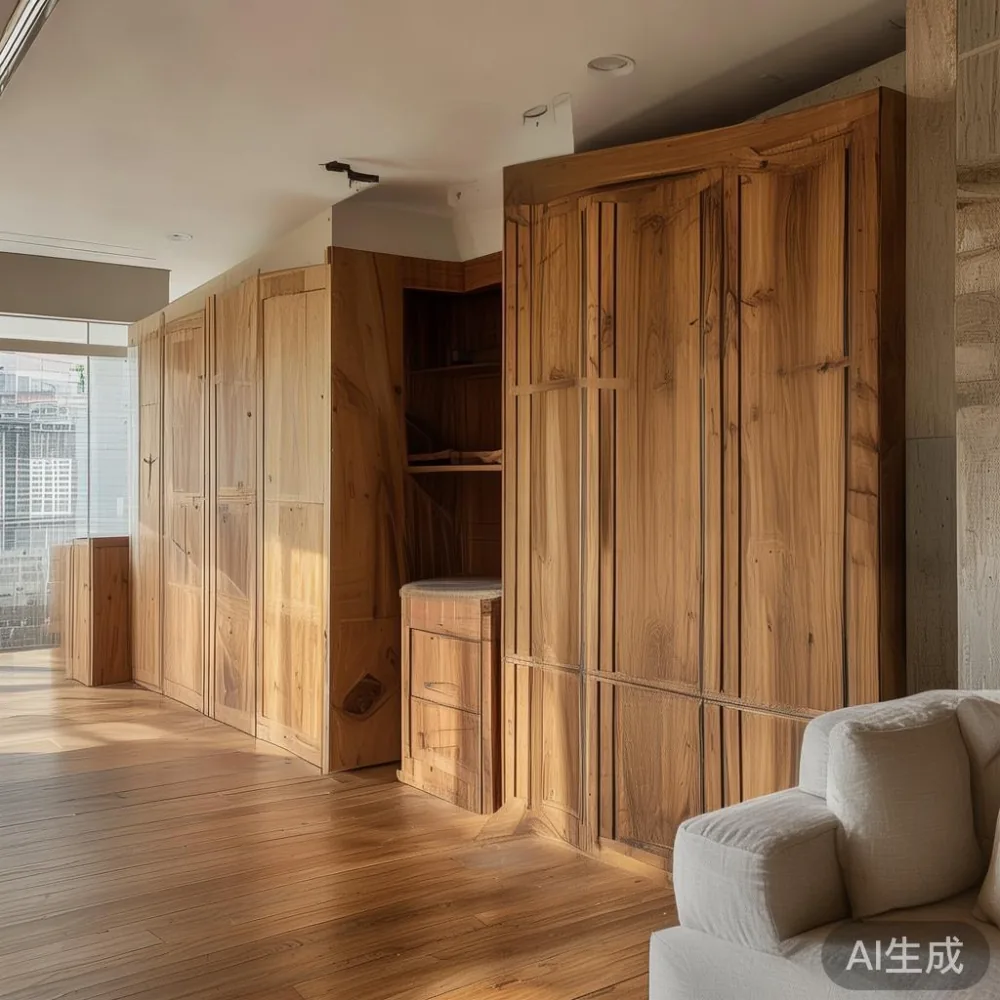
- Corridor turning circle: HDB corridors often pinch to 1.2 m at the stair landing. A 2.4 m wardrobe turned on its side needs at least 1.3 m of clear run.
- Lift door height: 2.1 m for standard lifts, 2.3 m for newer EC blocks in Punggol. Anything taller has to tilt or split.
- Ceiling fan clearance: Bunkai-style fans hang 35–45 cm below the ceiling. Leave 8–10 cm between a wardrobe top and the fan blade tip.
Garage Storage: How Humidity Rewrites Your Plan
The phrase garage storage gets used loosely in Singapore, but the climate problem is identical whether your "garage" is a real landed garage in Bukit Timah, a multi-purpose utility corner in a Punggol EC, or a store room under the staircase in a 4-room HDB flat. Concrete floors wick groundwater up through capillary action; an unsealed garage slab can pump 1–2 litres of water vapour per square metre into the air every 24 hours in the wet season. Store unsealed oak or ash shelves in that air, and you are running an experiment on warped garage storage within six months.
Three rules I share with every customer who messages about their garage storage:
- Acclimatise the wood before install. Stand the panels upright in the actual room, spacers between them, for 7–14 days. A 2 cm gap top and bottom allows airflow.
- Lift the wood off the slab. 5 cm clearance under a wardrobe base or a garage storage cabinet kills 80% of rising damp damage. Stainless steel plinths rated to 80 kg per leg cost S$8–S$14 each and are well worth it.
- Stop double-parking hot gear. A motorcycle exhaust can sit at 80 °C after a 20-minute ride. Park it beside, never under, wooden garage storage shelving.
Is American Wardrobe Worth It in a Tropical Climate?
Short answer: the construction matters more than the country of origin. American wardrobe factories traditionally use thicker 22 mm side panels versus the 16 mm common in flat-pack imports. Thicker panels move less, period, and they tolerate a 3% EMC swing almost as well as the same wood in a temperate climate. The catch is logistics. A shipping container from Texas takes 22–28 days to reach Singapore, and the longer transit gives the wood more time to bounce between dry and humid during the equatorial crossing.
Is American wardrobe worth it for a HDB owner storing bulk items? My honest read after watching forty-odd installations: yes, if the panel thickness is documented, the drawer bottoms are real wood (not 6 mm hardboard), and the back panel breathes through a 2 mm expansion gap rather than being glued flush. If you are hunting for the best American wardrobe for 2026, prioritise white oak over rubberwood, kiln-dried to 8–10% EMC with a factory certificate.
What "Light Luxury" Actually Means in a Humid Bedroom
Walk into an MIDHILL showroom in Foshan — or any credible Foshan factory floor — and you will hear three light-luxury categories within ten minutes: French light luxury (curved cabriole legs, soft champagne finishes), American light luxury (clean shaker lines, dark walnut, brushed brass pulls), and post-modern light luxury (geometry, marble inlay, matte black accents). They each behave differently in Singapore.
French light luxury uses more closed-grain hardwoods and tends to cope well with humidity. American light luxury loves wide planks — perfect for a single-slab dining table, but a liability for a wardrobe in Punggol if the planks are not quarter-sawn. Post-modern light luxury, especially anything with a marble table top, brings its own enemy: acidic condensation from a glass of iced lemon tea left overnight can etch a polished marble surface within an hour.
Two techniques that travel from the showroom floor into your bedroom, if you want to know how to style light luxury bed in bedroom without sweating the humidity:
- Keep at least 12 cm of clearance around the headboard panel so air can move and the wood can breathe on all four edges.
- Run a 12-litre damp-trap dehumidifier set to 55% RH in the bedroom for the first 90 days after delivery. A Beurer or similar unit pulls roughly 250–300 ml of water per day at 80% RH — measurable, not theoretical.
Living With the Pieces You Already Own
You do not need to replace anything just because the monsoon season is starting. Five habits protect what is already in your home, and they cost less than a S$60 delivery from a Tampines mall:
- Buy one hygrometer per major room. A S$12–S$18 digital unit from any neighbourhood store tells you when humidity climbs above 65%. Anything above 65% is where most seasonal movement begins.
- Wipe, do not spray. A damp microfibre cloth, well wrung, is fine. A spray bottle of water near an oak nightstand is how you grow white mildew rings by week three.
- Rotate wardrobe contents twice a year. A lavender sachet left untouched for months will transfer its oils onto unfinished wood. Switch sachets between bottom drawer and top shelf every April and October.
- Keep AC on a 28 °C, 55–60% RH setting. Running it at 22 °C dries wood out faster than the kiln that dried it originally, and cracking along a marble table edge often traces back to over-drying, not over-humidifying.
- Schedule a yearly check. A 30-minute touch-up — tightening hinge screws, re-aligning a wardrobe door by 1.5 mm, oiling drawer slides — prevents a 10-year problem turning into a replacement.
When Two Sofas Are Better Than One
The Japanese sofa vs Italian light luxury sofa question comes up more often than you would think among landed-property owners renovating a new living room. The Japanese approach favours low profiles, lighter woods, and removable covers — practical for a household with a small dog and a toddler. The Italian light luxury sofa route means tightly tensioned leather or woven bouclé over a kiln-dried beech frame. Both work in Singapore. The deciding factor is your airflow and your sun exposure. A west-facing living room in a Punggol penthouse can hit 38 °C by 4 pm, and a leather sofa placed there will bleach and crack within 18 months. A fabric sofa in the same spot just fades. Pick the frame, then pick the covering that matches the sun, not the showroom mood board.
The Quiet Showpiece: Marble Table Care in the Tropics
Marble and humidity play nicely together, but marble and humidity plus acidic spills do not. A Carrara marble table in a Tampines dining room will develop a soft patina within a year — desirable to some homeowners, alarming to others. To keep the surface even, seal the marble every six months with a penetrating sealer (S$28–S$45 per 500 ml). Pour a glass of cold brew coffee, wipe it up within 20 minutes, and never rest a lemon wedge directly on the stone. A small investment in coasters saves a S$1,800 tabletop.
Why Solid Wood Garage Storage Pays You Back Over a Decade
A 12 mm particleboard shelf rated for 15 kg costs roughly S$45 and lasts 4–5 years in a humid garage. A 22 mm solid oak shelf rated for 35 kg costs around S$180 and lasts 15–25 years with a yearly oil rub. The math, including two replacement cycles of the cheaper option, lands within S$40 of each other at year ten. The reason the solid version wins is what it does in year eleven and twelve — it is still there, still load-bearing, still refinishable if you scratch it during a move. MIDHILL offers lifetime refinishing support on the garage storage line, which is one of the reasons landed-property owners in Bukit Timah and Holland Village keep ordering the heavier oak variant instead of chasing a cheaper entry-level model.
The Warranty Logic Behind a Foshan Direct Order
Buying through a Foshan furniture exporter carries practical advantages beyond price. A 10-year structural warranty means that if a wardrobe frame fails because of a humidity-related joint split (not impact damage), the factory covers the repair or the replacement. Free shipping above US$350 — about S$480 — covers roughly 90% of orders, and 14-day returns handle the rare case where a piece simply does not fit the lift or the corridor. Spec sheet, moisture content certificate, and a clear finish warranty travel with the order. You are not guessing how the wood was dried or how the drawer was assembled; the paperwork tells you.
What About Mid-Century Modern in a Condo?
Luxury Mid-century modern furniture — walnut tones, hairpin legs, slim profiles — looks gorgeous on a Punggol condo mood board, but its tolerances are tight. A solid walnut bed frame with a 2 m headboard moves 2–3 mm per percent of moisture change. In a Punggol EC where the air conditioning only runs in the master bedroom, the nightstand may cup overnight while the bed frame stays flat. Solution: match the wood species across the room and run the AC at 28 °C, not 22 °C, so all pieces age on the same curve.
A Practical Move-In Checklist for a Punggol EC Owner
When my colleague helped her sister move into a new 5-room Punggol EC last month, she kept a 10-item checklist taped to the inside of the wardrobe door. Sharing it here because it works for any Singapore address:
- Hygrometer installed in the bedroom and the store room before any wood crosses the threshold.
- Freestanding dehumidifier in the garage storage corner, set to 55%, plugged into a smart plug with a humidity trigger.
- 5 cm plinths under every wardrobe base, even the ones that already have legs.
- Felt pads on dining table legs if the table sits on vinyl flooring (condensation under vinyl is a real thing).
- Wardrobe doors left open 30 minutes twice a week for the first month to balance EMC.
- Clear silicone gap (3 mm) along marble table edges to allow seasonal movement.
- Sofa positioned at least 60 cm from a west-facing window or behind sheer curtains.
- Wardrobe top kept 10 cm below any downlight or ceiling fan.
- Bulk items in garage storage shelved on the upper third only when the room is sealed and dehumidified.
- A yearly photo of every major piece, stored on the phone, so warranty claims have evidence.
The Honest Takeaway
Humidity in Southeast Asia is not a flaw to defeat; it is a variable to design around. A solid wood wardrobe from a Foshan factory, a marble table finished with penetrating sealer, a light luxury bed frame matched to your air-conditioning routine — all of these have a sensible place in a Tampines or Bedok home. The owners who get years of faithful service out of their pieces are the ones who treat the wood like a living material: measuring it, breathing with it, and giving it room to move. Spend a little extra on plinths, dehumidifiers, and a yearly check-up, and the rest of the work happens on its own. The air will keep doing what it does in Singapore. The furniture just needs the right air around it.