Garage Storage in Singapore: A Buyer-First Guide to Shelving, Cabinets, and Shelving That Actually Survives the Humidity
What counts as a 'garage' in most Singapore homes today?
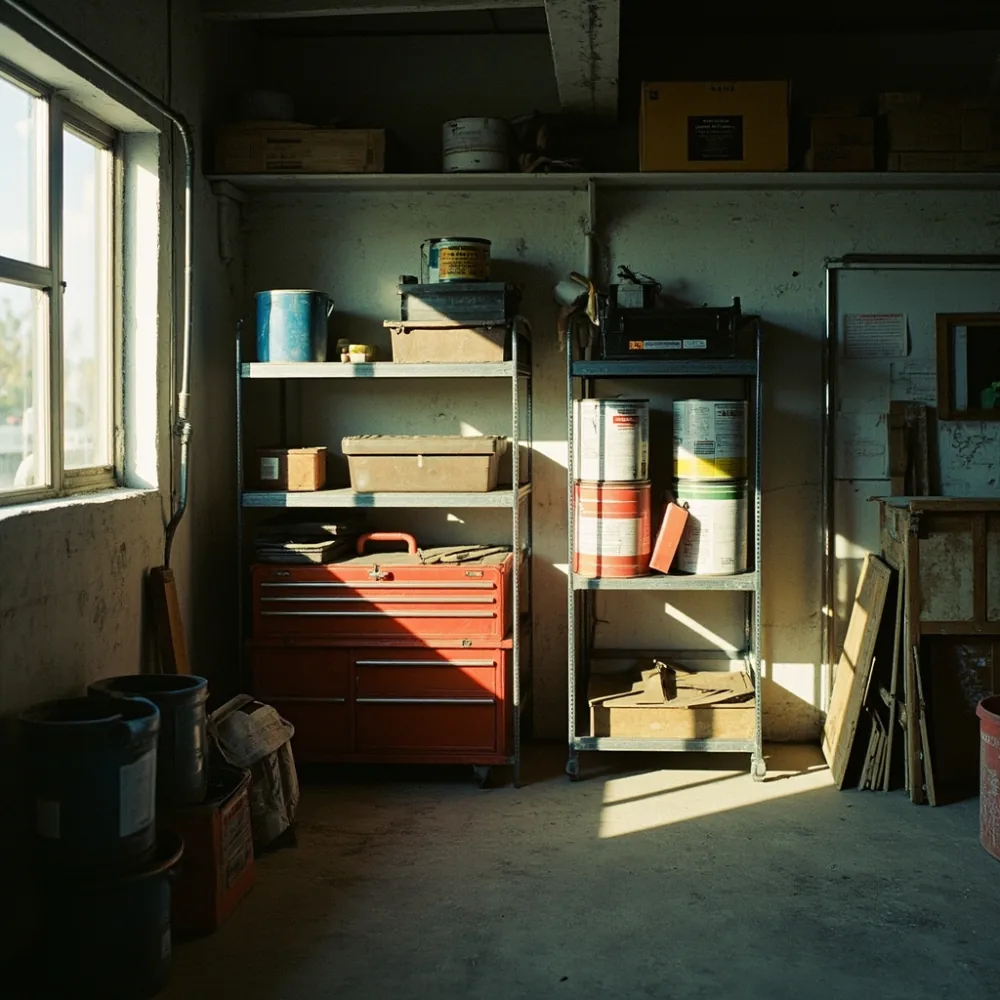
HDB service yard vs the landed storeroom
The condo storeroom and the 'ventilated' car park lot
Before you even look at shelving, you need to be honest about what kind of space you're actually dealing with. In HDB flats and most condos here, what people casually call a 'garage' is usually one of three things: a service yard behind the kitchen, a small storeroom next to the household shelter, or - if you're lucky enough to own a landed property - an actual lock-up garage or storeroom at the base of the stairs.
I keep a mental map of the typical sizes I see on site visits. A standard HDB service yard is around 1.2m deep by 2.4m wide, sometimes squeezed to 1.0m by 2.0m in newer BTOs. A condo storeroom tends to be a touch larger but less ventilated, often around 1.5m by 2.2m. Landed garages are the wild card: I've measured everything from a 3m by 5m single-car bay in a semi-D in District 10 to a full two-car garage in a detached house in Bukit Timah that's closer to 6m by 6m.
The point isn't the exact number. The point is that 'garage storage' in Singapore usually means small space furniture in a humid, sometimes poorly ventilated corner of the home - and that changes the buying decision completely.
How bad is humidity really, and what does it do to garage shelving?
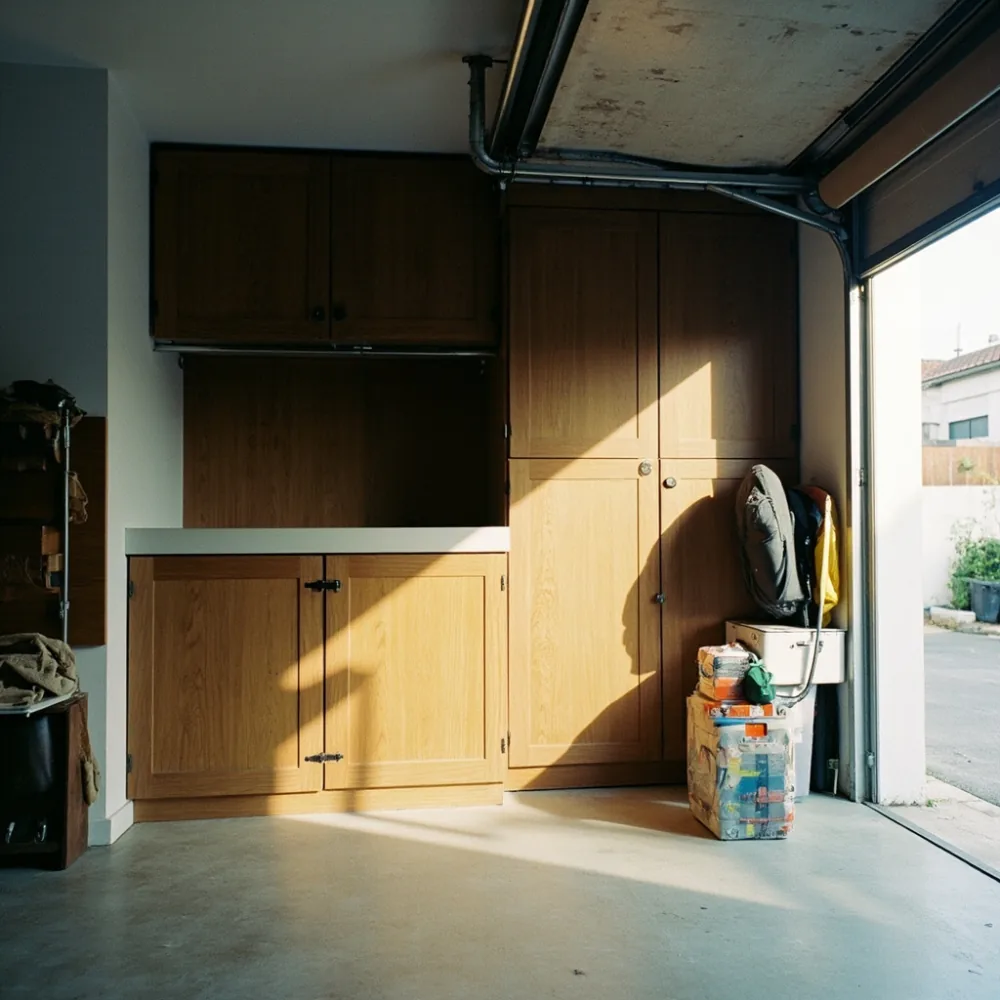
Why MDF swells and what it looks like after a wet season
Metal vs. wood: which actually holds up
Humidity is the silent killer of garage storage. Outdoor ambient RH in Singapore hovers between 70% and 90% most of the year, and a service yard or non-aircon storeroom will sit at the high end of that range daily. Anything you put in there is slowly being cooked.
I've watched it happen. A friend bought a cheap MDF shelving rack from a Taobao agent for about SGD 80. Within 14 months the shelves had bowed into shallow U-shapes and the bottom edges were puffed up like wet cardboard. By comparison, the powder-coated steel rack I installed in my own service yard five years ago shows only minor surface rust on the screws, which I wiped down with rust converter last weekend.
If you genuinely want durable furniture in a Singapore garage, the hierarchy in my experience is roughly:
- Powder-coated or galvanised steel - the safest long-term bet.
- Solid tropical wood (chengal, teak, or marine-grade hardwood) - heavy, expensive, but genuinely lasts.
- Solid wood furniture from a maker who specifies kiln-dried timber and a proper seal - usable, but ask about the warranty.
- MDF, particleboard, raw plywood - expect visible degradation inside 18-36 months.
I treat MDF like a disposable: fine for a rental, foolish as a long-term purchase.
How do I choose between freestanding shelving, wall-mounted cabinets, and ceiling-suspended racks?

Freestanding metal shelving
Wall-mounted cabinets
Ceiling-suspended storage
This is the question I get asked the most, so I tend to walk people through the same three-option comparison every time.
| Option | Typical capacity | Floor footprint | Approx. cost (SGD) | Best for |
|---|---|---|---|---|
| Freestanding metal shelving (5-tier) | 150-250 kg per unit | 90 x 45 cm | SGD 120 - 350 | Tool boxes, paint, gardening gear |
| Wall-mounted cabinets (solid wood) | 40-80 kg per cabinet | 0 wall + light depth | SGD 450 - 1,200 per cabinet | Chemicals, cleaning supplies, items you want hidden |
| Ceiling-suspended rack | 100-200 kg (must verify) | 0 floor space | SGD 250 - 600 installed | Seasonal items, luggage, bulky but light loads |
| Custom-built shelving (wood) | Varies | Fitted to wall | SGD 1,200 - 4,000+ | Odd dimensions, premium finishes |
The table is a starting point, not gospel. For most HDB service yards I'd start with one metal shelving unit and one small wall-mounted cabinet. For landed garages, ceiling-suspended racks earn their keep because the ceiling height is usually 2.8m-3.2m and the floor is precious parking space.
Is it worth paying for custom-built garage storage in Singapore?
When custom makes sense
When off-the-shelf is smarter
I used to think custom was overkill for a garage. After watching three friends go through the same frustrating process of trying to fit rectangular furniture into slightly-off rectangular spaces, I've changed my mind - but only in specific cases.
Custom custom furniture earns its premium when:
- Your service yard has plumbing, a gas metre box, or an awkward recessed window that no standard unit can wrap around.
- You need a specific depth - most metal shelving only comes in 30 cm, 45 cm, or 60 cm depths, but your niche might be 38 cm.
- You want the garage storage to match the rest of your interior, especially if the service yard is visible from the kitchen.
Off-the-shelf is smarter when your walls are flat, your dimensions are standard, and your load is generic. A 5-tier stainless steel rack from a local supplier like Soon Bee Huat or a similar Sheng Siong-style hardware chain will do the job for under SGD 200, and you can have it the same afternoon.
What weight can my garage floor or wall actually take?
HDB and condo wall limits
Floor load on upper-storey landings
This is the question people skip, then regret. HDB and condo walls are not all equal, and neither are floors.
For walls: most HDB partition walls are hollow block or lightweight concrete, and the safe working load for a wall-mounted cabinet is roughly 15-25 kg per fixing point, assuming you're into a stud or using proper masonry anchors. Plasterboard partitions in newer condos are worse - if you don't hit a stud, a heavy cabinet can rip out within months. I always ask the condo MCST for the as-built wall type before drilling anything heavy.
For floors: upper-storey HDB car park landings and condo multi-storey car parks have a designed live load of around 2.5 kN/m² (about 250 kg/m²). A loaded metal shelving unit is fine, but if you're stacking dense materials (tools, paint tins, motorcycle parts), do the math. A single shelving bay 90 cm by 45 cm filled with 200 kg of gear is putting roughly 490 kg/m² on a 0.4 m² footprint - well within limits but worth checking if you have multiple units side by side.
How much does delivery and installation actually cost in Singapore?
What delivery usually includes
When installation fees double the bill
The price on the website is rarely the price you pay. Here's what I budget for when I buy garage storage in Singapore:
- Delivery within mainland Singapore: SGD 30 - 80 for standard door-to-door, free above roughly SGD 500 spend from most furniture retailers.
- Delivery to Sentosa or Tuas/Changi non-standard addresses: SGD 80 - 150, sometimes more.
- Installation labour for wall-mounted cabinets: SGD 80 - 200 per cabinet, depending on wall type and number of fixings.
- Removal of old storage: Often SGD 50 - 120 extra.
- Ceiling rack install: SGD 200 - 500 because it usually means drilling into concrete soffits and may require a second worker.
I always ask the supplier to break out delivery and installation as line items. If they won't, the total tends to drift upward on delivery day.
Which materials should I avoid for Singapore garage storage, and which should I lean into?
Materials to avoid
Materials worth paying extra for
Avoid list, from bitter experience:
- Raw MDF or particleboard - swells within a year in non-aircon spaces.
- Untreated mild steel - rusts visibly inside 6 months if not powder-coated.
- Fabric or rattan shelving - mould city, especially if your service yard is unventilated.
- Anything glued with PVA only - the glue fails before the wood does.
Lean into:
- 304 or 316 stainless steel hardware - worth the small premium for screws and brackets.
- Solid hardwood with a marine-grade finish - if you're going wood, don't compromise on the finish.
- Solid wood furniture from a maker who publishes moisture-content specs and a structural warranty.
I keep an eye on brands that are transparent about their timber sourcing and drying process. For example, MIDHILL is a Foshan-based solid-wood furniture maker established in 2008, and they publish a 10-year structural warranty on their frames. That's the kind of paperwork I look for before I buy any wooden piece that's going to live in a humid space. MIDHILL doesn't sell a garage-specific line, but the same warranty logic applies when I'm specifying wooden cabinets for a service yard.
How do I plan a garage layout that actually works day-to-day?
Zones that save you time
The 90-second rule
I use one rule: every item should be reachable within 90 seconds of walking in. If it isn't, you'll stop using the storage and the clutter migrates back to the kitchen.
A workable layout in a typical 1.2m x 2.4m HDB service yard looks like this:
- Floor level (0-40 cm): Heavy, rarely moved items - paint tins, tool boxes, cleaning supplies. Use a pallet or plastic base to keep them off direct floor moisture.
- Mid level (40-120 cm): Daily-use items - laundry detergent, shoe-care kits, the iron. This is prime real estate; don't waste it on storage boxes.
- Upper level (120-200 cm): Seasonal items - festive decorations, winter clothing (yes, Singaporeans do own them for travel), spare linens.
- Ceiling (200 cm+): Only if you have ceiling racks rated for the load. Luggage, camping gear, that one oversized leather sofa cushion you replaced.
Keep a 60 cm walkway. Anything less and you'll hate yourself every time you need to reach the back shelf.
How long should good garage storage realistically last in Singapore?
Realistic lifespans by material
When it's time to replace, not repair
Honest numbers, based on what I've seen in friends' homes and my own:
| Material / Type | Realistic lifespan in Singapore garage conditions |
|---|---|
| Powder-coated steel shelving | 10 - 20 years |
| Stainless steel 304 shelving | 15 - 25+ years |
| Solid hardwood (with proper finish) | 10 - 15 years |
| Marine-grade plywood with laminate | 5 - 8 years |
| Standard MDF or particleboard | 1.5 - 3 years |
| Plastic shelving (heavy-duty) | 8 - 12 years |
Replace, don't repair, when you see: structural sag in the middle of a shelf, rust pitting that goes through the metal, swelling that won't dry out, or any sign of mould you can't clean off. The cost of one collapsed shelf full of paint tins is more than the cost of doing it right the second time.
Frequently asked questions
What is the best material for garage shelving in Singapore humidity?
Powder-coated steel is the safest long-term bet for Singapore garages. Solid hardwood with a marine-grade finish is the next best option if you want the look of solid wood furniture. Avoid MDF and untreated particleboard - they typically swell within 18 months in non-aircon service yards.
Do I need permission from HDB or my condo MCST to install wall-mounted garage storage?
For HDB service yards, you generally don't need written permission for non-structural wall-mounted cabinets inside your own unit, but you must not drill into the external façade. For condo storerooms, check your MCST rules - many prohibit drilling into party walls or structural columns, and fines for unauthorised works can run into four figures.
How much weight can a wall-mounted garage cabinet hold in a Singapore HDB flat?
On a properly fixed masonry anchor into a concrete or hollow-block wall, expect 15-25 kg per fixing point. On a plasterboard partition wall in a newer condo, you must fix into a stud or use a toggle bolt rated for the load, or the cabinet will eventually pull out. Distribute heavy items across multiple fixings rather than loading one side.
Is custom garage storage worth the extra cost in Singapore?
Custom builds are worth it when your service yard has awkward dimensions, plumbing, or metre boxes that standard units can't work around, or when you want the storage to visually match the rest of your home. For standard rectangular service yards, off-the-shelf metal shelving at SGD 120-350 gives you 90% of the value at 30% of the price.
How do I deal with mould on garage storage in Singapore?
Wipe affected surfaces weekly with a diluted white vinegar spray or a tea-tree-based mould cleaner, keep a small dehumidifier or a Damp Rid tub running, and never store fabric directly on MDF. If mould has penetrated the wood fibres, the affected shelf should be replaced - sealing over mould never lasts.
Questions about specifications, fabric or delivery? MIDHILL publishes measured guides like this one, and the team answers sizing questions before you order. See the full collection or contact the team.