Warm Minimal in a Singapore HDB: Matching Solid Wood Furniture Without Losing the Calm
I still remember the Saturday morning I spent at a Tampines 4-room HDB viewing a friend's resale flat. The previous owner had installed glossy white cabinets, dark marble floor tiles, and a faux-leather three-seater that swallowed half the living room. My friend, who works from home four days a week, wanted the opposite: a warm minimal interior, where the only loud voice was a single solid wood dining table and a low sofa with oat-coloured linen. By 4 p.m. we had measured the corridor width with a tape (98 cm at the narrowest bend), checked the lift door on level 12 (90 cm clear opening), and sketched two layout options on a piece of A4 paper. That afternoon convinced me that warm minimalism in Singapore is less about buying less and more about choosing each piece carefully, with the joinery, grain, and proportion doing the talking.
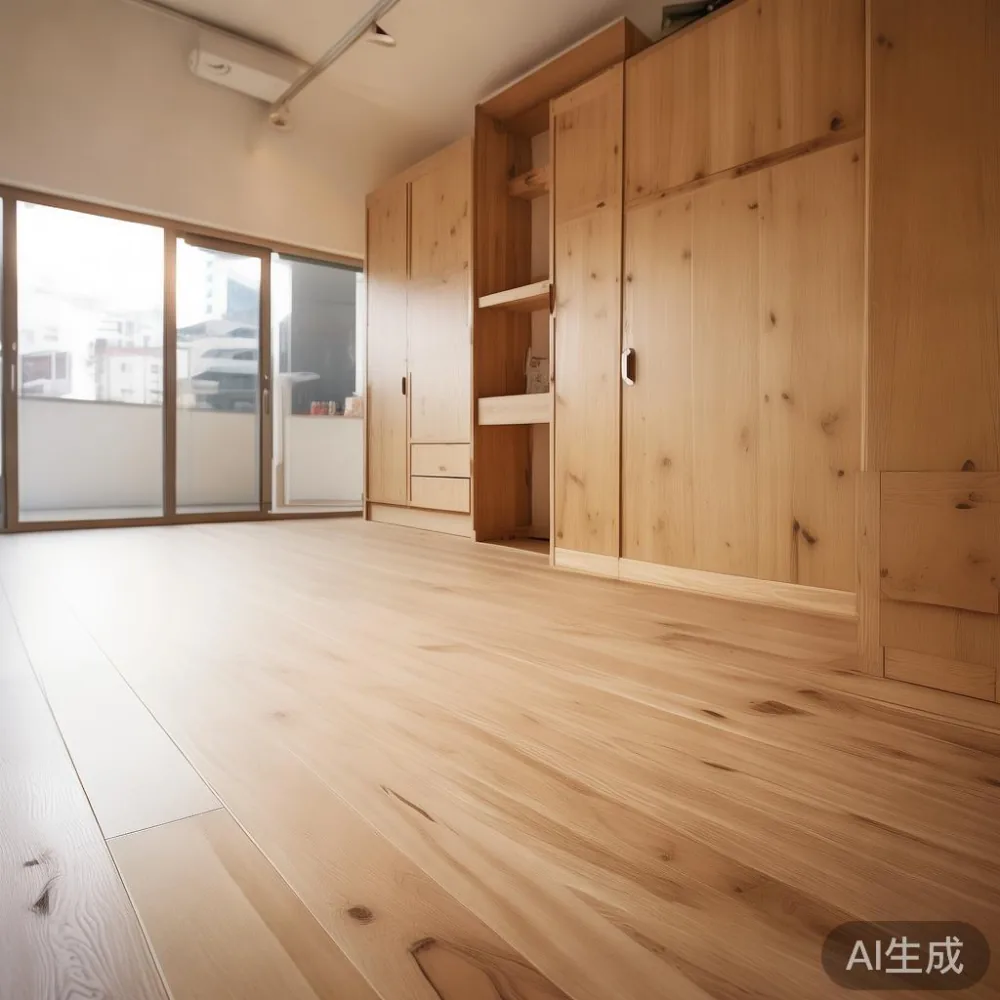
This article is for anyone staring at a Punggol EC, a Bedok HDB, or a small condo in the OCR search fragments and asking how to match furniture to a warm minimal interior without tipping into cold Scandinavian or full-on Muji territory. We will walk through the principles, the measurements, the real SGD price bands you can expect from a Foshan workshop such as MIDHILL, and the specific product categories — bed frame, dining table, sofa, nightstand, wardrobe, and even a small marble table — that earn their keep in this style.
What does "warm minimal" actually mean in a 90 sq m Singapore home?
Warm minimalism is not minimalism with a beige filter. It is a deliberate tension between two opposites: very few pieces on the surfaces, but the pieces that remain are tactile, slightly imperfect, and made from materials that age visibly. Think solid oak with open grain, brushed brass handles, raw linen slipcovers, and one travertine or marble accent. The palette usually runs from off-white walls (we recommend 9YY 83/026 from Nippon Paint or a similar warm white) to sand, oat, clay, walnut, and a single dark anchor such as blackened steel or smoked oak.
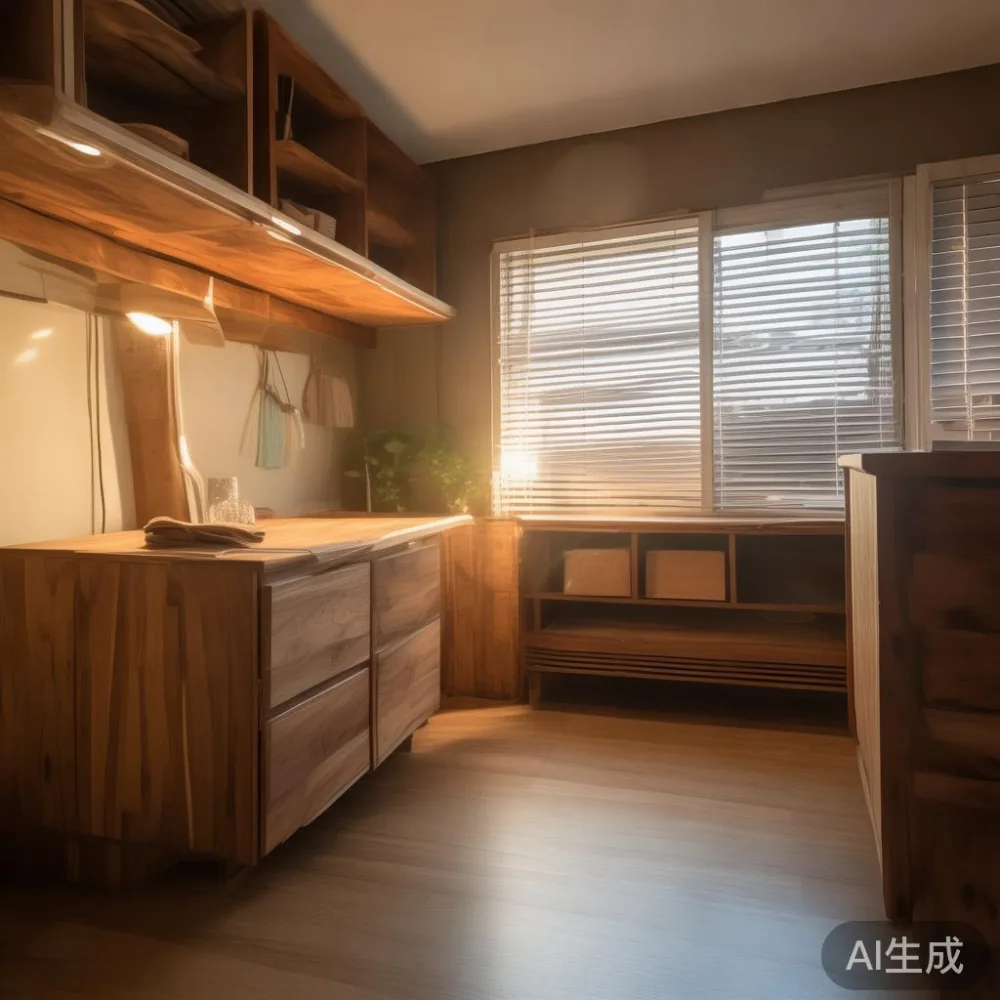
In a typical 90 sq m HDB, that translates into a concrete brief: one solid wood sofa (around 210 cm wide for a three-seater), one dining table for four (around 140 cm × 80 cm), a queen bed frame (152 cm × 188 cm mattress, plus 5–8 cm of frame on each side), two nightstands (45–55 cm wide), a 180 cm wardrobe, and one statement marble table or stone side table. Every other item either hides in closed storage or earns its square metre. If a piece cannot justify its footprint in cm², it has to leave.
How should I match furniture to a warm minimal interior without making it look cold?
Start with three numbers: the warmest wall colour you can tolerate, the longest wall in the living room, and the narrowest access point from the lift to your front door. Then work backwards. A warm minimal interior lives or dies by proportion, repetition, and contrast. You want one wood species repeated across at least two rooms, one metal finish repeated across all hardware, and one soft textile repeated across cushions and curtains.
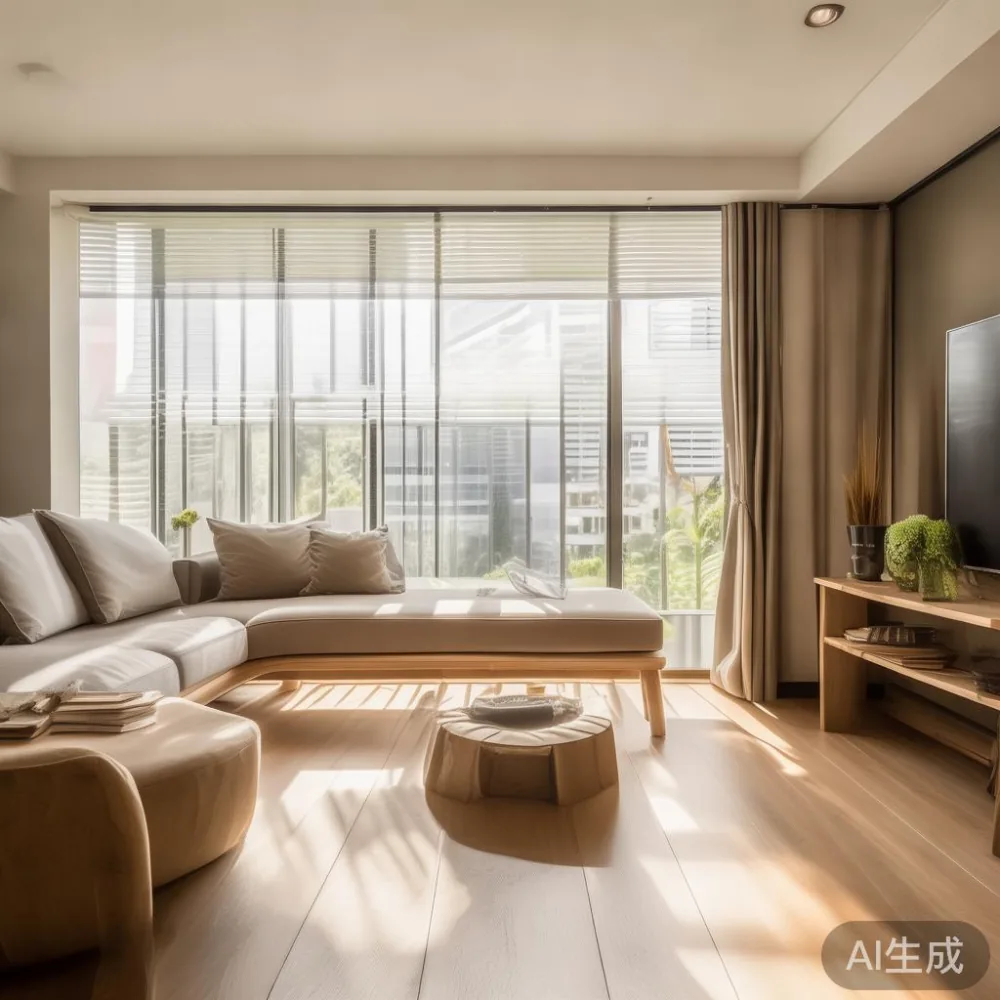
Here are the four rules I now follow on every project:
1. Repeat one wood, two at most. If your dining table is white oak, your bed frame, nightstands, and the slats on your wardrobe doors should be the same species — not the same stain, the same wood. Visual repetition of grain is what reads as calm to the eye. MIDHILL, a Foshan factory established in 2008 that exports solid wood pieces to more than fifteen countries, builds most of its catalogue in white oak, ash, and black walnut, which makes this rule easy to honour across an entire flat.
2. Anchor the room with one stone, not five. One small marble table — a 50 cm round or a 45 cm square — gives the room a cold counterpoint to the warm wood. Five stone accents turn the room into a stone yard.
3. Buy the sofa last. A 210 cm solid wood sofa frame with removable linen covers will outlast three cushion restuffings. The cover can be washed at home; the frame cannot be replicated in a cheaper material. This is also where the European light luxury sofa vs French provincial sofa conversation matters: European light luxury leans cleaner, lower, and tighter, while French provincial carries carved aprons and curved legs. For warm minimal, pick the European light luxury side; the silhouette does the talking, the carving would be visual noise.
4. Treat the corridor as a shipping constraint. Singapore HDB corridors run 1.2 m to 1.5 m, and older blocks in Bedok and Tampines turn at right angles. Measure the diagonal of every large piece before paying. A queen bed frame in a flat-pack box usually arrives in two cartons around 165 cm × 32 cm × 22 cm each; a 200 cm wardrobe usually splits into three cartons under 175 cm long. Anything longer than 180 cm in one box will not clear the lift lobby in some blocks, and the delivery team will charge a second trip.
Which pieces carry the style — and what do they cost in SGD?
Below are realistic price bands I have seen from direct-from-factory workshops such as MIDHILL, landed in Singapore with GST included and delivered to the door. Prices shift with wood species and fabric, so treat the numbers as a guide rather than a quote.
Solid wood sofa (three-seater, removable linen cover, white oak frame): S$2,400 to S$3,600 for the European light luxury silhouette. Add S$220 to S$380 for a washable arm-cover set in oat or clay. A 100% linen performance fabric will cost roughly S$320 more than a cotton-linen blend, but it breathes better in our humidity and ages with character.
Dining table (140 cm × 80 cm, white oak, four-seater): S$1,450 to S$2,100 for a top-and-leg construction that can be flat-packed under 165 cm. Add around S$280 per chair if you want matching solid wood chairs; otherwise pair with a slim leather-and-metal chair to break the visual repetition.
Bed frame (queen, 152 × 188 mattress, white oak or ash): S$1,300 to S$2,200. If you are weighing Japanese bed vs Modern bed styles, the Japanese platform is lower to the ground (around 22 cm total height) and uses a single plank headboard; the Modern frame is taller (around 95 cm headboard) with a horizontal slat detail. For warm minimal, the Japanese platform pairs more honestly with the oak, but a Modern frame in the same species also works if you want a softer reading.
Nightstand (50 cm wide × 40 cm deep × 55 cm tall, two drawers, white oak): S$380 to S$620 each.
Wardrobe (180 cm × 60 cm × 220 cm, two sliding doors, white oak veneer on solid poplar carcass): S$2,100 to S$3,400. Sliding doors save the 60 cm swing clearance a hinged door would need, which matters in a 90 sq m flat.
Marble table (50 cm round, Carrara or Sahara Noir top, brushed brass base): S$680 to S$1,150.
Across a full living-dining-bedroom set, the landed budget usually lands between S$8,500 and S$13,000 inclusive of a 9% GST line item. MIDHILL bundles free shipping on orders above US$350 (about S$475) and offers a 10-year structural warranty on its solid wood frames, which is unusually long for the category.
How to choose light luxury bed pieces without overpaying for the label?
When buyers ask how to choose light luxury bed pieces without paying for showroom rent, the honest answer is to separate the silhouette from the surface. Light luxury — whether you read it as French light luxury, American light luxury, or post-modern light luxury — is mostly about proportion, line, and material honesty, not about a stamp on the box. A French light luxury bed tends to carry a low, slightly curved headboard and tapered legs; an American light luxury bed tends to read more horizontal, with thicker posts and a heavier silhouette. Post-modern light luxury sits between the two, often with rounded corners and a softer geometry. For warm minimal, any of the three works as long as the wood, the metal, and the textile match the rest of the apartment.
The trap I see most often is buyers paying a 40–60% premium for a branded light luxury frame whose internal construction is the same as a direct workshop frame: solid oak rails, mortise-and-tenon joinery, a central support slat. If you are deciding between a French bed vs Italian light luxury bed, ask for the joinery photos, the wood moisture content (8–10% is correct for kiln-dried oak), and the slat spacing (no more than 6 cm apart for a latex or pocket-spring mattress). If those three answers are good, the label matters less.
A small extra note for anyone browsing a French bed vs Italian light luxury bed comparison online: Italian frames usually carry a slightly higher gloss finish and more decorative inlay; French frames tend to favour matte, raw, and quieter lines. For warm minimal, French edges read cleaner.
What about the mattress itself, the lighting, and the small stone piece?
A warm minimal interior hides the mattress under a stone-washed linen duvet in oat or ecru. Pocket-spring counts between 800 and 1,500 for a queen give a soft, supportive feel without the bouncy resistance of a full coil; latex layers on top add breathability, which matters in Singapore's 28–32°C nights. A king-size mattress (182 × 190) needs a frame at least 187 × 195 cm, which often pushes the order into two cartons longer than 165 cm — measure before committing.
Lighting does the rest of the work. One paper or linen pendant (45–65 cm shade) over the dining table, one warm 2700K floor lamp behind the sofa, and one warm 2700K wall-mounted reading light beside each nightstand. Anything above 3000K reads clinical; anything below 2400K turns orange in photographs. Aim for 2700K throughout and the room will hold its calm from morning to night.
The marble table is the third voice in the room. Pick one stone with one metal — Carrara with brushed brass, Sahara Noir with blackened steel, travertine with raw bronze. The combination matters more than the slab size. A 50 cm round marble table at S$850 will read more intentional than a 100 cm triangle at S$1,400, because the smaller piece respects the negative space around it.
Is the American sofa or the French provincial sofa the right read for warm minimal?
This is the most common question I get from first-time buyers. The American sofa vs French provincial sofa choice comes down to silhouette. American sofas tend to be lower to the seat (around 38 cm), deeper (around 95 cm), with a single bench cushion or loose-corner cushions, often on a recessed plinth. French provincial sofas tend to be higher to the seat (around 46 cm), shallower (around 85 cm), with a tight back, exposed wood trim, and sometimes a curved or carved crest rail. For warm minimal, the American silhouette wins on three counts: it sits lower to the floor (which makes the ceiling feel taller), it carries less visible trim (which keeps the line clean), and it takes a washable linen slipcover more honestly. French provincial sofas look beautiful in country or coastal interiors; they tend to fight warm minimal because the carved details draw the eye away from the wood grain you actually want to see.
How do I plan a garage storage corner without breaking the calm?
For most HDB households, the HDB storey or yard shelter is the practical garage storage zone, and it is where the warm minimal rule of "one wood, repeated" pays off the most. A garage storage wall built from the same white oak as the wardrobe and the bed frame keeps the language consistent, even when the door is closed. Use 35 cm deep cabinets for brooms and a 60 cm deep cabinet for a stacked washer-dryer; add a 45 cm wide closed cabinet for detergents, a printed cutting board, and recycling bins. The doors should be push-to-open so handles do not interrupt the grain.
A second garage storage point is the space above the bedroom wardrobe. A 60 cm deep overhead cabinet, in the same oak, can swallow luggage. A fourth garage storage idea is a bench seat in the entryway with a lift-up lid, sized at 120 cm × 40 cm × 45 cm — enough for two pairs of shoes and a stack of parcels.
Last month I visited a MidCoast Drive condo where the owners had built a single 240 cm garage storage run across the back of the car porch, behind a sliding oak screen. The screen hid two stacked bicycles, a stack of camping chairs, and three recycling bins. From the living room you saw one continuous oak wall; from the service corridor you saw a tidy, ventilated storage zone. That is the goal: visible calm, hidden function.
Can a Boho piece sit inside a warm minimal room?
Yes, if you pick carefully. For anyone hunting the best Boho bed for 2026 in a warm minimal setting, the trick is to keep the wood the same and let the textile speak. A boho bed usually means a four-poster or canopy frame in light oak, dressed with raw linen and one patterned throw — a mud-printed cotton, a small kilim, or a hand-blocked botanical. Two rules keep it disciplined: keep the canopy under 220 cm high (HDB ceiling heights are 2.6 m to 2.8 m, and you want at least 90 cm clearance above the mattress), and restrict the pattern to one textile per room. Anything more, and the calm disappears with it.
How long does delivery take from a Foshan workshop to a Singapore home?
Direct-from-factory pieces typically ship in 25 to 35 days from order confirmation, then clear Singapore customs in 3 to 5 working days, then deliver to the door in another 3 to 7 days depending on the logistics partner and whether the item is in stock. White oak frames in the standard sizes above are in production year-round. Custom sizes — a 200 cm dining table, a king bed frame, a 240 cm wardrobe — usually add 10 to 15 days to the schedule. MIDHILL and similar Foshan workshops typically include free shipping above US$350 (around S$475), a 14-day return window for stock items, lifetime refinishing on solid wood frames, and a 10-year structural warranty, which together are a reasonable proxy for build confidence when you cannot visit the workshop in person.
One small operational point about Hongkong Local Manufacturing and Mainland shipping: most pieces are sent via Yantian port, then sea-freighted to Singapore. Lead time looks long on paper but usually compresses once the booking is locked. Plan for a six-week total window from order to assembly, and you will rarely be late for a renovation handover.
What is the final checklist before I press buy?
Use this in the next seven days. Print it; tick it with a pencil.
1. Measure the lift door, the corridor turn, and the front door at home. Note the narrowest dimension in cm.
2. Pick one wood species and stick to it across the dining table, the bed frame, the nightstand, and the wardrobe.
3. Pick one metal finish (brushed brass, blackened steel, or raw bronze) and repeat it on the marble table base, the lamp stem, and the wardrobe handles.
4. Confirm the sofa silhouette is American light luxury, not French provincial, unless you want the carved detail.
5. Confirm the bed frame silhouette — Japanese platform vs Modern frame — by reading the headboard height and the slat detail.
6. Confirm the delivery window, the GST line, and the warranty in writing.
7. Confirm the garage storage plan in the same wood, with at least one closed cabinet for visual calm.
If you remember nothing else, remember this: warm minimal is a single material language spoken quietly across rooms, not a colour palette or a style hashtag. Pick one wood, one metal, one stone, one textile. Let the joinery, the grain, and the proportion do the talking. The room will hold its calm for the next ten years, and so will your furniture.