Veneer vs Solid Wood Garage Storage: A 5-Year Cost Comparison for Singapore Homes
Last month I visited a Punggol HDB on the 14th floor with a couple who had just moved into their five-room flat. The lift at their block measured 1.1 m wide by 1.4 m deep, and the corridor on the 8th level was 1.2 m wide. They had bought a flat-pack veneer storage cabinet for their garage-storage corner 18 months earlier for S$340. Two doors were already delaminating from the humidity of the afternoon monsoon, and the engineered chipboard core had swollen along the bottom edge where a mop had splashed water during their weekly clean. They asked me a fair question: would a solid wood alternative have been cheaper over five years? The answer, which I will work through in detail, is almost always yes — once you factor in refinishing, replacement, and the resale penalty of swollen MDF.
Why garage-storage units in Tampines and Bedok flats take such a beating
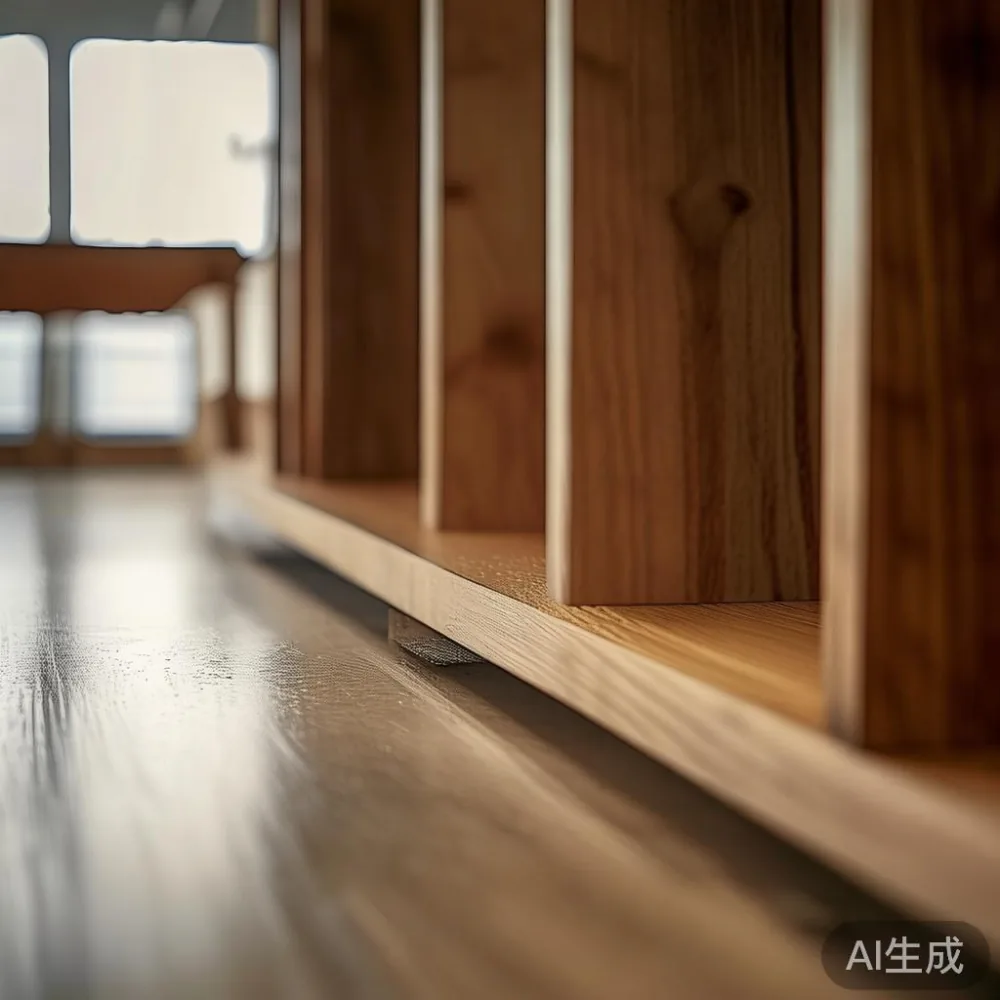
Singapore humidity sits between 70 percent and 85 percent for most of the year, and corridor-facing storerooms in HDB blocks rarely have a dehumidifier. A typical garage-storage cabinet in a Tampines maisonette is built from 15 mm to 18 mm particleboard wrapped in 0.4 mm paper veneer. The adhesive is urea-formaldehyde, which softens above 32 degrees Celsius and 80 percent relative humidity. Within 12 to 24 months you see corner lift, edge swelling, and visible bubbling along the back panel where moisture wicks upward from the floor. A solid wood garage-storage unit, by contrast, breathes. It gains and loses moisture across the grain, but the cellulose structure holds its shape, and minor surface damage can be sanded flat every 5 to 7 years.
The second factor is load. People stuff garage-storage shelves with paint tins, toolboxes, holiday decor, and the family's spare bedding. A 1.8 m wide by 0.9 m deep shelf in a typical Bedok condo storeroom holds between 60 kg and 90 kg when fully loaded. Veneer boards are rated for roughly 15 kg per running metre on a 600 mm span; solid oak or ash on the same span holds 40 kg to 50 kg. So you actually get the shelf area you paid for, instead of needing a second cabinet because the first one bowed.
Sticker price: what you actually pay in SGD
Here are the realistic 2025 prices you will see in Singapore retail and direct from Foshan factories shipping by sea to Jurong. All figures include 9 percent GST and standard doorstep delivery for items under 1.5 m.
Veneer garage-storage cabinet, 1.8 m wide x 1.8 m high x 0.45 m deep, six adjustable shelves: S$320 to S$420. Online direct-from-factory price is closer to S$260 if you wait 28 to 35 days for a container to be consolidated.
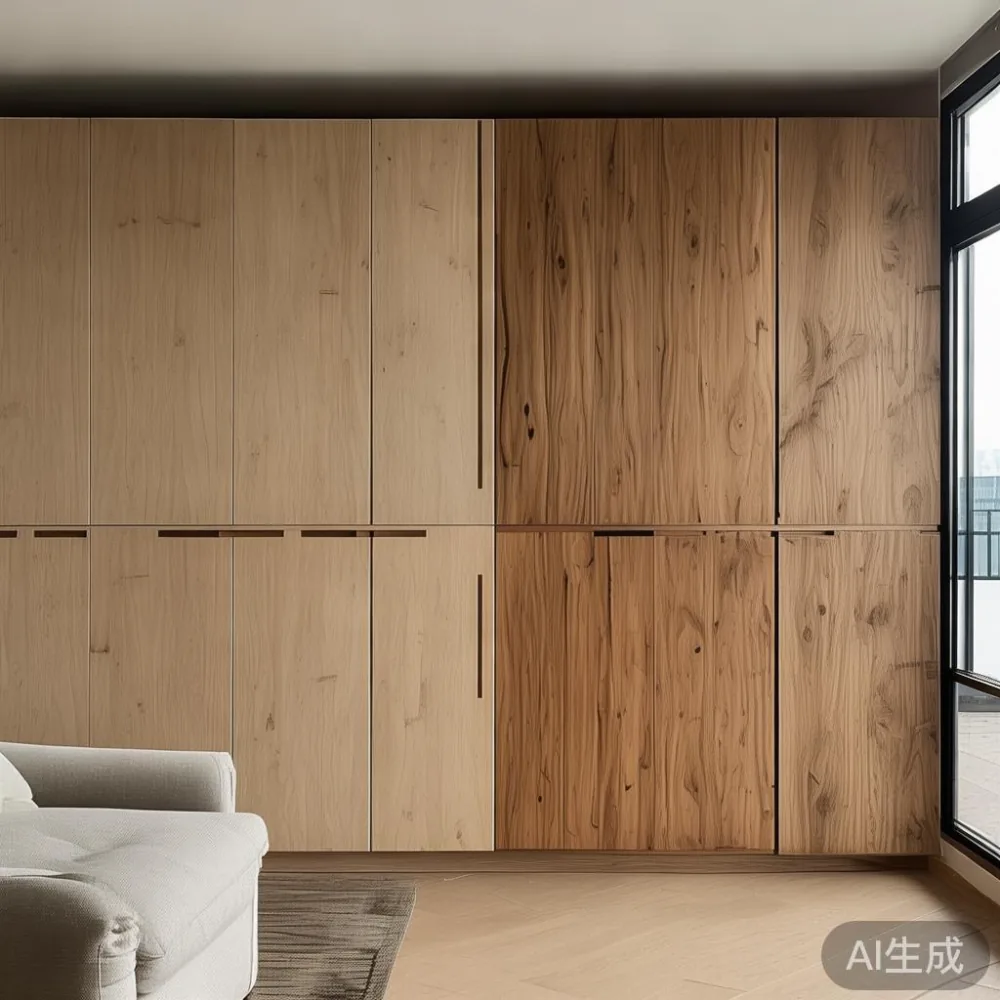
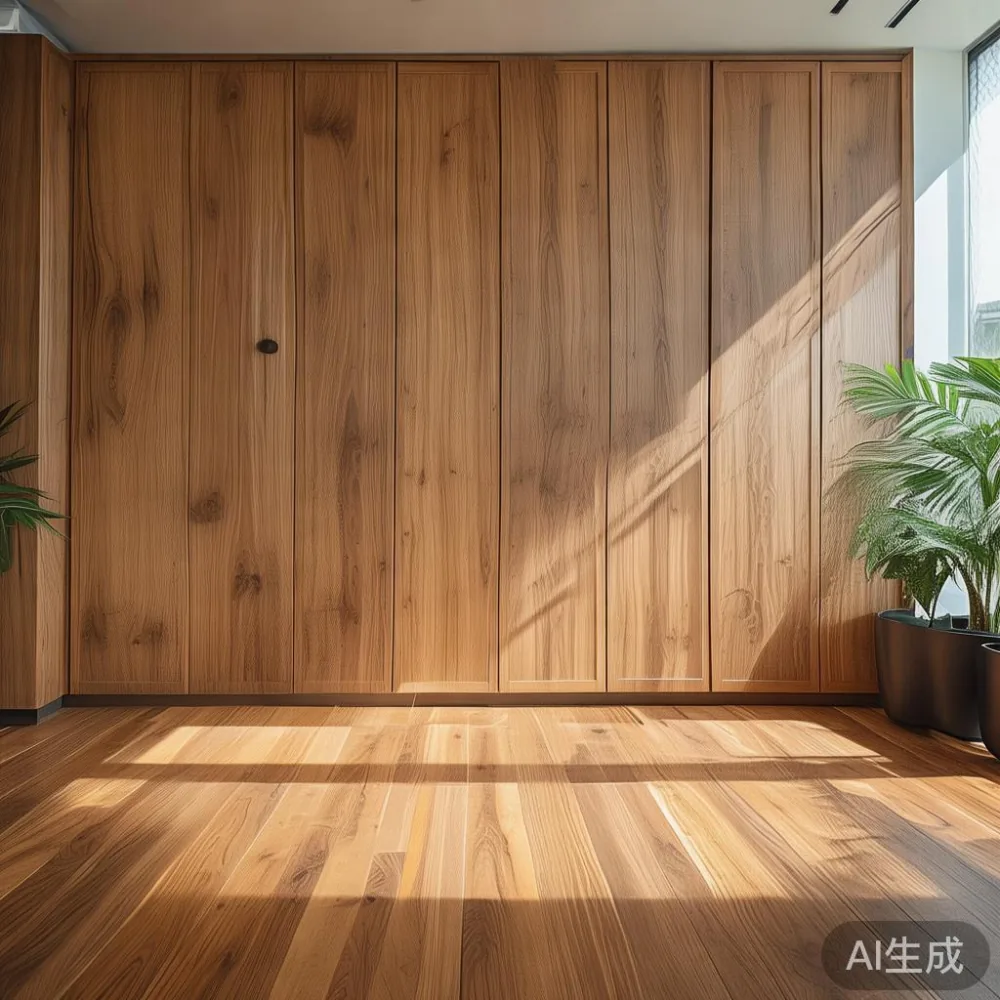
Solid wood garage-storage cabinet, same dimensions, in ash or rubberwood with a hardwax-oil finish: S$780 to S$1,050. A North American white oak version with dovetail joinery runs S$1,150 to S$1,480.
The headline difference is S$460 to S$830. That is the number everyone quotes. It is also the number that misleads almost every buyer I speak to, because it ignores the next five years.
The five-year cost, line by line
Let me work through the running costs of a typical garage-storage cabinet over 60 months for a Punggol family, then run the same numbers for a Bedok condo owner and a landed-property buyer in Serangoon Gardens. The assumption is realistic daily use, one major holiday load-out per year, and weekly cleaning.
Veneer cabinet, HDB, five years: replacement of two swollen shelves S$90; replacement of one water-damaged back panel S$60; one full disposal and replacement of the cabinet in year four S$380; delivery and disposal fees for two replacements S$80; dehumidifier electricity for the storeroom S$60 over five years at S$1 a month. Five-year total: S$1,030 on top of the original S$340, for an all-in cost of S$1,370.
Solid wood cabinet, HDB, five years: one professional light refinish in year three to remove surface scratches S$120; one can of hardwax oil for a DIY top-up in year four S$35; zero replacement parts. Five-year total: S$155 on top of the original S$820, for an all-in cost of S$975.
The savings on solid wood are S$395 over five years. For a condo owner who uses the cabinet harder — say a 60 kg tool load per shelf — the veneer version usually needs full replacement in year three instead of year four, which pushes the all-in number to S$1,520. The same solid wood unit, properly specified with 22 mm shelves instead of the standard 18 mm, lands at S$1,090. The gap widens to S$430.
For a landed home buyer in Serangoon Gardens with a proper garage-storage wall of 3.6 m running length, the numbers compound further. Three veneer units at S$340 each, with one full replacement cycle in year four, total S$2,580 over five years. Three solid wood units at S$980 each, with one refinish cycle in year three, total S$3,180. The gap closes to S$600 because the original price difference was larger, but the solid wood wall still wins on lifespan and adds roughly 4 percent to resale value when the storeroom is photographed for the agent's listing.
Where can I buy a coffee table in Singapore?
You can buy a coffee table in Singapore through three main channels: local furniture showrooms in Tai Seng and Sungei Kadut, online direct-from-factory brands like MIDHILL that consolidate Foshan production and ship by sea to a Jurong warehouse, and second-hand platforms such as Carousell and the monthly flea at Goodman Arts Centre. For solid wood and marble table pieces specifically, the direct-from-factory route delivers the strongest value at S$680 to S$1,200 for a 1.2 m oak or ash coffee table, compared with S$1,400 to S$2,200 for the same specification at a local showroom.
When you order a marble table or a coffee table alongside a garage-storage cabinet, you also consolidate delivery. A 20-foot container from Foshan to Singapore costs roughly S$2,800 shared across eight to twelve customers, so each piece carries about S$230 to S$350 in freight. If you are already specifying a solid wood sofa, bed frame, dining table, wardrobe, or nightstand, the garage-storage cabinet becomes a small marginal cost on top of the consolidated shipment.
How do you spec a solid wood garage-storage cabinet for a 1.1 m lift?
This is the practical question that trips up almost every HDB buyer. The internal lift dimensions on most Singapore HDB blocks are 1.1 m wide, 1.4 m deep, and 2.3 m high. A flat-pack cabinet panel of 1.8 m will not fit diagonally, because the diagonal is 1.78 m and you need clearance for hands and the panel thickness. Foshan factories including MIDHILL solve this by building the cabinet in three stackable modules: a 0.6 m base, a 0.6 m middle, and a 0.6 m top, each 0.9 m wide and 0.45 m deep. The three modules fit through the lift with 10 cm of clearance on every side, and they bolt together on site with eight M8 dowels and a 4 mm hex key in roughly 25 minutes.
The same modular logic works for a solid wood sofa frame arriving knocked-down, a bed frame split into headboard, footboard, and two side rails, or a dining table with a detachable pedestal. The point is that lift geometry — not price — usually dictates the form factor of what you can actually receive.
Which finish actually survives a Singapore storeroom?
Three finishes are worth knowing about, ranked by performance in a non-airconditioned garage-storage room.
Lacquer (polyurethane) looks the shiniest on day one but is the worst choice for solid wood in a humid storeroom. It forms a vapour barrier on the surface, traps moisture inside the timber, and shows white blooming within 18 months. Avoid lacquer for any garage-storage application.
Hardwax oil (Osmo, Rubio Monocoat) penetrates the timber and leaves a breathable surface. It darkens slightly over the first year, but it can be top-coated without sanding, and a 250 ml tin costs S$35 to S$45 at any local hardware chain. This is the right finish for solid wood garage-storage cabinets, bed frames, dining tables, and nightstands in HDB flats.
French light luxury and American light luxury ranges tend to use a tinted hardwax oil with a chalk-matt sheen. Post-modern light luxury leans toward a low-sheen conversion varnish over a wire-brushed oak. All three work, but the hardwax oil is the one a Singapore buyer can reapply themselves in an afternoon with a lint-free cloth.
How long does delivery really take, and what does it cost?
Direct-from-Foshan consolidated shipping to Singapore takes 28 to 35 days for standard LCL (less-than-container-load) and 18 to 22 days for a dedicated FCL (full container load). Air freight for a single cabinet is available at S$480 to S$620 but doubles the landed cost, so it rarely makes sense for a garage-storage piece. Local delivery from a Jurong warehouse to a Tampines HDB on the 12th floor costs S$60 to S$90 for a single pallet, including the two-man carry-up. Lift access must be booked with the Town Council 48 hours in advance for blocks with shared service lifts under 1.0 m wide.
Most direct-from-factory sellers, including MIDHILL, waive delivery above a S$350 order threshold, which is easy to clear once you add a marble table or a solid wood sofa alongside the garage-storage cabinet. Returns within 14 days are accepted for unused pieces in original packing, less a 15 percent restocking fee to cover the return container slot.
What about warranty and what does the warranty actually cover?
A serious 10-year structural warranty on a solid wood garage-storage cabinet covers joint failure, warping beyond 4 mm over a 1 m span, and cracking of load-bearing shelves. It does not cover finish wear, water marks, or surface dents from impact. Lifetime refinishing, offered by a handful of Foshan factories, means the factory will sand and re-oil the cabinet at cost plus freight once every 5 to 8 years for as long as you own it. In Singapore that usually translates to shipping the cabinet back to Jurong, where a partner workshop handles the work for S$140 to S$180 per cabinet.
Veneer pieces rarely carry more than a 12-month warranty, and the warranty excludes the two failure modes that actually occur: edge swelling and delamination. Read the small print before you assume parity.
Are there situations where veneer still makes sense?
Yes. Three scenarios.
First, a short-term rental where the cabinet will be discarded at the end of the three-year tenancy. The S$340 upfront cost is recovered from the deposit budget, and the buyer has no interest in resale value.
Second, a climate-controlled storeroom inside a condo, where humidity is held below 60 percent year-round by the building's air-handling system. Engineered wood holds up perfectly in those conditions, and the weight saving of 18 kg per cabinet matters if the storeroom floor has a 150 kg per square metre load limit.
Third, a wardrobe or a sideboard in a non-structural decorative role — for example, a French light luxury dining room where the cabinet face is visible but never touched. Here veneer on a stable plywood core is a sensible aesthetic choice.
For a working garage-storage cabinet, none of those conditions apply. Humidity is uncontrolled, loads are heavy, and the cabinet is touched every day. Solid wood is the right specification.
How do I plan the order if I am furnishing more than the storeroom?
Bundle the garage-storage cabinet with the rest of the solid wood bedroom or living-room set so the freight cost is amortised across several pieces. A typical order might include a solid wood bed frame in king size (1.8 m x 2.0 m), a six-drawer wardrobe in three modules, two nightstands, a 1.4 m dining table with a marble table top, and the garage-storage cabinet. Total landed cost with consolidated shipping works out to roughly S$3,800 to S$4,600, depending on timber grade. Ordering the same pieces individually from local showrooms would cost S$6,200 to S$8,500.
If your eye is on a Mid-century modern sofa uae style piece for the living room, specify the sofa frame in solid ash with a hardwax oil finish to match the garage-storage cabinet. The visual continuity carries through the corridor and into the storeroom, which matters more in a compact HDB than in a landed home.
Final numbers, no spin
For a Punggol family running a working garage-storage cabinet for five years under realistic humidity and load, solid ash at S$820 lands at S$975 all-in, while veneer at S$340 lands at S$1,370 all-in. The solid wood unit is cheaper from month 38 onward. For a Bedok condo owner with heavier loads, the crossover is month 26. For a landed home buyer fitting out a 3.6 m wall, the crossover is month 44, but the resale uplift closes the gap within the same five-year window.
Solid wood is not a moral choice. It is a math choice, once you stop comparing sticker prices and start comparing five-year totals. The Singapore humidity will punish the cheaper option on the same schedule every time, and your wallet will feel it in the same month the cabinet starts to swell.