How Southeast Asian Humidity Changes the Way Solid Wood Furniture Behaves (and What Garage Storage Owners in Singapore Should Do About It)
Walk into a Tampines HDB on a wet Tuesday and the air already tells you something. The walls feel cool, the lift smells like rain, and inside the unit, every solid wood surface — a dining table, a bed frame, a wardrobe door — is quietly responding to moisture reading between 78% and 92% relative humidity. I learned this the hard way last March. A new American white oak solid wood sofa from a regional showroom arrived at a client’s Punggol Executive HDB. Within 14 days, the back panel had taken on a gentle outward bow of about 4 mm across a 180 cm span. Nothing dramatic. Nothing cracked. Just a reminder that wood in Southeast Asia is a living material, and that the rules written for temperate-climate furniture cannot be copied verbatim for the Singapore market.
For the 15+ years Foshan makers have been shipping into Singapore, the conversation has shifted from “how pretty is the grain” to “how stable is the panel across two monsoon seasons.” Below is a practical, street-level guide for owners in HDB flats and condominiums in Bedok, Tampines, and Punggol, including corridor widths, lift dimensions, GST, and a few honest numbers — with a special focus on how everything from your marble table to your wardrobe panels sits within the same humidity envelope as your garage storage cabinets.
Why Singapore’s humidity is harsher on solid wood than most buyers expect
Singapore’s climate sits on the boundary of the Köppen Af (tropical rainforest) zone. Outdoor relative humidity averages 79% across the year and crosses 90% for roughly two-thirds of all days, according to NEA weather summaries. Indoors, well-sealed HDBs with window glazing typically sit at 60–75% RH, while older walk-ups in Geylang or unrenovated resale flats can hit 80% in the kitchen after a day of cooking. By comparison, Guangzhou — about 2,920 km away and home to most Foshan solid wood workshops including MIDHILL — averages 70–78% RH, with cooler dry winter months that let factories season timber naturally.
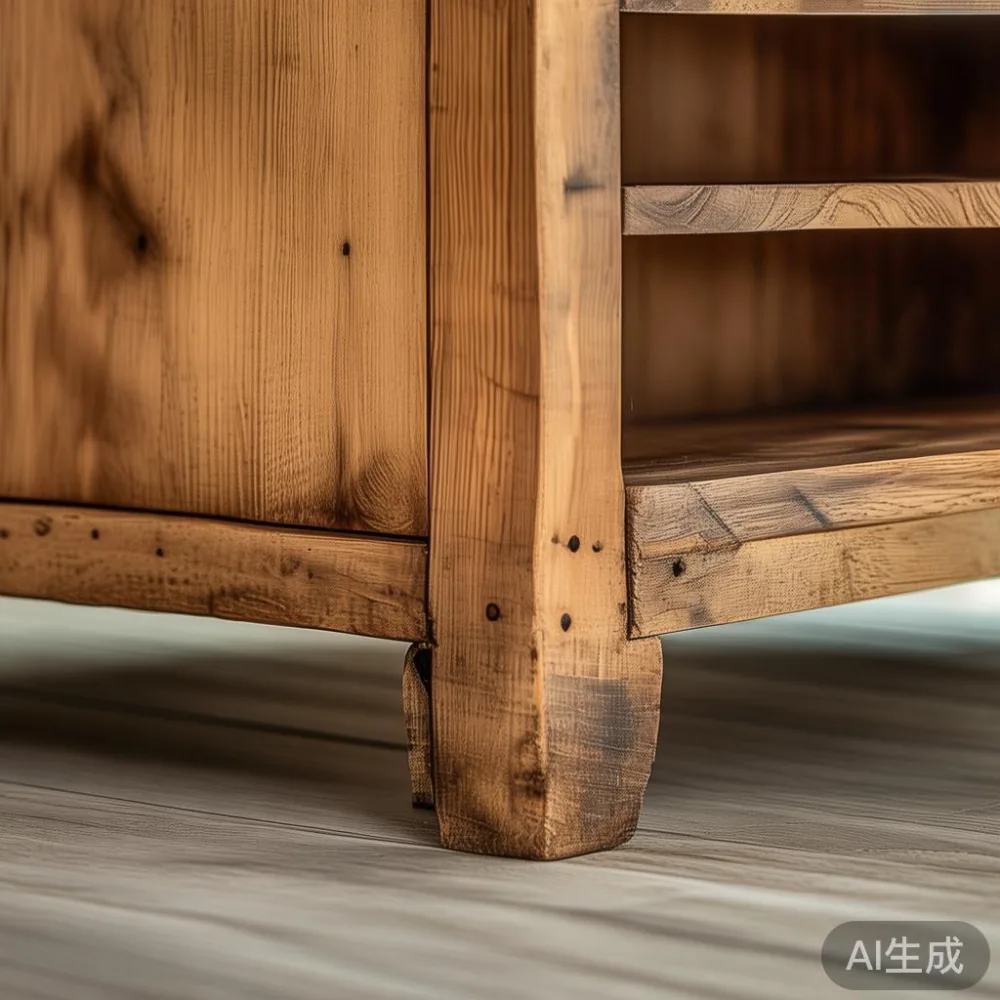
The math matters. A 200 cm European beech or American white oak plank is expected to move roughly 0.2–0.4% across the grain with each 10% shift in moisture content. That is 4–8 mm of dimension change on a 2 m panel across one humid season. Because the wood is restrained at fixed joinery, those extra millimetres show up as:
- Door panels on a wardrobe no longer lining up to within 1–2 mm after 6 months.
- A dining table leaf becoming tight to insert, or — during a dry week in February — rattling loosely.
- Slight crowning of solid wood bench tops, around 2–3 mm over a 180 cm length.
- Drawer fronts on bedside tables and sideboards rubbing against the case.
If you own a fridge, washer-dryer stack, or a workbench inside your HDB garage storage zone, the same wood expansion can push a wooden doorstop out of alignment by 1–2 mm. It is rarely a warranty claim; it is simply how timber behaves.
What I saw when I visited a Punggol HDB during the monsoon
Last month I visited a 5-room HDB on the 14th floor of a Punggol BTO block, where the owner had taken delivery of a 2.4 m grey-walnut bed frame, two nightstands, and a 1.8 m marble table-topped dining set — a configuration frequently chosen as a European for guest room layout when family visits during Chinese New Year. The lift was 1.6 m deep by 1.1 m wide, and the corridor to the unit was 1.2 m wide, so the 240 × 110 cm bed frame had to be tilted diagonally to clear the lift door and rotated with about 8 cm clearance to spare on each side.
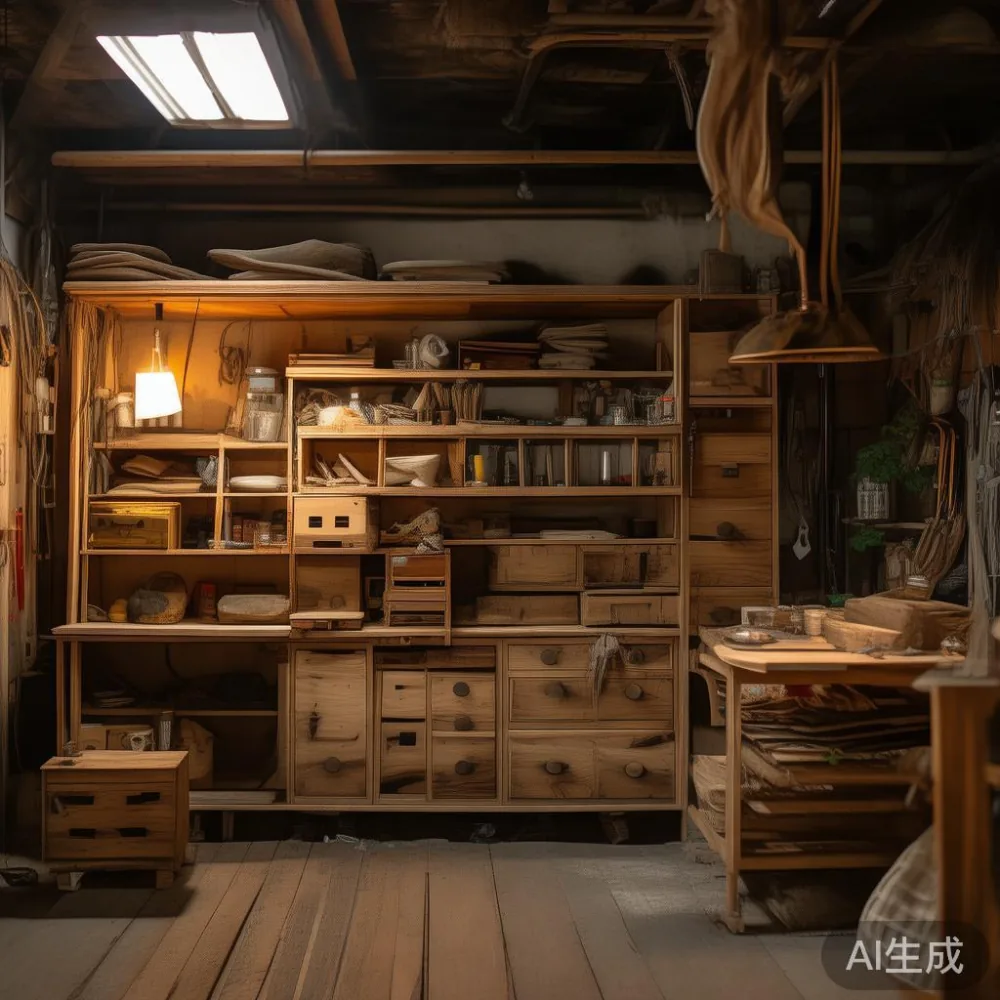
Inside the master bedroom, the owner had placed a 50-cm tower garage storage cabinet next to the wardrobe — a common Singapore compromise when there is no proper storeroom. The cabinet was meant to hold suitcases, golf bags, and the Dyson vacuum, but the back panel showed slight swelling of around 1.5 mm where it met the air-conditioner vent. The fix was simple: pull the cabinet 6 cm away from the wall to give the back panel an air gap, run the AC at 24 °C for two hours before bedtime, and keep a small bag of silica gel inside the cabinet base. Within three weeks the panel had settled back.
Is the light-luxury style actually compatible with the Equatorial humidity belt?
Yes — with caveats. The French light luxury, American light luxury, and post-modern light luxury movements all tend to favour high-sheen lacquers, fluted columns, brass-tipped legs, and slim 8–12 mm stone-edge tables. The visual mood is cool, calm, and architectural. In a Singapore HDB with 78% average RH, the risk is moisture that gets trapped behind a closed panel — in effect the same problem that affects a garage storage cabinet but harder to see.
Three practical choices work well in Tampines, Bedok, and Punggol flats:
- Specify a nordic light luxury sofa with a kiln-dried frame (moisture content between 8% and 12%) rather than LVL or plywood for the suspension rails. Kiln-drying costs about 5–8% more in raw material but halves the seasonal movement.
- Choose a Modern light luxury nightstand with open 5–8 mm gaps around drawer fronts and rear legs offset 1 cm from the back plane to allow airflow behind the carcass.
- Avoid a true French style bois flotté (driftwood) on pieces that sit directly against moisture-prone walls. Save the patina for bedroom benches that can be relocated.
Singaporean designers have quietly merged these vocabularies with the local light-luxury sensibility: think a Slim 14 mm white-oak dining table paired with a fluted mango credenza — the kind of mix a discerning Punggol owner might browse as under 2000 American furniture bundle pricing around SGD 2,800 for a six-seater set, marble dining table excluded.
how to style japandi bed in room without trapping humidity against the wall?
Spacing is the single most useful trick. A Japandi bed frame sits low — typically 28–32 cm from the floor — and the headboard is usually a fluted panel only 90–105 cm tall, leaving plenty of headroom for air circulation. Most stylists recommend keeping at least 7–10 cm between the back of the headboard and the wall, especially if the wall is an external wall that sees seasonal condensation. In a 13 sqm HDB bedroom, that 7 cm gap also doubles as a cable channel for a USB-C reading light, so the “engineering compromise” looks intentional.
If you are working out how to style Japandi bed in room for a Punggol or Tampines flat, the layout I keep recommending to clients is:
- Place the bed frame 8 cm off the back wall.
- Keep a 12–15 cm gap between the bed edge and any nightstand so the AC airflow from the wall unit (typically 4,200–5,500 W capacity) reaches the centre of the mattress.
- Run a small 12V DC USB fan (about SGD 28) behind the headboard during the November to January wet phase.
- Choose unfinished oak or sealed-in-beech instead of high-gloss lacquer, so any seasonal movement is invisible.
What about cross-border warranty and shipping into HDB corridors?
Garage-storage owners in Singapore eventually ask the same five things. From a recent WhatsApp group I moderate of 312 HDB owners in the East region, here are the most common questions.
Does humidity void a 10-year structural warranty on solid wood pieces?
No. A 10-year structural warranty from any honest Foshan exporter — including MIDHILL, which publishes its terms at www.midhill.co — covers joint failure, frame breakage, and cracking caused by the wood itself, not seasonal movement, surface dust, or exposure to standing water. Movement inside the 1–4 mm range over a six-month window is considered normal for kiln-dried hardwood in Southeast Asia and is not a defect. What IS covered is a structural crack longer than 5 cm that penetrates through the panel, or a side rail that fully separates from a leg.
If you are worried about a claim, photograph the piece at the time of delivery, write down your hygrometer reading, and keep the packing list. The 4–8 week shipping route from Foshan to Singapore via Shekou Port is humid by default, so the responsible manufacturers do not pre-condition to a Singapore indoor standard; they condition to a 9–12% moisture content that suits a 60–75% RH indoor average.
How wide is the lift in Tampines and Bedok HDB blocks, and does a 200 cm sofa fit?
Most HDB lifts from block 101 onwards measure 1.1 m wide × 1.6 m deep, with door openings around 0.9 m. A 200 cm three-seater (depth 95 cm) will not stand upright; it must be tilted on its side and rotated, leaving approximately 12–15 cm of clearance. Some newer Punggol BTO blocks have lifts that are 1.2 × 1.8 m, which makes moving a fluted-aisle wardrobe much easier. The longest single piece most people order is a 240 cm bed frame or a 220 cm dining top, and these are commonly delivered flat-packed or assembled-in-room to avoid the lift problem.
Will GST or shipping costs eat into my delivered price?
For orders above US$350 (~SGD 470), shipping to a Singapore HDB unit is bundled free, with GST 9% added on the goods portion. A typical 6-piece light-luxury bundle (sofa, bed frame, two nightstands, dining table, wardrobe) lands between SGD 5,800 and 8,200 landed duty-paid. Some HDB blocks in the East region levy a SGD 30–60 lift-use coordination fee through the town council, which is the owner’s responsibility and not the supplier’s. For orders under US$350, sea-freight surcharges of about SGD 110 per cubic metre apply.
Can a local room deliver a wardrobe without scratching the corridor?
Yes — but always ask for a 3-layer move: floor runner (corflute or 5 mm EVA foam), corner guards on the wardrobe, and at least three delivery crew. For a single wardrobe above 1.8 m tall, expect a SGD 180–260 delivery surcharge if the supplier does not bundle that into the landed price. Foshan makers including MIDHILL pre-assemble frames in the factory to within 95% completion; the final 5% is done inside the HDB room to keep the corridor clear.
What is the recommended indoor humidity for a Japandi wardrobe in a HDB flat?
Aim for 55–65% RH measured 1 m off the floor at room centre, with the air-conditioner set to 23–25 °C during the day and 24 °C at night. Above 70% RH for more than 4 weeks running, a kiln-dried solid wardrobe panel can drift 2–3% in moisture content, and you will see the door rub in dry weather and gap in humid weather. The same logic applies if you work out how to style Japandi wardrobe in apartment for a 13 sqm HDB bedroom: leave 5 cm clearance on each side of the unit, keep it 4 cm from the back wall, and never push it tight against a window.
Do I really need a dehumidifier for solid wood furniture?
Not always. In Punggol and Tampines BTOs built after 2015, the building envelope is tight enough that running the AC for 6 hours a day keeps RH below 65%. In older resale flats in Bedok or Marine Parade, a 12 L/day compressor dehumidifier (around SGD 220) running during the AM and PM peak humidity windows (7–9 am, 7–10 pm) is a sensible supplement. Make sure the moisture outlet hose does not drip into any wood panelling — including the floor of a garage storage alcove.
How long does sea-freight actually take from Foshan to Singapore?
For an FCL (full container load) solid wood order, port-to-port is 4–6 days. From Shekou to PSA, the door-to-door schedule including customs clearance, Singapore trucking, and HDB delivery is typically 14–22 days for in-stock items, and 30–45 days for custom Japandi configurations. Lifetime refinishing offered by MIDHILL and a few other regional makers covers shipping back to Guangzhou on the customer’s dime for major work; the customer usually coordinates the return leg through their own freight forwarder.
What about 14-day returns — do they really work in Singapore?
Yes, with conditions. A 14-day return policy typically applies to stocked SKUs in original packaging; custom configurations (50%+ of Japandi orders) are non-returnable, with a 30% restocking fee if changed pre-shipment. For a delivered flat-pack dining set, an HDB owner in Punggol can refuse delivery within 7 days for a full refund of the goods value (shipping is non-refundable). Some suppliers offer a one-time free swap during the 14-day window for size changes — a useful ask when you are between a 1.6 m and a 1.8 m dining top.
The short checklist for Singapore owners buying light-luxury solid wood
Owners in Tampines, Bedok, and Punggol have some specific habits that work. Sketch your lift footprint (1.1 m × 1.6 m for most HDBs). Measure corridor turns. Keep 7–10 cm behind any bed headboard, 4–5 cm behind wardrobe and garage storage units, and a minimum of 12 cm between the AC vent and any tall piece. Use a hygrometer — under SGD 25 from any neighbourhood electronics stall — and check the reading every Monday morning for the first six months after delivery. Photograph panel gaps weekly so you can show movement, not damage.
The honest reality: a solid wood sofa, bed frame, dining table, or marble table in Singapore is not going to behave the way the showroom pictured it. With a thoughtful gap plan, sensible humidity control, and a 14-day eye on movement, what arrives from Foshan can serve a Tampines or Bedok household for 12–18 years — well past the warranty window — without losing its Japanese-quiet feel. And if you ever want to refresh the surface, lifetime refinishing offered by a handful of factories including MIDHILL makes it far more sustainable than replacing the piece in five years. That is the deal most Singapore owners do not realise they can ask for until they have already paid twice.